Monuments to Ambition: The Enduring Allure of Vanity Projects and the Pursuit of Power
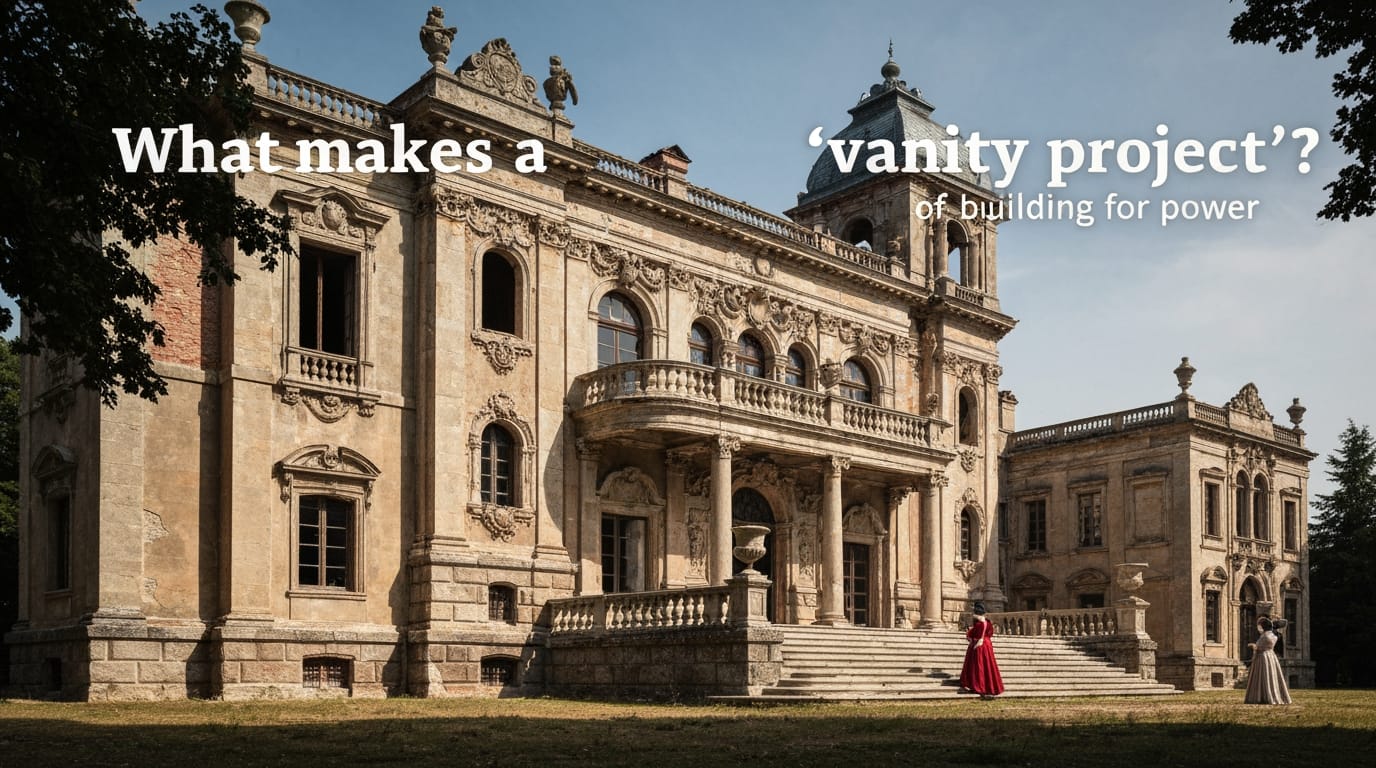
Throughout history, from ancient empires to modern democracies, powerful individuals and entities have embarked on grand construction endeavors that, while impressive in scale, often prompt questions about their true purpose and public benefit. These "vanity projects"—a term denoting undertakings driven more by personal ego, prestige, or a desire for lasting legacy than by practical necessity—serve as enduring testaments to the human impulse to assert dominance, cement influence, and control narratives through monumental displays.
A vanity project is typically characterized by its minimal added value, potentially even decreasing it, and is often initiated on the whims of those with ample resources. Unlike essential infrastructure, these ventures are frequently seen as showcases for an individual's perceived talents or importance, yet can ultimately result in costly failures or impractical outcomes. Merriam-Webster defines "vanity" itself as inflated pride, conceit, or something empty and valueless, underscoring the often self-serving nature of these projects. While sometimes framed as "passion projects," the line blurs when confidence morphs into delusion, leading to what critics dub "epic, flaming disasters".
Ancient Echoes: Building Legacies in Stone
The historical landscape is replete with structures that, in retrospect, bear the hallmarks of vanity projects designed to project power and secure immortality. The colossal pyramids of ancient Egypt, built as elaborate tombs for pharaohs, and the grand palaces of Greek civilization, though marvels of their age, were often constructed at immense cost to the populace, primarily serving the "god-kings" and elites. In stark contrast, the ancient city of Mohenjo-daro in the Indus Valley Civilization, known for its sophisticated drainage systems and organized street layouts, prioritized infrastructure that benefited daily life for its citizens rather than opulent displays for a select few. This juxtaposition highlights a fundamental distinction: building for collective welfare versus building for individual glorification.
Another profound example is the Mausoleum of Qin Shi Huang, the first emperor of China, renowned for its Terracotta Army. Work on this massive tomb complex began shortly after Qin Shi Huang ascended the throne at age 13 and continued for 38 years, with full-scale construction starting after he unified the country. Modeled on the layout of his capital, this monumental undertaking was a clear expression of imperial power, designed to ensure his authority and legacy extended even into the afterlife. These ancient constructions, while now historical treasures, were then staggering investments of labor and resources, fundamentally tied to the rulers' quest for absolute power and an indelible place in history.
The Psychology of Grandeur: Ego, Control, and the Cult of Personality
The driving force behind many vanity projects lies deep within the psychology of power and human ambition. Individuals are often motivated to seek power for two primary reasons: to exert control over others or to enhance their own self-determination. When the former dominates, especially driven by fear or mistrust, it can lead to coercive strategies and a desire to manipulate behavior. For those in positions of authority, power can boost confidence and ego, but it can also diminish their interest in feedback and the needs of those they govern. This psychological shift makes leaders more susceptible to making decisions that may be disadvantageous to others, focusing instead on personal glorification.
Personality traits frequently play a significant role. Leaders high in narcissism, for instance, often pursue power to validate an inflated self-image and garner admiration, rather than to achieve collective goals. Similarly, Machiavellian individuals view power as a strategic instrument for control, willing to manipulate and bend rules to achieve their objectives. The promise of a lasting legacy, or an attempt to divert attention from more pressing issues, also serves as a potent motivator. When challenged, proponents often defend these projects as essential for "legacy, not vanity," indicating an awareness of the distinction even as they pursue self-aggrandizing goals. The paradox, as some research suggests, is that those primarily motivated by personal gain tend to be less effective leaders than those driven by a desire to achieve collective goals.
Modern Manifestations: Political Projects and Billionaire Whims
In contemporary times, the concept of a vanity project continues to manifest, albeit with modern implications and scrutiny. Public figures and wealthy individuals often find their ambitious undertakings labeled as such, particularly when they appear to divert resources from more pressing societal needs.
Former U.S. President Donald Trump has been associated with several projects criticized as vanity ventures. His proposed renovation of a White House ballroom, for example, drew criticism from those who argued it reflected misplaced priorities, especially amidst national economic concerns, and risked altering the historical integrity of the presidential residence. Despite a White House official defending it as a "legacy" project, critics saw it as primarily serving Trump's personal image. Similarly, his plans for a 250-foot "Triumphal Arch" near Arlington National Cemetery sparked bipartisan opposition. Opponents denounced it as a "monument to Donald Trump's ego" that would waste taxpayer money, violate existing laws, and disrespect veterans, especially after Trump reportedly stated the arch was "for me". The proposed "Board of Peace," chaired by Trump for life and requiring a $1 billion contribution for membership, was also widely described as a "vanity project" and a "pay-to-play club" by major news outlets, raising concerns about its governance and purpose.
Beyond political spheres, wealthy individuals have also indulged in extravagant endeavors. Examples include billionaires relocating ancient trees to private arboretums, funding the construction of a "Titanic II" replica, or attempting to create real-life dinosaur parks, often with questionable practical outcomes or public reception. These projects, while privately funded in some cases, often highlight a detachment from public utility and a focus on personal indulgence.
The Enduring Debate: Public Benefit Versus Personal Vision
The debate surrounding vanity projects often centers on their economic impact and whether they truly serve the public good. Critics frequently highlight the substantial costs, potential for inefficiency, and the diversion of resources from more critical areas such as public services or economic relief. Projects like the Memphis Pyramid, which operated as an arena for only a few years before sitting empty, serve as cautionary tales of large-scale endeavors failing to deliver sustained value.
Ultimately, vanity projects represent a complex interplay of human ambition, the desire for power, and the pursuit of a lasting legacy. While some may inadvertently become historical landmarks, their initial intent often reflects a leader's self-regard rather than a genuine response to societal needs. The distinction between a visionary public work and a self-serving monument remains a recurring theme throughout human history, continuously shaping the built environment and sparking perennial discussions about true leadership and the responsible exercise of power.