Berlin Hauptbahnhof at 20: A Monument to Unity and Modernity
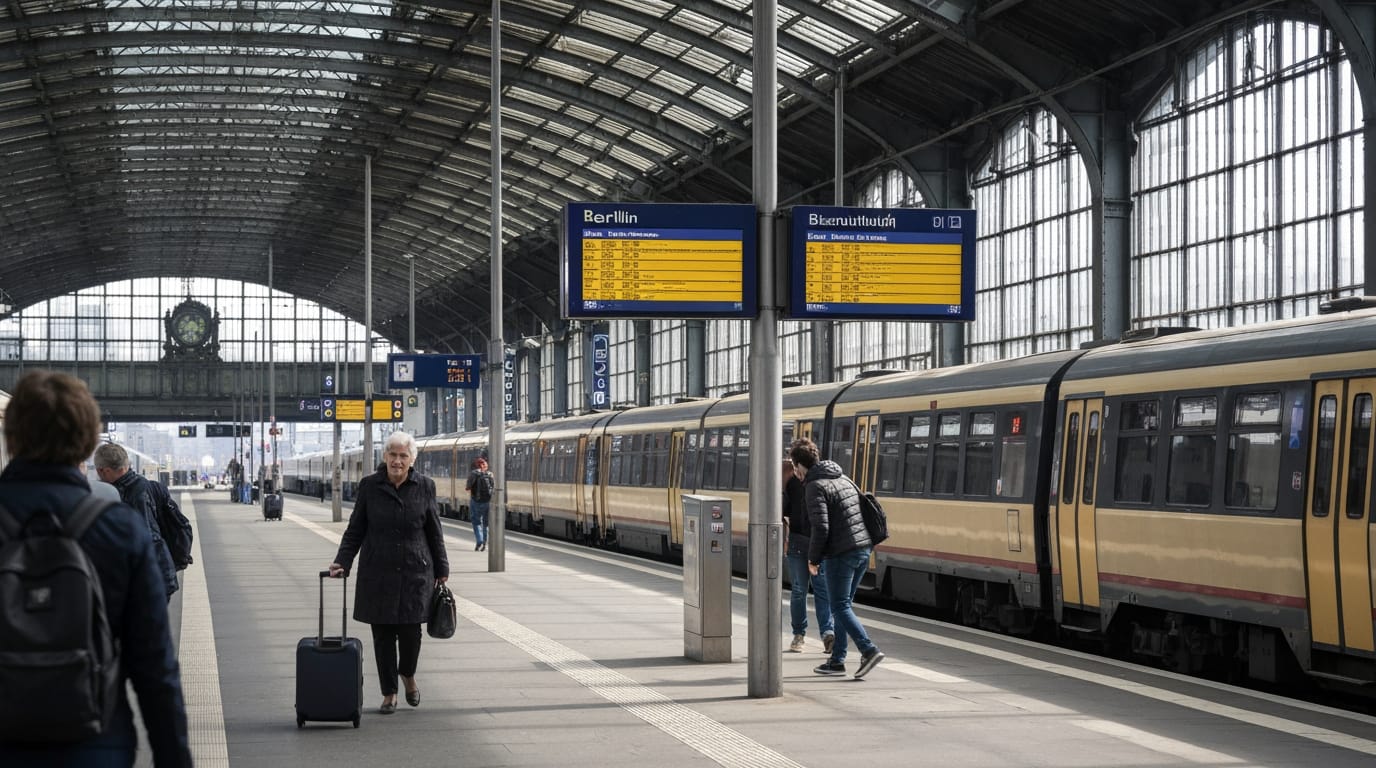
Twenty years ago, on May 26, 2006, Berlin officially unveiled its new Hauptbahnhof, a sprawling glass-and-steel edifice that swiftly rose to become Europe's largest and most modern interchange station. Far more than a mere transportation hub, this architectural marvel, designed to knit together the once-divided city's rail lines, has evolved into a potent symbol of German reunification and a bustling nexus of urban life, shaping not just how people move through Berlin but how they experience it. As it marks its two-decade milestone, the station stands as a testament to ambitious post-reunification vision, even as it navigates contemporary challenges.
A Grand Vision for a Reunited Capital
The concept for Berlin Hauptbahnhof emerged from the ashes of division, following the fall of the Berlin Wall in 1989. City planners recognized the imperative to modernize and unify Berlin's fragmented railway network, which had been severely disrupted during the Cold War. In 1992, the federal government made the pivotal decision to construct the new central station on the historic site of Lehrter Bahnhof. The original Lehrter Bahnhof, a key east-west main line terminal opened in 1871, had been severely damaged during World War II and ultimately demolished by the East German government in the late 1950s. Its replacement was envisioned not just as a station but as a "cathedral of transport," highlighting Berlin's renewed role as an interface in an increasingly integrated Europe.
Construction commenced in 1995, a monumental undertaking that would span 11 years. Architects Meinhard von Gerkan and his firm Gerkan, Marg and Partners (gmp Architekten) were tasked with translating this grand vision into reality. Their design aimed for transparency and light, creating a modern structure predominantly of glass and steel. The project faced significant engineering hurdles, including tunneling beneath the Spree River in sandy soil with a high water table, and even encountering unexploded World War II munitions, all while near active S-Bahn lines and historic landmarks like the Reichstag. The river itself was temporarily re-channeled to facilitate the complex underground work. The station opened ceremonially on May 26, 2006, and became fully operational two days later, on May 28, 2006. The total cost for the project surpassed 700 million Euros, significantly higher than initial estimates.
An Architectural Statement: Glass, Steel, and Flow
Berlin Hauptbahnhof's architecture is a defining feature, instantly recognizable with its striking steel and glass construction. It was conceptualized as the world's largest intersection station, with two main platform levels running perpendicularly. The upper level hosts the east-west Stadtbahn services within a 321-meter-long glass hall, while the lower, subterranean level accommodates the north-south long-distance lines. This cross-shaped design dramatically emphasizes its role as a nodal point in the European railway network. A vaulted central roof allows natural light to permeate all five levels, creating a spacious and airy environment.
Despite its grandeur, the design process was not without its controversies. To cut costs and ensure completion by the 2006 Football World Cup, the architect's original plans for the glass roof were shortened by approximately 130 meters, a decision that led to public debate and, for some, compromised the architectural integrity. Nevertheless, the station integrates sustainable features, including a photovoltaic system embedded in the glass roof that can generate up to two percent of the station's electricity needs. It also employs high-performance glass for temperature control and low-environmental impact insulation.
The Central Artery of German Rail
From its inception, Berlin Hauptbahnhof was destined to be the pulsating heart of Germany's railway system. It functions as a central hub for approximately 1,800 trains daily, accommodating long-distance, regional, and rapid transit services. This extensive network connects major German cities like Hamburg, Munich, and Frankfurt, and extends internationally to destinations such as Warsaw, Prague, Vienna, Amsterdam, and Paris. With an estimated 300,000 to 350,000 passengers traversing its platforms each day, and around 120 million annual passengers, Berlin Hauptbahnhof consistently ranks among Europe's busiest train stations, affirming its vital role in both German and European mobility.
The station's innovative multi-level design facilitates seamless transfers between different modes of transport, including the U-Bahn, S-Bahn, trams, and buses, promoting Berlin’s vision of advanced public transportation. This intermodal connectivity enhances accessibility and convenience, making it a critical link between East and West Europe. Its strategic location near the government district further cements its importance, serving both commuters and travelers.
Beyond Transit: A Hub of Urban Life and Development
Berlin Hauptbahnhof transcends its primary function as a transport facility, having become a vibrant center for commerce, culture, and urban development. It features three connecting and commercial levels, boasting 15,000 square meters of shopping arcades and 44,000 square meters of office space, with over 80 shops and restaurants open seven days a week. This integration of retail and services has transformed the station into a dynamic meeting point for Berliners and visitors alike.
The station's development has also catalyzed significant urban regeneration in its vicinity. As a key example of transit-oriented development (TOD), it has revitalized a previously underutilized area, drawing investment and fostering the creation of a dynamic urban quarter. Adjacent developments, guided by a 1994 master plan, include hotels, offices, catering, and housing, contributing to a thriving district that serves both the city's transport needs and the daily lives of its inhabitants. The station has also occasionally served as a backdrop for historical and cultural moments, including welcoming refugees in 2015 and 2022, a royal visit from King Charles in 2023, and even appearing in the 2011 action thriller "Unknown Identity."
Enduring Symbolism Amidst Evolving Challenges
As Berlin Hauptbahnhof celebrates two decades of operation, its symbolic power remains undiminished. It embodies the spirit of a reunified Germany and a connected Europe, designed for an era of greater mobility and integration. However, like any large-scale infrastructure, it faces ongoing challenges. Critiques regarding internal navigation, escalator functionality, and the long-delayed S21 S-Bahn connection highlight areas for improvement. The recent mass shutdown of escalators in February 2026, for instance, underscored maintenance issues. Deutsche Bahn acknowledges the need to continuously enhance the "quality of stay" for its millions of passengers.
Despite these operational hurdles, Berlin Hauptbahnhof's fundamental role as a gateway to Berlin and a crucial artery in the continent's rail network is unquestioned. It is a constantly evolving urban landmark, reflecting the dynamic nature of the city it serves. From its ambitious genesis to its present-day operations, the station continues to be a focal point, symbolizing the enduring commitment to connectivity and progress that defined post-reunification Germany.