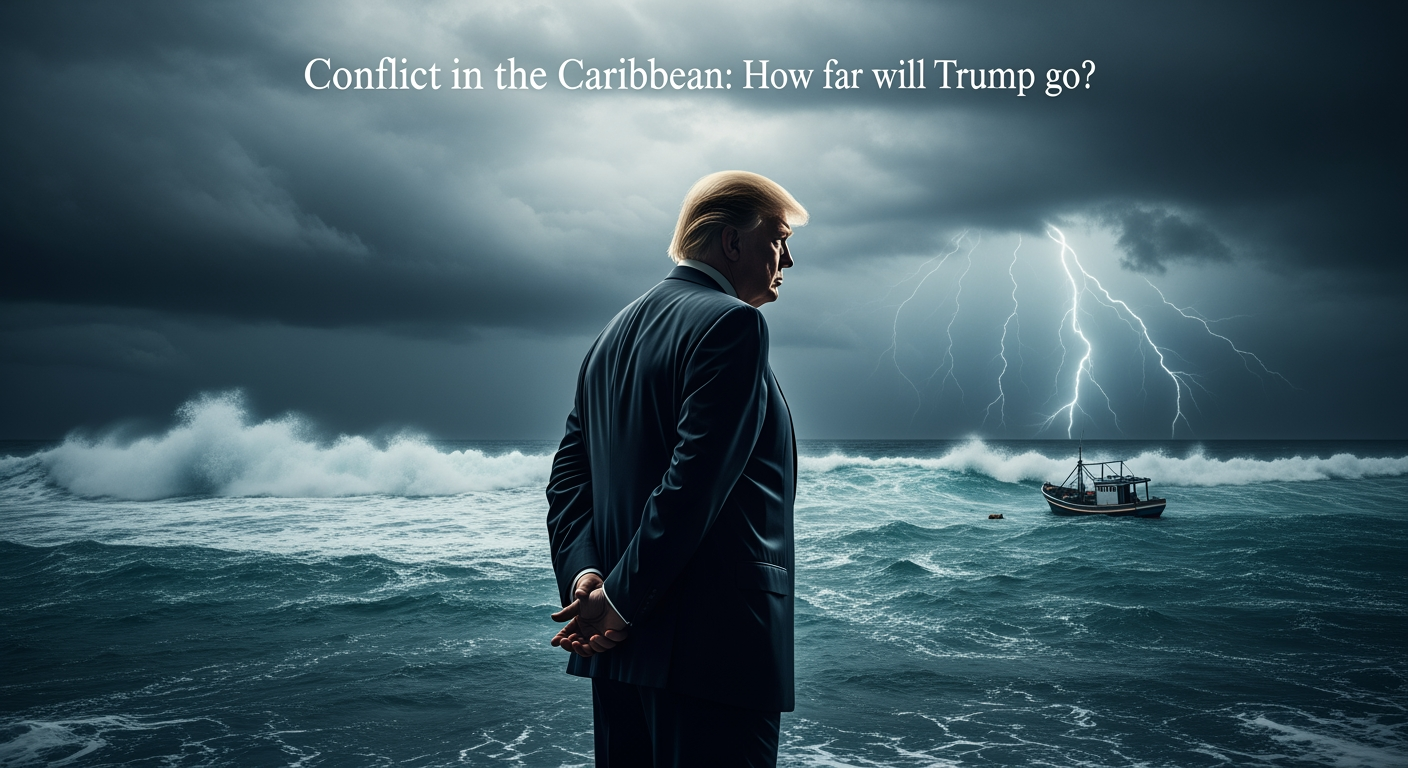
The Caribbean, a region historically intertwined with U.S. geopolitical interests, is once again emerging as a focal point of concern, with rising tensions and military postures suggesting a significant shift in American foreign policy. Against a backdrop of persistent instability in nations like Haiti and the simmering Guyana-Venezuela border dispute, the renewed emphasis on assertive measures from Washington raises critical questions about the potential for escalating conflict and the limits of intervention. This evolving dynamic underscores a complex interplay of national security concerns, economic interests, and a re-examination of regional engagement.
A Return to Assertive Diplomacy: Trump's First Term and the Caribbean
The Trump administration's initial foray into foreign policy was characterized by an "America First" doctrine, prioritizing national interests, bilateral agreements over multilateral ones, and often employing a transactional approach to international relations. This philosophy heavily influenced engagement with Latin America and the Caribbean. During his first term, the Trump administration notably increased economic sanctions against Venezuela, aiming to pressure the Maduro regime through financial means rather than direct military intervention. This "maximum pressure" campaign, while ambitious, demonstrated a willingness to weaponize the U.S. financial system and isolate what it deemed "bad regimes." Concurrently, there was an expanded U.S. military presence in the Caribbean, particularly in 2020, ostensibly to combat drug trafficking. This period also saw significant rhetoric against certain regional governments and an emphasis on border security, often linking immigration issues with transnational crime.
Regional Flashpoints: Haiti's Crisis and the Guyana-Venezuela Standoff
The Caribbean basin remains susceptible to internal and interstate pressures that could draw in external powers. Haiti, for instance, has been mired in a multifaceted crisis marked by political fragmentation, rampant gang violence, and a struggling economy. The assassination of President Jovenel Moïse in 2021 further destabilized the nation, leading to a humanitarian crisis and a surge in internally displaced persons. Gangs now control significant portions of Port-au-Prince and other areas, exacerbating security challenges. U.S. policy in Haiti has traditionally navigated a delicate balance of providing support without direct military presence, leaning on multinational efforts like the Multinational Security Support (MSS) mission, which has faced funding and deployment challenges.
Further south, the long-standing territorial dispute between Venezuela and Guyana over the resource-rich Essequibo region has flared up, raising fears of a border conflict. Venezuela claims the Essequibo region, which constitutes nearly two-thirds of Guyana's territory and holds vast offshore oil reserves discovered by ExxonMobil. Despite the International Court of Justice (ICJ) asserting its jurisdiction and issuing provisional measures to prevent Venezuela from altering the status quo, Caracas has continued to press its claims, including plans for elections in the disputed territory. Guyanese soldiers have reported attacks in the region, leading to heightened military alerts. This dispute presents a significant regional challenge, with potential implications for international energy markets and the stability of South America.
The "America First" Framework and Conflict Response
The "America First" doctrine, a cornerstone of the Trump foreign policy approach, emphasizes placing American safety and prosperity above all else, often favoring unilateral action and transactional engagement. This approach prioritizes a focused and judicious use of military power to deter adversaries and win wars, while aiming to avoid prolonged foreign entanglements like nation-building. While proponents argue it leads to a more secure and prosperous America, critics suggest it can destabilize global norms and lead to a more unpredictable international landscape.
In the context of Caribbean conflicts, this doctrine suggests a potentially swift and decisive, yet narrowly defined, U.S. response. The labeling of certain Western Hemisphere drug cartels as "Foreign Terrorist Organizations" in January 2025, and subsequent directives to use military force against them, points to a willingness to employ direct action under the guise of counter-terrorism. This aligns with the "America First" emphasis on securing borders and combating threats perceived as directly impacting U.S. national security, such as drug trafficking.
Escalation of Force: The "War on Narcoterrorism"
Recent developments in the Caribbean signal a significant escalation of U.S. military engagement under the current administration, framed as a "war against narcoterrorism." In August 2025, the U.S. initiated a naval buildup in the southern Caribbean, deploying warships, aircraft, and thousands of personnel with the stated objective of combating drug trafficking. This effort has included military force against alleged drug-smuggling vessels, with reports of multiple strikes and casualties. The deployment of a carrier strike group to the Caribbean in October 2025 further amplifies the military footprint in the region.
This aggressive posture has raised questions among some observers about the true objectives, with some experts suggesting that a goal of the operation is to pressure the Venezuelan government. While the administration links these actions directly to fentanyl trafficking, official reports indicate that the majority of fentanyl enters the U.S. over land via Mexico, and most cocaine transits through the Eastern Pacific, not the Caribbean. This discrepancy fuels debate regarding the rationale behind the intensified military operations in the Caribbean.
The explicit authorization for the CIA to conduct lethal ground operations inside Venezuela and elsewhere around the Caribbean, coupled with the formal declaration of a "non-international armed conflict" with "unlawful combatants" (drug cartels), signifies a hardening of U.S. policy. The substantial increase in U.S. troops and military assets in the region, including F-35B jets and MQ-9 Reaper drones stationed in Puerto Rico, demonstrates a robust capacity for kinetic action.
Conclusion: A Region on Edge
The Caribbean currently finds itself navigating a complex and potentially volatile landscape. The confluence of existing regional instabilities, such as Haiti's profound crisis and the contentious Venezuela-Guyana border dispute, coupled with a renewed and assertive U.S. foreign policy stance, points to an era of heightened unpredictability. Washington's focus on national security and a declared "war on narcoterrorism" has led to an expanded military presence and a willingness to employ kinetic force in the region. How these assertive measures will ultimately impact the delicate balance of power, regional sovereignty, and the lives of those in the Caribbean remains a critical question, underscoring the enduring influence of U.S. policy in its "third border." The coming months will likely reveal the full extent and implications of this evolving engagement.