Munich's Famous Eisbach River Surfing Spot Closed After Serious Accident
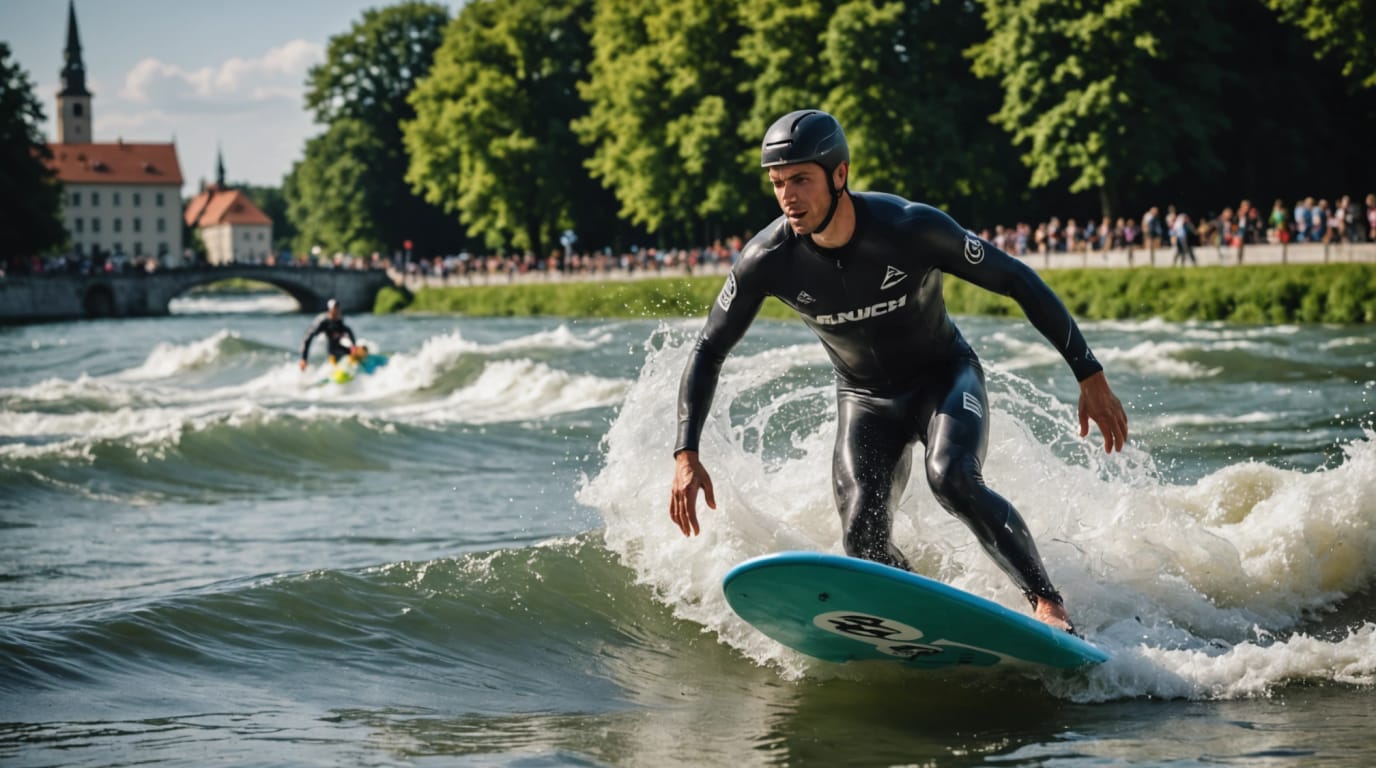
Munich's renowned Eisbachwelle, a popular river surfing location in the heart of the city, has been temporarily closed following a severe accident that left a surfer in critical condition. The closure, enacted by local authorities, has sparked concern among the surfing community and ignited debate about safety measures at the iconic urban wave.
The incident occurred late Wednesday night when a 33-year-old female surfer became entangled in her safety leash and was repeatedly pulled underwater by the strong current. Emergency services, including specialized fire department personnel, were called to the scene and managed to rescue her after a difficult operation. The surfer was immediately transported to a hospital where she remains in life-threatening condition.
The Eisbachwelle, located next to the Haus der Kunst art museum in the Englischer Garten, is an artificial wave created by a submerged structure in the Eisbach river. For years, it has attracted surfers from around the globe, becoming a symbol of Munich's unique urban culture. The wave's accessibility and consistent surfable conditions have made it a popular spot for both experienced riders and tourists eager to witness the spectacle.
However, the Eisbachwelle is also known for its challenging conditions and potential dangers. The river's strong current, shallow water, and hidden obstacles pose risks to surfers, especially those who are inexperienced. Over the years, there have been numerous minor accidents and injuries at the site.
Following the recent accident, the Kreisverwaltungsreferat (District Administration Office) and the fire department jointly decided to close the Eisbachwelle to the public. A spokesperson for the fire department stated that the closure was necessary because the safety of surfers could not be guaranteed. The authorities are now evaluating the situation and considering potential measures to improve safety at the site.
The closure has been met with mixed reactions. While many acknowledge the need for increased safety, some members of the surfing community fear that the closure could become permanent. The Bayerische Wellenreitverband (Bavarian Wave Riding Association), representing approximately 3,000 surfers, has urged authorities to avoid hasty decisions. The association suggests that simple measures could be implemented to make surfing safer without shutting down the wave altogether. They worry about overreaction from the authorities.
This isn't the first time the Eisbachwelle's future has been threatened. In 2009, local politicians considered demolishing the wave following reports in the media that incorrectly linked it to drowning accidents in the Eisbach river. A public campaign and online petition, supported by surfers worldwide, successfully prevented the demolition and led to the wave being legally protected as a cultural resource.
The current situation highlights the ongoing tension between preserving the unique cultural significance of the Eisbachwelle and ensuring the safety of its users. The wave has become an integral part of Munich's identity, attracting tourists and contributing to the city's vibrant atmosphere. However, the recent accident underscores the need for a comprehensive safety plan that addresses the inherent risks of river surfing.
Possible safety measures could include improved signage warning of the dangers, mandatory safety briefings for surfers, restrictions on surfing during periods of high water flow, and the installation of additional safety features in the riverbed. Another consideration involves mandatory gear such as helmets or personal floatation devices.
The authorities are expected to consult with surfing organizations, safety experts, and local residents to develop a sustainable solution that balances safety concerns with the preservation of this iconic urban surfing spot. The outcome of these discussions will determine the future of the Eisbachwelle and its role in Munich's cultural landscape.
The temporary closure of the Eisbachwelle serves as a stark reminder of the risks associated with extreme sports, even in seemingly urban environments. As Munich grapples with the challenge of ensuring safety at this unique location, the global surfing community watches closely, hoping for a resolution that allows the spirit of urban river surfing to continue while minimizing the potential for future tragedies. The incident also brings into focus the need for individual responsibility and awareness of one's own abilities when participating in potentially dangerous activities.


