Myanmar Faces Genocide Accusations at International Court of Justice as Landmark Hearings Commence
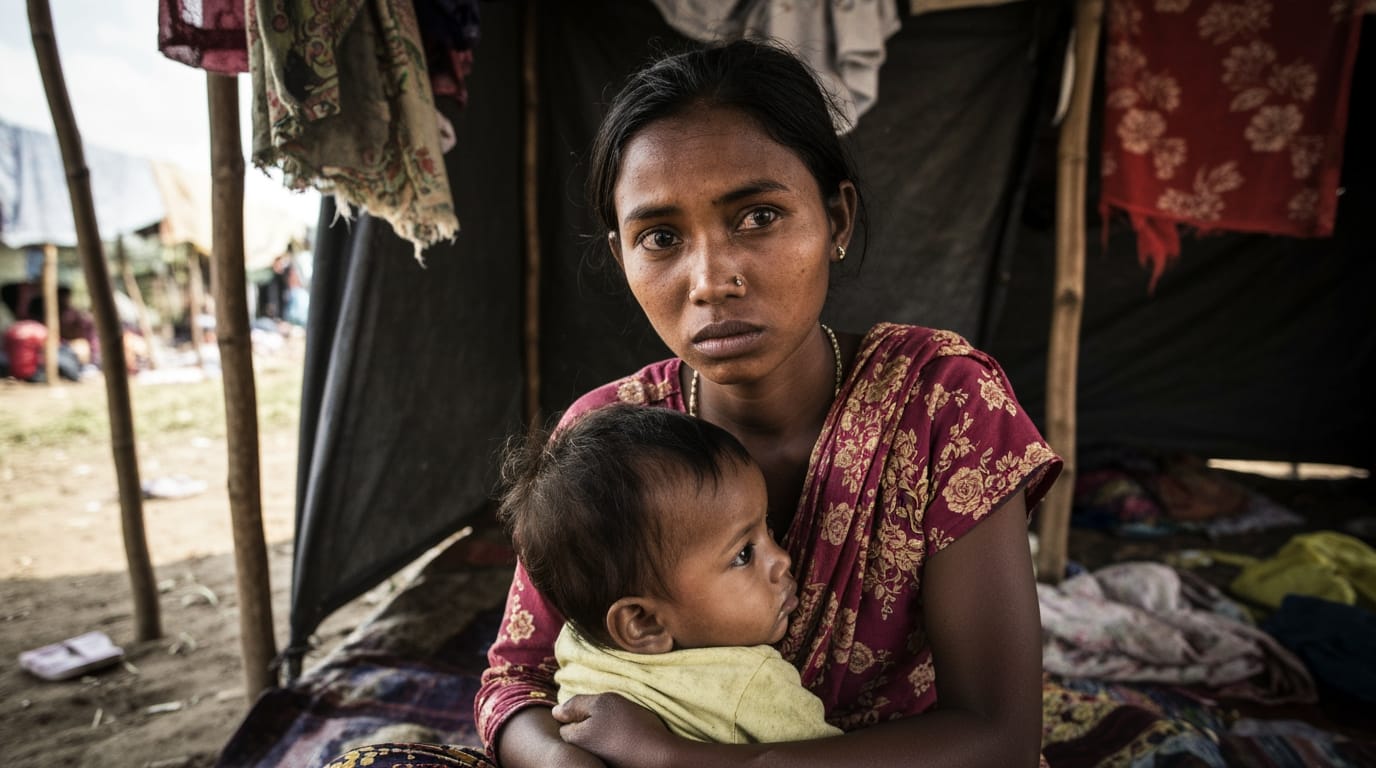
THE HAGUE, Netherlands – The International Court of Justice (ICJ) in The Hague has commenced crucial hearings in the genocide case against Myanmar, focusing on allegations that the Southeast Asian nation violated its obligations under the 1948 Genocide Convention. These proceedings, which began on January 12, 2026, represent a significant moment for international justice and for the hundreds of thousands of Rohingya people displaced and persecuted over decades. The case, brought by The Gambia in 2019, seeks to hold Myanmar accountable for what it describes as systematic atrocities against the predominantly Muslim ethnic minority.
Decades of Discrimination and the 2017 Exodus
The plight of the Rohingya is rooted in a long history of statelessness and discrimination within Myanmar, a predominantly Buddhist nation. Despite their historical presence, often dating back centuries in the Rakhine State, the Rohingya were denied citizenship under Myanmar's 1982 Citizenship Law, effectively rendering them stateless and subject to systemic persecution. This institutionalized discrimination has manifested in various forms, including restrictions on movement, access to education, healthcare, and livelihoods. Over the years, major attacks and waves of displacement have occurred, notably in 1978, 1991, and 2016.
The current ICJ case stems primarily from a brutal military crackdown initiated in August 2017. Following attacks by the Arakan Rohingya Salvation Army (ARSA) on police and army posts, Myanmar's security forces launched what they termed "clearance operations" in Rakhine State. These operations, however, led to widespread and documented atrocities, including mass murder, systematic rape, and the burning of entire villages. The United Nations and numerous human rights organizations have characterized these actions as a textbook example of ethnic cleansing, with a UN fact-finding mission concluding that the 2017 offensive included "genocidal acts." This campaign forced more than 700,000 Rohingya to flee across the border into Bangladesh, joining hundreds of thousands who had sought refuge in previous decades.
The Gambia's Landmark Legal Challenge
In November 2019, The Gambia, a small West African nation, took the unprecedented step of filing a case against Myanmar at the International Court of Justice. Acting on behalf of the Organisation of Islamic Cooperation (OIC), The Gambia invoked the Genocide Convention, arguing that Myanmar had breached its obligations to prevent and punish genocide. This marked a rare instance of a state initiating proceedings against another for genocide when it was not directly affected by the alleged atrocities, underscoring the universal nature of the Genocide Convention's obligations.
In December 2019, the ICJ held preliminary hearings, during which then-State Counsellor Aung San Suu Kyi, representing Myanmar, denied the accusations of genocide, describing them as "incomplete and misleading" and framing the events as an "internal armed conflict" against militants. However, in January 2020, the ICJ unanimously ordered Myanmar to implement "provisional measures" to protect the remaining Rohingya population from genocidal acts and to preserve evidence related to the case. These measures are legally binding and require Myanmar to prevent all genocidal acts, ensure its security forces do not commit such acts, and report regularly on its compliance to the court. Despite these orders, human rights groups have documented ongoing abuses against Rohingya in Myanmar, suggesting non-compliance with the court's directives.
Myanmar later challenged the ICJ's jurisdiction and The Gambia's standing to bring the case. Still, in July 2022, the court rejected these preliminary objections, allowing the case to proceed on its merits.
The Road Ahead: Justice and Accountability
The hearings on the merits of the case, which commenced this week, are expected to last several weeks. The Gambia's legal team is presenting evidence to demonstrate that Myanmar's actions were carried out with the "intent to destroy the Rohingya as a group in whole or in part," a crucial element in proving genocide under international law. Justice Minister Dawda Jallow of The Gambia emphasized the human element of the case, stating, "It is not about esoteric issues of international law. It is about real people, real stories and a real group of human beings – the Rohingya of Myanmar. They have been targeted for destruction."
The ICJ case is not a criminal proceeding against individuals but seeks to establish Myanmar's state responsibility for genocide. However, a ruling against Myanmar would carry significant moral and political weight, further isolating the country on the international stage and potentially paving the way for other accountability mechanisms. Several countries, including Canada, Denmark, France, Germany, the Netherlands, the United Kingdom, and the Maldives, have officially joined The Gambia's case, signaling broader international support for justice for the Rohingya. Separately, the International Criminal Court (ICC) is investigating individual military leaders for alleged crimes against humanity, and in 2024, its prosecutor requested an arrest warrant for Min Aung Hlaing, commander-in-chief of Myanmar’s military.
The Continuing Humanitarian Crisis
Meanwhile, the humanitarian crisis for the Rohingya remains dire. Over one million Rohingya refugees reside in the crowded camps of Cox's Bazar, Bangladesh, making it one of the largest refugee settlements globally. These refugees are entirely dependent on humanitarian assistance for basic needs such as food, water, shelter, and health. They face ongoing challenges, including disease outbreaks, malnutrition, inadequate educational opportunities, and risks of exploitation, particularly for women and children who constitute a significant portion of the refugee population. Natural disasters like monsoons and cyclones also pose constant threats to their precarious living conditions.
For the estimated 470,000 non-displaced Rohingya remaining in Rakhine State, conditions are also challenging, with restrictions on movement, work, education, and healthcare. Many live in barricaded camps in central Rakhine. Despite the international legal efforts, funding for humanitarian aid has stagnated, leading to significant gaps in addressing the urgent needs of the Rohingya.
A Precedent for Future Justice
The ongoing ICJ hearings hold significant implications beyond Myanmar. Legal experts are closely watching the proceedings, as the case is expected to set critical precedents for how genocide is defined, how genocidal intent can be proven through cumulative patterns of violence and rhetoric, and how international law can provide remedies for such grave violations. The outcome could influence how other similar cases, such as South Africa's case against Israel concerning actions in Gaza, are handled by the World Court.
The international community's pursuit of justice at the ICJ offers a glimmer of hope for the Rohingya, who have endured decades of persecution and displacement. While a final decision may take years, these hearings underscore the enduring principle that states can be held accountable for the gravest international crimes, bringing the quest for justice and dignity a step closer for one of the world's most persecuted populations.


