Myanmar Junta Presses Forward with Second Phase of Contested Election Amidst Deepening Crisis
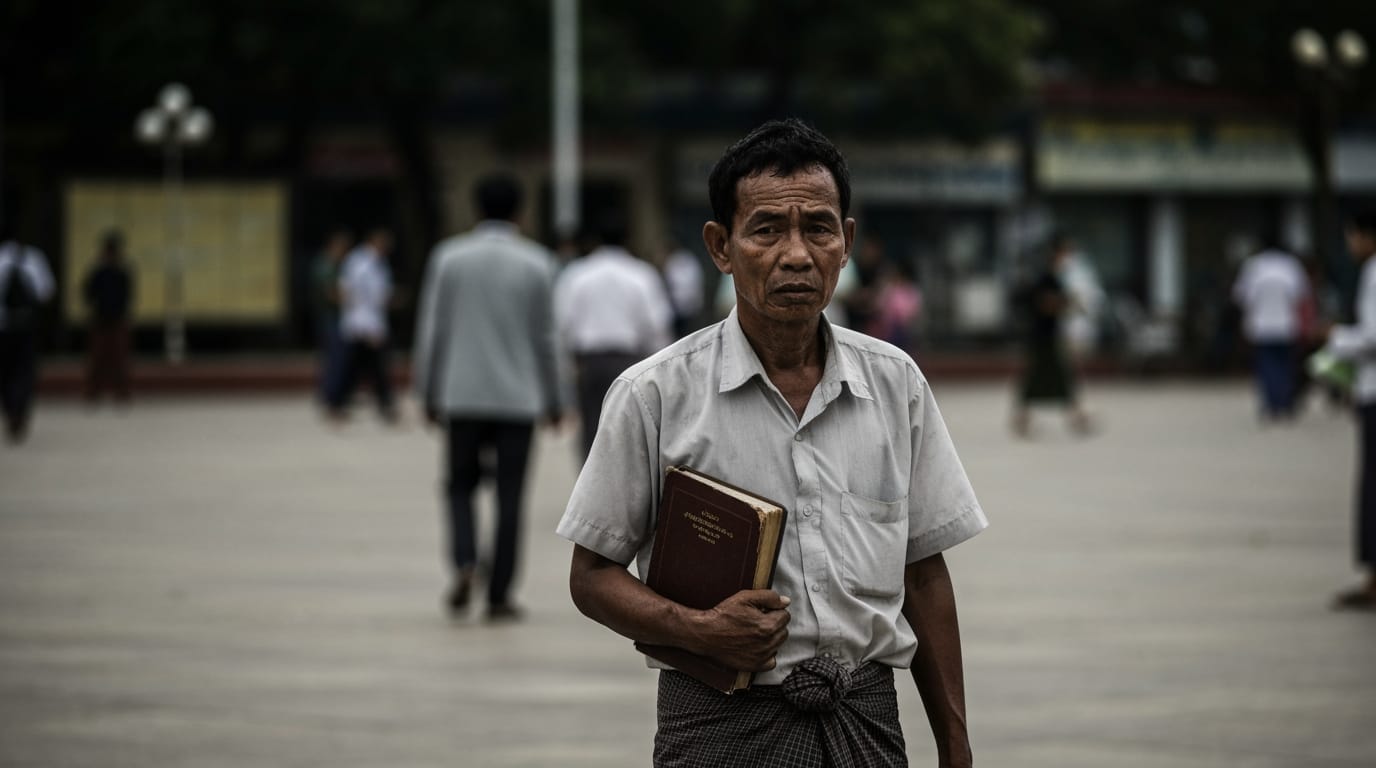
YANGON – Myanmar’s military junta initiated the second phase of a widely criticized general election on Sunday, January 11, 2026, a move international observers and human rights groups decry as a transparent attempt to legitimize military rule more than four years after the 2021 coup. The staggered voting process unfolds across 100 townships in 12 states and regions, including areas grappling with ongoing armed conflict, further highlighting the precarious political and humanitarian landscape engulfing the nation. This electoral exercise, the first since the military seized power, is occurring against a backdrop of civil war, mass displacement, and severe international condemnation, casting a long shadow over its credibility and efficacy.
The Vote Amidst Persistent Turmoil
Polling stations opened their doors at 6 a.m. local time on Sunday, encompassing regions such as Sagaing, Magway, Mandalay, Bago, and Tanintharyi, as well as Mon, Shan, Kachin, Kayah, and Kayin states. Many of these areas have witnessed intense clashes in recent months, underscoring the risks associated with the vote. This second round follows an initial phase held on December 28, 2025, in 102 townships, which reportedly saw a voter turnout of just 52.13%, significantly lower than previous elections in 2015 and 2020. A final phase is slated for January 25, though 65 townships across the country will not participate due to the prevailing instability and fighting.
The military junta asserts that these elections are crucial for restoring political stability and fostering a better future for Myanmar, a nation of 51 million people grappling with one of Asia's most severe humanitarian crises. However, analysts caution that any military-controlled government arising from this process is unlikely to achieve broad international recognition or genuinely stabilize the fractured country. The decision to hold the elections in three phases is itself a concession to the widespread armed conflicts that have destabilized large parts of Myanmar since the coup.
A Contested Mandate: Stripping Away Opposition
The fundamental legitimacy of the election has been fiercely challenged by numerous international bodies and independent experts. The United Nations, many Western countries, and human rights organizations have unequivocally labeled the elections a "sham" due to the absence of free, fair, and credible conditions. Critics point to the systematic dismantling of democratic opposition, particularly the dissolution of Aung San Suu Kyi's National League for Democracy (NLD) party, which swept the 2020 elections, and dozens of other anti-junta parties for failing to register under new electoral laws.
Key figures, including State Counsellor Aung San Suu Kyi and President Win Myint, remain imprisoned since the February 2021 coup, effectively sidelining the leadership that previously commanded widespread popular support. The military-backed Union Solidarity and Development Party (USDP) is poised for a landslide victory, having already claimed nearly 90% of the lower house seats contested in the first phase. This outcome is considered unsurprising by observers, given the electoral landscape was "tilted in its favour," including the removal of serious rivals and laws designed to stifle opposition. Furthermore, Myanmar's constitution automatically allocates 25% of seats in each legislative house to military appointees, providing the USDP with a significant advantage that ensures continued military dominance regardless of popular vote. Senior junta officials and prominent figures aligned with the military are among the candidates participating, further cementing the military's influence.
Deepening Humanitarian Crisis and Civil War
The election unfolds against a backdrop of a protracted civil war that erupted after the 2021 coup, transforming Myanmar into a battleground and triggering a profound humanitarian crisis. Since the military takeover, at least 16,600 civilians have died in the conflict, and an estimated 3.6 million people have been displaced, according to data from the Armed Conflict Location & Event Data Project and the UN. Human rights groups have documented widespread atrocities, including torture, indiscriminate attacks, and the denial of humanitarian aid, which may constitute crimes against humanity and war crimes.
Large swathes of the country remain outside the junta's stable control, with resistance forces and ethnic armed groups gaining territory and actively engaging the military. This ongoing conflict has not only fueled a severe humanitarian disaster but has also led to a drastic increase in political prisoners, with numbers soaring from 234 before the coup to over 21,700 by early 2025. The UN High Commissioner for Human Rights, Volker Türk, has warned that civilians are being coerced by all sides, pressured by the military to vote and threatened by armed opposition groups to boycott, creating an environment of fear and repression that precludes any meaningful participation.
International Divide and Questionable Legitimacy
The international community remains deeply divided over the legitimacy of Myanmar's elections. Western nations, including the United States, the United Kingdom, and Australia, alongside the United Nations and the European Union, have strongly denounced the polls as a "sham" designed to consolidate the military's power. The Special Advisory Council for Myanmar (SAC-M), an independent group of international human rights experts, has urged the international community to reject the regime's elections, citing the lack of legitimacy amidst a civil war and humanitarian crisis.
Conversely, some countries, including Vietnam, Cambodia, Russia, China, Belarus, India, Kazakhstan, and Nicaragua, sent observers to monitor the first phase of voting, signaling a degree of engagement with the junta's electoral process. The military government hopes this election will provide a veneer of legitimacy, help alleviate its international isolation, and attract renewed investments. However, the overwhelming consensus among critics is that without fundamental changes to the political landscape, including the release of political prisoners and a cessation of hostilities, these elections will only exacerbate instability and further entrench military rule rather than pave the way for genuine democracy.
The current electoral exercise, rather than resolving Myanmar's profound political crisis, appears poised to deepen the country's internal divisions and further isolate the military regime on the global stage. As the second phase of voting concludes, the path forward for Myanmar remains fraught with uncertainty, with continued conflict and humanitarian suffering casting a long shadow over any claims of democratic progress.


