Myanmar's Junta Stages Controversial Election Amidst Deepening Civil War
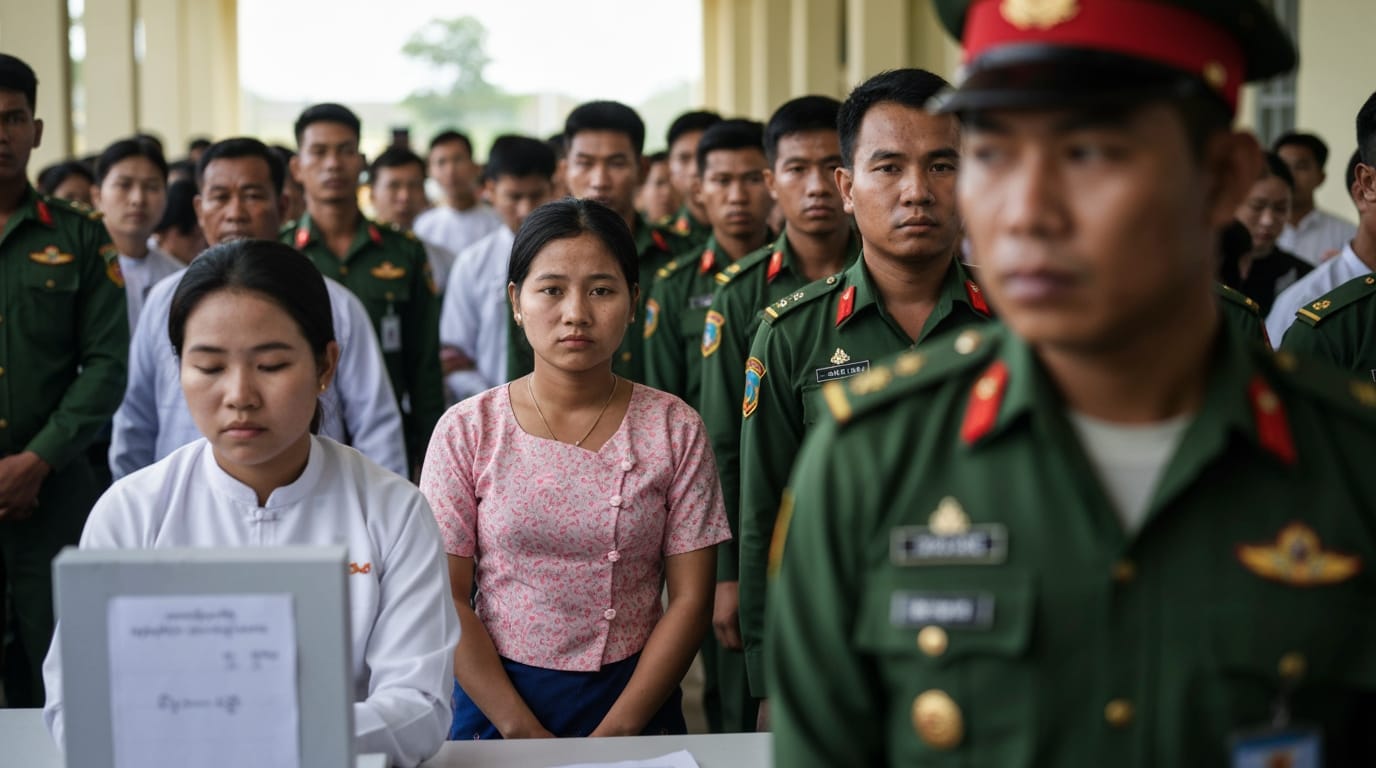
YANGON, Myanmar – December 28, 2025 – Myanmar’s military junta today commenced the first phase of a general election, a deeply contentious poll widely condemned by international observers as a "sham" designed to legitimize four years of military rule since the 2021 coup. The multi-phase vote unfolds against a backdrop of a brutal civil war, widespread displacement, and severe suppression of dissent, casting a long shadow over any claims of a return to democracy.
This election, the first since the military seized power in February 2021, marks a critical juncture for the Southeast Asian nation. While the junta, known as the State Administration Council (SAC), portrays the vote as a step towards stability and democratic transition, critics argue it is an orchestrated attempt to formalize military control and secure a veneer of international acceptance amidst surging domestic opposition and a fractured populace.
The Genesis of a Crisis: From Coup to Controlled Polls
The path to this controversial election began on February 1, 2021, when Myanmar's military ousted the democratically elected government of Aung San Suu Kyi's National League for Democracy (NLD). The military justified its takeover with unsubstantiated claims of widespread voter fraud in the November 2020 general election, which the NLD had won in a landslide. International observers, however, found no evidence to support these allegations.
Following the coup, the military declared a state of emergency, which was repeatedly extended, and arrested key civilian leaders, including Aung San Suu Kyi, who remains imprisoned on charges widely viewed as politically motivated. The military initially promised elections by August 2023, a deadline that was subsequently postponed multiple times due to escalating violence and the ongoing civil war. The junta also introduced new electoral laws, which included tightening requirements for party registration and banning individuals convicted of crimes, effectively sidelining Aung San Suu Kyi and her NLD party. The NLD, which refused to re-register under the new rules, was ultimately dissolved by the election commission, removing the country's most popular political force from the electoral landscape.
These legislative changes also saw a shift in the electoral system, moving from a first-past-the-post system to a mixed model combining first-past-the-post and proportional representation. Analysts view these alterations as measures designed to improve the electoral performance of the military's proxy party, the Union Solidarity and Development Party (USDP), which fared poorly in the 2020 election.
The Mechanics of a Controlled Vote
The election is being conducted in three staggered phases: December 28, 2025, January 11, 2026, and January 25, 2026. However, the military junta has openly admitted that the polls will not be held in significant portions of the country, particularly in areas controlled by ethnic armed organizations and resistance forces. Senior General Min Aung Hlaing, the junta leader, has conceded that elections cannot be held "100 percent" nationwide, underscoring the limited territorial control of the military. This exclusion effectively disenfranchises millions and highlights the deeply fragmented nature of the nation under military rule.
The electoral environment is characterized by an atmosphere of fear and repression. A draconian "Election Protection Law," enacted in July, criminalizes any criticism or "interference" with the election process, imposing severe penalties, including lengthy prison sentences and even the death penalty. Human Rights Watch reported that nearly 100 people had been detained under this law by November, with that number more than doubling since, some for merely "liking" critical social media posts. Security has been visibly heightened around polling stations, with armed guards and military patrols deployed in cities like Yangon. For the first time in Myanmar's history, electronic voting machines are being utilized, a move that critics fear could further compromise transparency.
Many pro-democracy parties have either been dissolved or have chosen to boycott the elections, asserting that the conditions for a free and fair vote do not exist. The National Unity Government (NUG), formed by ousted lawmakers, has urged citizens to boycott the polls, labeling them a "sham" designed to entrench military power.
International Condemnation and Divided Perspectives
The international community's response to Myanmar's election has been largely critical. The United Nations, Western governments, and numerous human rights organizations have unequivocally condemned the polls as illegitimate. UN Human Rights Chief Volker Türk stated that the elections are "clearly taking place in an environment of violence and repression" and that conditions for freedom of expression or peaceful assembly are absent. Foreign governments, including most Western nations, have refused to send observers, denouncing the election as a "sham." Human Rights Watch called the elections "a desperate bid for international legitimacy after nearly five years of brutal military repression."
Despite widespread condemnation, the junta has found some strategic backing. China, a crucial ally, along with Russia and to a lesser extent India, have either offered support or maintained engagement with the regime, with China sending election observers. These nations' pragmatic approaches often prioritize regional stability and geopolitical interests over democratic principles. The junta itself has dismissed international criticism, asserting the election is "for the people of Myanmar, not for the international community," and its satisfaction is "irrelevant."
Impact on a Nation in Crisis
The election is poised to further exacerbate the ongoing civil war and deepen existing divisions within Myanmar. The conflict, ignited by the coup, has led to thousands of casualties, displaced millions, and created a severe humanitarian crisis with over 11 million people facing food insecurity. Amnesty International has highlighted that preparations for the election have resulted in unlawful attacks and a drastic increase in arbitrary detentions, potentially amounting to war crimes.
The expected outcome is a victory for the military-backed Union Solidarity and Development Party (USDP). This result, critics argue, would not restore genuine democracy but merely provide a "civilian veneer" for continued military control. The military's constitutional right to 25% of parliamentary seats further guarantees its decisive influence, regardless of the popular vote. For the people of Myanmar, many are resigned to the "charade," with some fearing reprisal if they do not participate, while others actively resist. The election, rather than offering a path to peace, is largely seen as a strategic maneuver by the military to consolidate power and legitimize its rule at a time when its battlefield dominance faces unprecedented challenges.
In essence, the 2025 election, while presented by the junta as a democratic exercise, is widely perceived as a calculated effort to institutionalize military authority and reshape Myanmar's political landscape to serve its own interests, perpetuating a cycle of violence and repression.


