Nadav Lapid's 'Yes' Ignites Debate with Unflinching Portrayal of Post-October 7 Israel
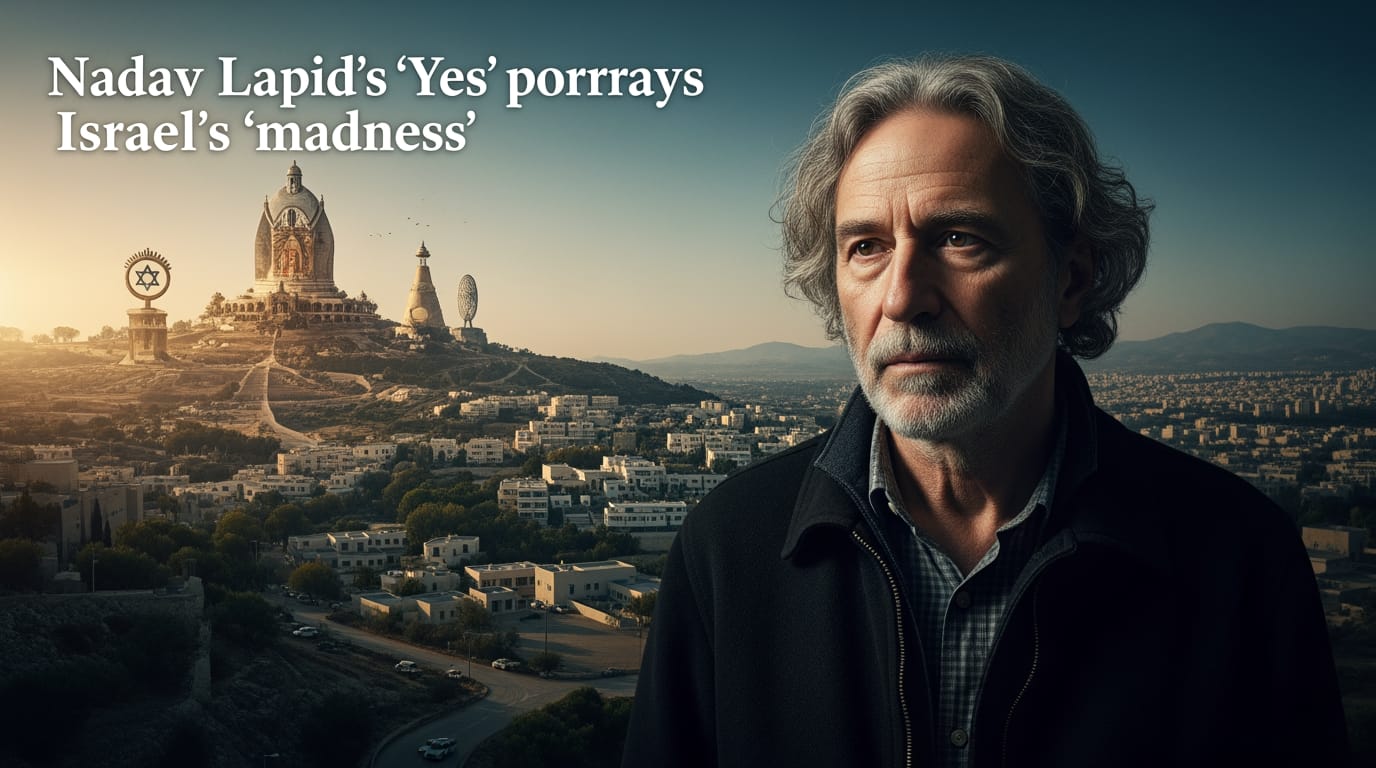
CANNES, France – Renowned Israeli filmmaker Nadav Lapid has once again thrust a searing spotlight onto his homeland with his latest feature, "Yes," a film that has premiered to both intense acclaim and immediate controversy at the Directors' Fortnight section of the 2025 Cannes Film Festival. Described as a fierce, confrontational, and darkly satirical examination of Israeli society in the wake of the October 7 attacks and the ongoing conflict in Gaza, "Yes" is designed not to entertain but to provoke, challenging audiences to confront uncomfortable truths about national identity, morality, and the nature of conflict. Its title itself, interpreted by some as a nod to "capitulation to a dominant order," hints at the profound questions Lapid poses regarding societal compliance and critical dissent.
A Nation in Turmoil, Through a Musician's Eye
"Yes" centers on Y (portrayed by Ariel Bronz), a jazz musician and performer, and his dancer wife Yasmine (Efrat Dor), who navigate a decadent Tel Aviv nightlife, often performing "deranged cabaret routines" for the city's wealthy elite. Their lives take a significant turn when Y is tasked with composing a new national anthem for post-October 7 Israel, intended as an "anthem for a new generation." The proposed lyrics for this anthem are disturbingly "steeped in bloodthirst and vengeance," placing Y in a profound moral quandary between artistic integrity and societal expectation. Lapid masterfully uses Y's internal struggle to symbolize the broader anxieties gripping the nation.
The film, structured in three distinct chapters, employs surreal and often shocking imagery, including scenes where Y is showered by stones or participates in grotesque boot-licking rituals, to underscore a critique of the hedonism and perceived indifference of the elite amidst a backdrop of war. News alerts detailing death tolls in Gaza frequently flash across the screen, punctuated by "agonizing, disembodied screams," starkly juxtaposing the privileged existence of some Israelis with the brutal realities of the conflict. A particularly poignant moment unfolds near the Gaza border, where Y encounters his ex-lover Lea (Naama Preis), who delivers a powerful monologue recounting the horrors of October 7, all while the smoke of Gaza under bombardment looms in the distance. Lapid's signature kinetic camera work, described as veering, swooping, frantic, and aggressive, further amplifies the film's "assault mode" and its palpable sense of "unkempt fury."
Lapid's Uncompromising Artistic Vision
Nadav Lapid has long been recognized as one of Israel's most acclaimed and provocative filmmakers, known for his "thematically and formally challenging work" and his willingness to offer "strong and blatant criticism of Israeli nationalism and identity." His filmography, which includes award-winning titles such as "Policeman" (2011), "The Kindergarten Teacher" (2014), the Golden Bear-winning "Synonyms" (2019), and "Ahed's Knee" (2021), consistently explores themes of national identity, artistic freedom, and the internal conflicts that arise from living in a highly politicized society.
Lapid's stated intention with "Yes" was not to pander but to "confront, to provoke, and to scream a warning," using the cinematic medium as a "cinematic tantrum against the madness that's consumed Israel." He sees his role as an artist as being in "opposition, to upset the power structure of cinema." The film's creation itself was fraught with tension, having been shot in Israel during the ongoing war in Gaza and completed under rocket fire, with some cast and crew reportedly walking off set. Though Lapid resides in Paris, he returned to Tel Aviv following the October 7 events to immerse himself in the prevailing "Zeitgeist," which heavily influenced the film's narrative. His history of challenging established narratives, including his controversial description of "The Kashmir Files" as "vulgar propaganda," underscores his commitment to artistic and political candor.
A Firestorm of Reception and Debate
True to Lapid's provocative style, "Yes" is anticipated to be profoundly divisive, expected to "offend on a wide scale" while simultaneously "exhilarating with its sheer rage and ebullient aggression." Reviewers note that it is "not an easy film to like" and "wasn't made to be liked," but it remains "impossible to ignore." The film is poised to ignite outrage among various groups: supporters of Israel's current military actions, those who believe the gravity of the October 7 events and their aftermath precludes any form of artistic "levity," and individuals who might deem protests against the condition of the Israeli artist as trivial given the broader geopolitical context.
Internationally, particularly among French critics, the film has garnered praise as a "cathartic portrayal of the turmoil and trauma of post-October 7th Israeli society," with some viewing it as a testament to Lapid's courage and political commitment. However, the film's unflinching critique of Israeli society, depicting its ruling classes as "decadent and indifferent" and society itself as "spiraling into nationalism and denial," has also drawn sharp reactions. Controversial elements include a perceived equivalence suggested between Vladimir Putin's Russia and Israel, and a meta-cinematic moment where a character directly accuses the audience of being "anti-Israel." This "aggressively confrontational" approach, as one critic described it, positions the film as "a wail against his audience, his country, and above all, himself."
Broader Implications for Israeli Identity and Artistic Freedom
"Yes" represents Lapid's "most daring" and "most brazen indictment of militarism to date," extending his long-standing artistic inquiry into Israeli identity and the challenges to nationalistic narratives. The film's presence at Cannes, a festival with a historical reputation for rebellion and confronting difficult political realities, underscores its significance in global cinema. Lapid's work consistently explores the dialectical tensions and contradictions within Israeli society, a tradition he continues with "Yes." It serves as a "fierce indictment" of a nation perceived to be "teetering on the edge where moral decay and military aggression go hand in hand." Ultimately, the film emerges as a "scream of anguish from the very soul of Israel," forcing a collective introspection on its current trajectory.
In its raw and unapologetic examination, "Yes" compels viewers to grapple with profound ethical questions, leaving them to ponder whether to "say yes to survive or... walk away" from uncomfortable truths. The film solidifies Nadav Lapid's position as a vital, albeit challenging, voice in world cinema, pushing boundaries and initiating crucial, often painful, dialogues about the complexities of national identity and the human condition amidst ongoing conflict. It is a work intended to be "unforgettable" and a "searing portrait of a society lost in the abyss," prompting reflection long after the credits roll.