NATO Jets Intercept Stray Drone Over Latvia, Highlighting Escalating Baltic Airspace Tensions
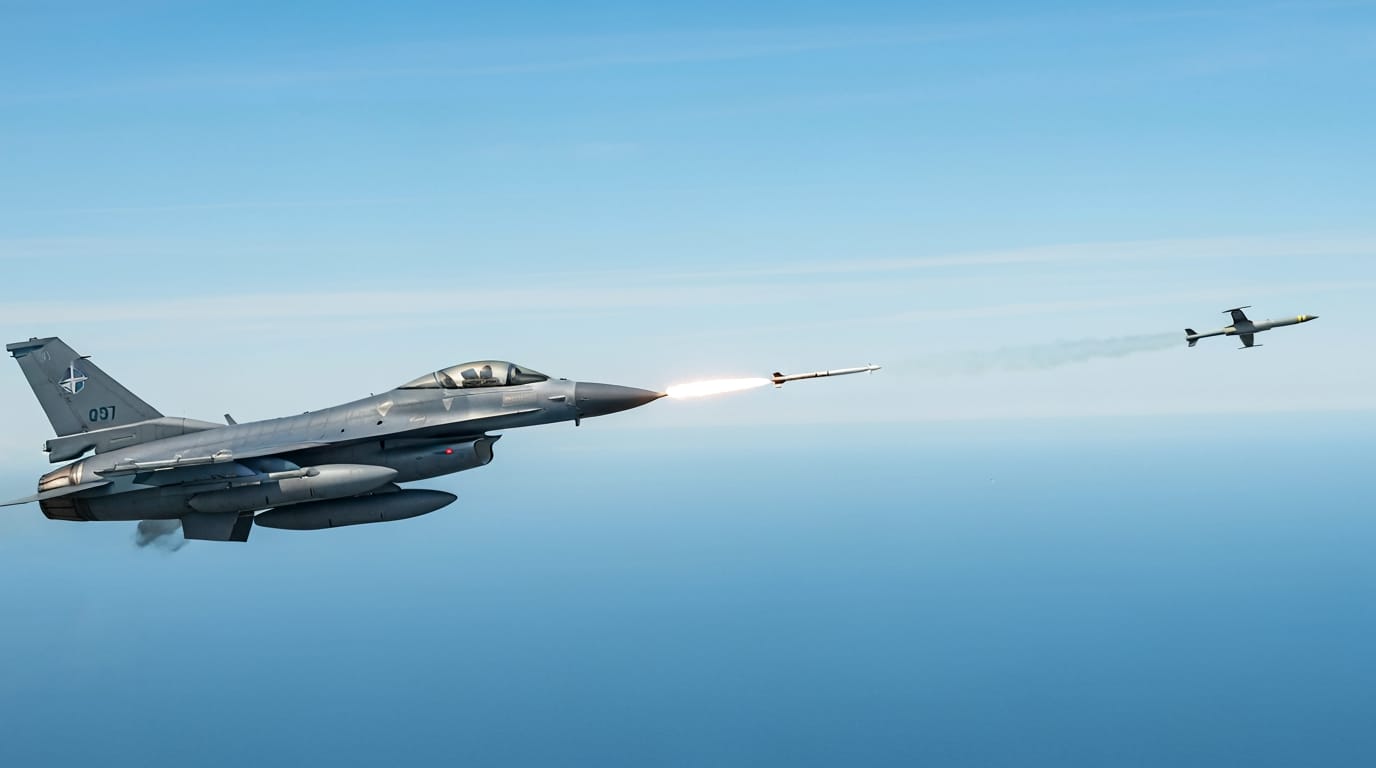
RIGA, LATVIA – French fighter jets operating under NATO's Baltic Air Policing mission successfully shot down a stray drone that entered Latvian airspace on Monday, June 8, 2026, marking the first time such an interception has occurred over Latvian territory. The incident, attributed to Russian electronic warfare diverting the unmanned aerial vehicle, underscores growing security concerns and the volatile nature of airspace in the Baltic region amid the ongoing conflict in Ukraine.
The event unfolded Monday morning in eastern Latvia, near the border with Russia, when a foreign unmanned aerial vehicle was detected. Alerts were issued to residents in several municipalities, including Alūksne, Ludza, Balvi, and Rēzekne, warning of a potential aerial threat. French Rafale fighter jets, stationed at Šiauliai Air Base in Lithuania as part of NATO's air policing efforts, were scrambled to intercept the drone. The Latvian National Armed Forces later confirmed the drone was successfully brought down over Nautrēni parish, situated between Rēzekne and Kārsava, with the airspace threat officially lifted by approximately 10:30 AM local time. Latvian Foreign Minister Baiba Braze publicly thanked French allies for their swift action.
A Troubling Pattern of Incursions
This interception is not an isolated occurrence but rather the latest in a series of drone incursions that have increasingly plagued the Baltic states of Latvia, Lithuania, and Estonia. Authorities in these NATO member countries have reported at least five such incidents in Latvia alone since early May. These drones are largely believed to be Ukrainian in origin, intended for targets within Russia, but have been diverted from their trajectories by sophisticated Russian electronic warfare (EW) systems. Estonian Foreign Minister Margus Tsahkna has even suggested that Moscow may be deliberately steering these drones into NATO airspace to test defenses and erode Western support for Kyiv.
The current incident follows closely on the heels of another significant interception on May 19, when a Romanian F-16 fighter jet, also part of the Baltic Air Policing mission, shot down a suspected Ukrainian drone over Estonia's Lake Võrtsjärv. That event was the first time a NATO jet had fired a missile in defense of the Alliance in the Baltics, setting a precedent for the measures now being taken. Ukrainian officials have consistently apologized for these cross-border deviations, attributing them to Russian jamming efforts.
Political Ramifications and Heightened Readiness
The escalating drone activity has had tangible political and security consequences for Latvia. A particularly impactful incident occurred on May 7, when a Ukrainian drone, diverted by Russian countermeasures, crashed near an oil facility in Rēzekne, damaging four empty oil tanks. This event, and the broader perceived inadequacy of the national response to the persistent drone threat, contributed to a significant political crisis that culminated in the resignation of former Latvian Prime Minister Evika Siliņa on May 14. The controversy fueled a robust national debate over Latvia's air defense readiness and overall border security.
In response to the heightened threat, Baltic states and NATO allies are actively bolstering their defensive capabilities. Latvia has reinforced its air defenses along its eastern border by deploying additional units. Estonia has activated its first border drone-detection sensors, and there is a broader European agreement to develop a "drone wall" along the eastern borders of EU nations. A U.S. anti-drone system has also been deployed to NATO's eastern flank, further strengthening regional defenses. The Latvian National Armed Forces emphasized that they, alongside NATO allies, continuously monitor airspace to ensure an immediate response to potential threats and warned that similar incidents may recur as the war in Ukraine persists.
Conclusion: Vigilance in a Volatile Region
The downing of a stray drone by NATO jets over Latvia serves as a stark reminder of the ongoing and evolving challenges to regional stability presented by the war in Ukraine. The incident, while successfully managed, underscores the constant vigilance required from NATO's Baltic Air Policing mission and the allied forces safeguarding the region's airspace. As Russian electronic warfare continues to disrupt drone trajectories, the Baltic states find themselves on the front lines of an unconventional aerial threat, compelling them to rapidly adapt and enhance their defense strategies. The commitment of NATO allies to respond decisively to such incursions reaffirms the Alliance's resolve to protect its member states and maintain the integrity of its airspace.


