NATO Launches "Arctic Sentry" Amid Heightened Geopolitical Stakes in the High North
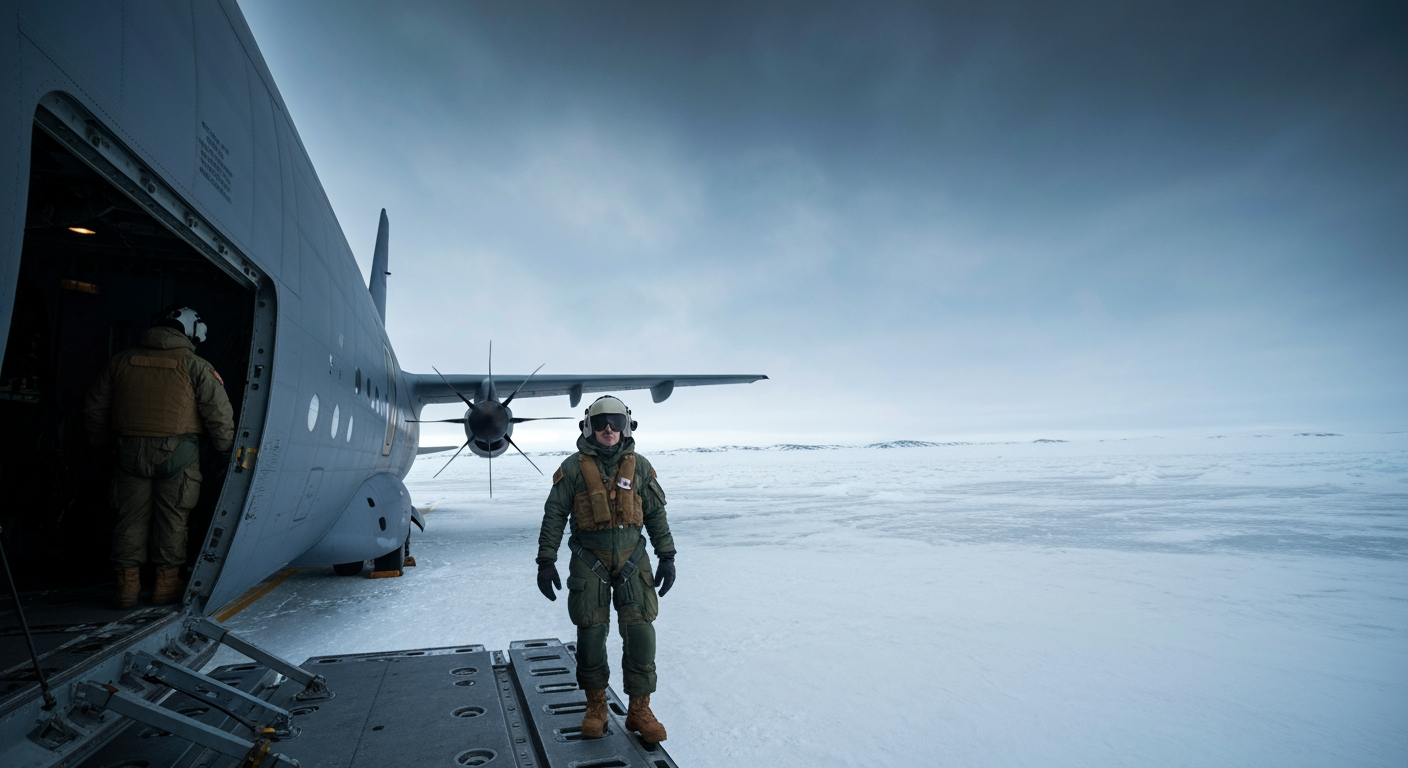
NATO has initiated military planning for a new enhanced vigilance activity named "Arctic Sentry," signaling a significant escalation in the Alliance's focus on the High North. This development underscores a fundamental shift in the Arctic's geopolitical landscape, transitioning from a region of perceived low tension to a critical arena of global power competition. The move comes as Russia continues its military buildup in the region and China expands its strategic interests, forcing the transatlantic alliance to adapt its defensive posture.
The decision to formalize an Arctic mission reflects a growing recognition within NATO that the melting Arctic ice, opening new sea routes and access to resources, combined with aggressive actions from non-NATO powers, demands a robust and coordinated response. This renewed emphasis marks a departure from the post-Cold War era when the Arctic was largely considered a low-priority zone for collective defense. With the recent accessions of Finland and Sweden, six out of the eight Arctic states are now NATO members, dramatically altering the regional security calculus and bolstering the Alliance's capabilities in the circumpolar north.
The Shifting Arctic Landscape and NATO's Renewed Focus
For decades following the Cold War, the Arctic was characterized by a spirit of cooperation, with international bodies like the Arctic Council focusing on environmental protection, research, and indigenous affairs. However, 21st-century geopolitical shifts, accelerating climate change, and increased international activity have reinvigorated strategic interest in the region. The EU foreign policy chief recently declared the Arctic "no longer a quiet corner on the map" but rather "the front line of the global power competition."
A primary driver for NATO's intensified focus is Russia's substantial and sustained military investment in its Arctic territories. Moscow has been actively reopening and modernizing Soviet-era military bases, establishing new deep-water ports and airfields, and testing novel weaponry in the harsh Arctic environment. Russia's Northern Fleet, equipped with nuclear submarines and advanced missile systems, is strategically located in the region, posing a direct challenge to the security interests of NATO members. These actions are viewed by NATO as a clear test of its readiness and capabilities.
Adding to this complex dynamic is China's expanding footprint in the High North, often referred to as its "Polar Silk Road" initiative. While not an Arctic nation, China has demonstrated increasing interest in Arctic shipping routes, energy projects, and scientific stations, raising concerns within NATO about Beijing's long-term strategic ambitions and potential dual-use civilian-military infrastructure.
"Arctic Sentry" and Enhanced Vigilance
The "Arctic Sentry" mission, currently in its planning stages, aims to strengthen NATO's posture in the Arctic and High North through enhanced vigilance activities. Colonel Martin O'Donnell, a spokesman for NATO's Supreme Headquarters Allied Powers Europe (SHAPE), confirmed that military planning for this new mission is underway.
The impetus for this mission was partly catalyzed by past tensions surrounding Greenland, a Danish autonomous territory, and concerns raised by the United States regarding its security. While initial disputes over Greenland's status created strains, a "framework deal" between NATO chief Mark Rutte and former US President Trump reportedly paved the way for greater American influence and collective Alliance efforts in Arctic security. Denmark and Greenland have since engaged in renegotiations with the United States concerning a 1951 treaty governing U.S. troop deployments on the island, indicating a collaborative approach to enhancing regional defense.
Beyond the "Arctic Sentry" initiative, NATO is actively bolstering its permanent infrastructure and capabilities in the region. In October 2025, the Alliance inaugurated a new Combined Air Operations Centre (CAOC) in Bodø, Norway. This strategic facility is designed to coordinate air operations across the vast Nordic region, the Baltic Sea, the North Atlantic, and the Barents Sea, significantly enhancing domain control and responsiveness. Additionally, NATO taskforces comprising warships from various member states, including Dutch, Norwegian, Portuguese, and German vessels, have been deployed to Arctic waters to ensure freedom of navigation and safeguard critical undersea communications cables, a vital component of modern defense and global connectivity.
Forging Readiness: Exercises and Capabilities
To ensure its forces are prepared for the unique and challenging conditions of Arctic warfare, NATO is investing heavily in Arctic-capable forces, improving mobility, and enhancing interoperability in cold environments. This commitment is regularly tested through a series of large-scale military exercises designed to rehearse collective defense scenarios.
Recent exercises highlight this intensified focus:
- Joint Viking 2025: Held in northern Norway, this exercise involved 10,000 troops from nine nations, focusing on rehearsing collective defense in Arctic terrain. However, reports indicated that some U.S. Army units encountered significant difficulties, requiring Finnish reservists to "go easier" on them during the drills, underscoring the specialized training and equipment required for effective Arctic operations.
- Dynamic Front 25: Thousands of NATO troops, including personnel from the United States, Sweden, the United Kingdom, and France, participated in artillery drills in Finland. This exercise, Finland's first large-scale maneuver since joining NATO, took place near the Russian border and was widely interpreted as a clear message of Alliance unity and defensive capability to Moscow.
- Operation Arctic Endurance 2026: A Danish-led military exercise and presence operation in Greenland, involving military personnel from several European NATO states such as France, Germany, and Sweden. This operation is specifically focused on countering potential Russian activity in the strategically vital territory.
These exercises are crucial for developing the specialized skills and robust equipment needed to operate effectively in the Arctic's extreme weather conditions and vast, remote landscapes. They also serve to strengthen the coordination and interoperability among the diverse forces of NATO member states.
Strategic Implications and Future Outlook
NATO's strategic adaptation in the Arctic is a continuous process, influenced by broader geopolitical competition and the escalating effects of climate change. While the Alliance has expanded its presence and engagement, a concrete and collective Arctic strategy is still being developed, with discussions ongoing about how to best integrate security concerns into a comprehensive policy framework.
The Alliance's overarching mission in the High North is to uphold stability, guarantee freedom of navigation, and ensure that the Arctic remains governed by international law rather than by force. This involves a delicate balance of deterrence through demonstrated readiness and unity, while also acknowledging the region's historical role as an area for cooperation on non-military issues like environmental protection and scientific research.
However, the challenges are considerable. Russia's long-standing advantage in Arctic military infrastructure means NATO faces a significant gap in regional capabilities, with some estimates suggesting it could take up to a decade to match Russia's current security infrastructure. Furthermore, the harsh climate, sparse infrastructure, and logistical complexities of the Arctic demand a holistic approach that considers not only military readiness but also civilian-forward governance, environmental impacts, and engagement with indigenous communities.
As NATO moves forward with its "Arctic Sentry" mission and continues to strengthen its northern flank, the region will remain a critical barometer of transatlantic security and a crucial test of the Alliance's adaptability in an increasingly contested global environment. The interplay between military deterrence, diplomatic engagement, and environmental stewardship will define the future of this strategic frontier.
Related Articles


Ratko Mladić, "Butcher of Bosnia" and Convicted War Criminal, Dies at 84
THE HAGUE, Netherlands – Ratko Mladić, the former Bosnian Serb military commander known as the "Butcher of Bosnia" and convicted of genocide, war crimes, and crimes against humanity, has died at the age of 84. Serbian...


Long-Awaited 9/11 Mastermind Trial Set for 2028, Decades After Attacks
GUANTANAMO BAY, Cuba – Nearly a quarter-century after the devastating terror attacks of September 11, 2001, a military judge has finally set a trial date for Khalid Sheikh Mohammed, the alleged mastermind behind the...