White House Ends Longest Government Shutdown as President Trump Signs Funding Bill
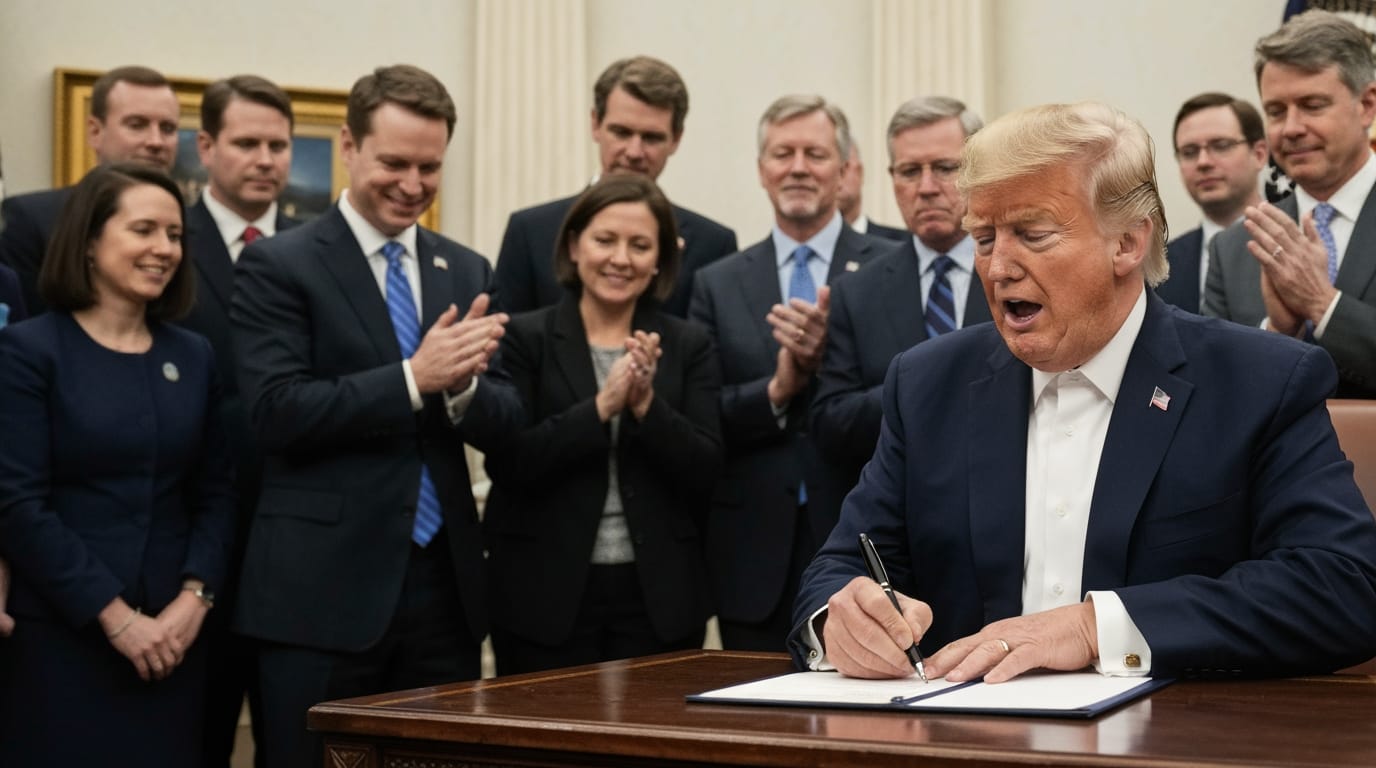
Washington D.C. — The longest government shutdown in U.S. history concluded on January 25, 2019, as President Donald Trump signed a stopgap spending bill, temporarily restoring full federal operations after a 35-day impasse. The resolution, which came without the $5.7 billion in border wall funding the President had vehemently demanded, marked a significant, albeit temporary, retreat from a central campaign promise and ended a period of widespread disruption and economic strain across the nation.
The shutdown, which began on December 22, 2018, stemmed from a bitter dispute between the White House and congressional Democrats over funding for a wall along the U.S.-Mexico border. President Trump had insisted he would not sign any appropriations legislation that did not include the funds, a stance he reiterated even on Christmas Day, declaring the government would not reopen until his demand was met. Democrats, led by Speaker Nancy Pelosi and Senate Minority Leader Chuck Schumer, firmly rejected the demand, proposing instead funding for enhanced border security measures but explicitly opposing a concrete wall. The deadlock paralyzed a significant portion of the federal government, leaving hundreds of thousands of federal employees without paychecks and disrupting numerous public services.
The Cost of the Standoff: Widespread Disruption and Economic Toll
The partial government shutdown severely impacted approximately 800,000 federal employees, with roughly 380,000 workers furloughed and an additional 420,000 deemed essential and required to work without immediate compensation. Many federal workers faced immense financial hardship, delaying mortgage or credit card payments and risking late fees or loan defaults. Government contractors, unlike federal employees, typically do not receive back pay after shutdowns, leaving an estimated 4.1 million contractual workers facing uncertain financial futures.
Beyond individual households, the shutdown exacted a substantial economic toll. The Congressional Budget Office (CBO) estimated the 35-day closure cost the American economy at least $11 billion, including an estimated $3 billion in permanent losses that will never be recovered. This economic damage stemmed from various factors, including lost federal worker productivity, delayed federal spending, and broader impacts on consumer and business confidence. The CBO noted that the shutdown reduced real gross domestic product (GDP) in the fourth quarter of 2018 by $3 billion and projected an $8 billion reduction in the first quarter of 2019.
Public services were significantly hampered, affecting daily life for millions of Americans. Essential services, such as air traffic control and border protection, continued, but staffing shortages and morale issues became evident. For instance, disruptions at major airports, caused by a high incidence of sick leave among unpaid air traffic controllers, were widely seen as a precipitating factor in the shutdown's eventual end. Critical programs like the Supplemental Nutrition Assistance Program (SNAP), which provides food assistance to millions, faced uncertainty and potential disruptions. Head Start programs, offering early childhood education to low-income families, also experienced funding gaps, forcing closures and straining family resources. Regulatory bodies like the Securities and Exchange Commission (SEC), Food and Drug Administration (FDA), and Environmental Protection Agency (EPA) operated with minimal staff, slowing approvals for various critical processes, from drug trials to environmental permits.
A Temporary Reprieve, Not a Resolution
The bill signed by President Trump on January 25, 2019, was a continuing resolution designed to fund the affected government agencies at their previous levels for three weeks, until February 15. This temporary measure allowed for the reopening of the government and ensured that all federal employees would receive their missed paychecks. However, the agreement did not allocate any new funding for the border wall, leaving the core issue unresolved and setting the stage for renewed negotiations.
In a public address from the White House Rose Garden, President Trump confirmed his decision to sign the bill, stating his primary motivation was to ensure federal workers received their pay. He reiterated his belief in the necessity of a border wall and warned that if a "fair deal" on border security was not reached by February 15, the government would either shut down again or he would declare a national emergency to secure the funding.
Political Aftermath and Lingering Divisions
The shutdown represented a significant political battle, with both sides initially holding firm. President Trump faced criticism for his unwavering demand for wall funding, while Democrats were seen as resisting a key presidential promise. Polling data during the shutdown indicated a majority of Americans held President Trump and Republicans responsible for the impasse, and his approval ratings reportedly dropped. Conversely, House Speaker Nancy Pelosi's public support saw an increase following the shutdown's conclusion, with her favorability ratings rising.
The temporary nature of the resolution underscored the deep partisan divisions in Washington. While federal workers and the public breathed a collective sigh of relief, the underlying disagreement over border security and funding remained a significant challenge. The brief truce simply deferred the larger debate, with the threat of another shutdown or an emergency declaration looming just weeks away. The episode highlighted the increasing use of government funding as leverage in political negotiations, raising concerns about the stability and functionality of federal governance.
The 35-day shutdown ultimately served as a costly demonstration of the executive and legislative branches' inability to reach a compromise, leaving a lasting impact on the federal workforce, the economy, and public trust in Washington's ability to govern effectively.