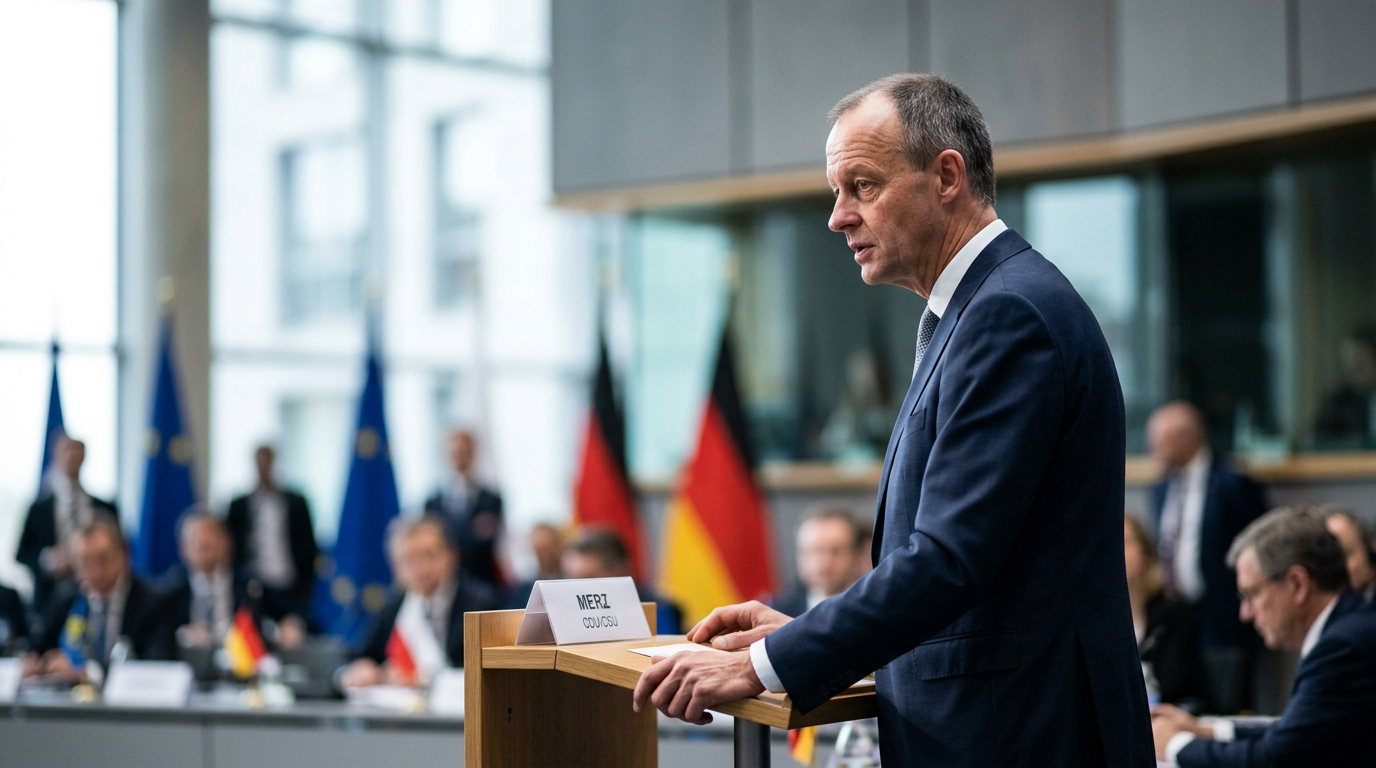
NATO Reinforces Kyiv Support Amidst Shifting Global Dynamics
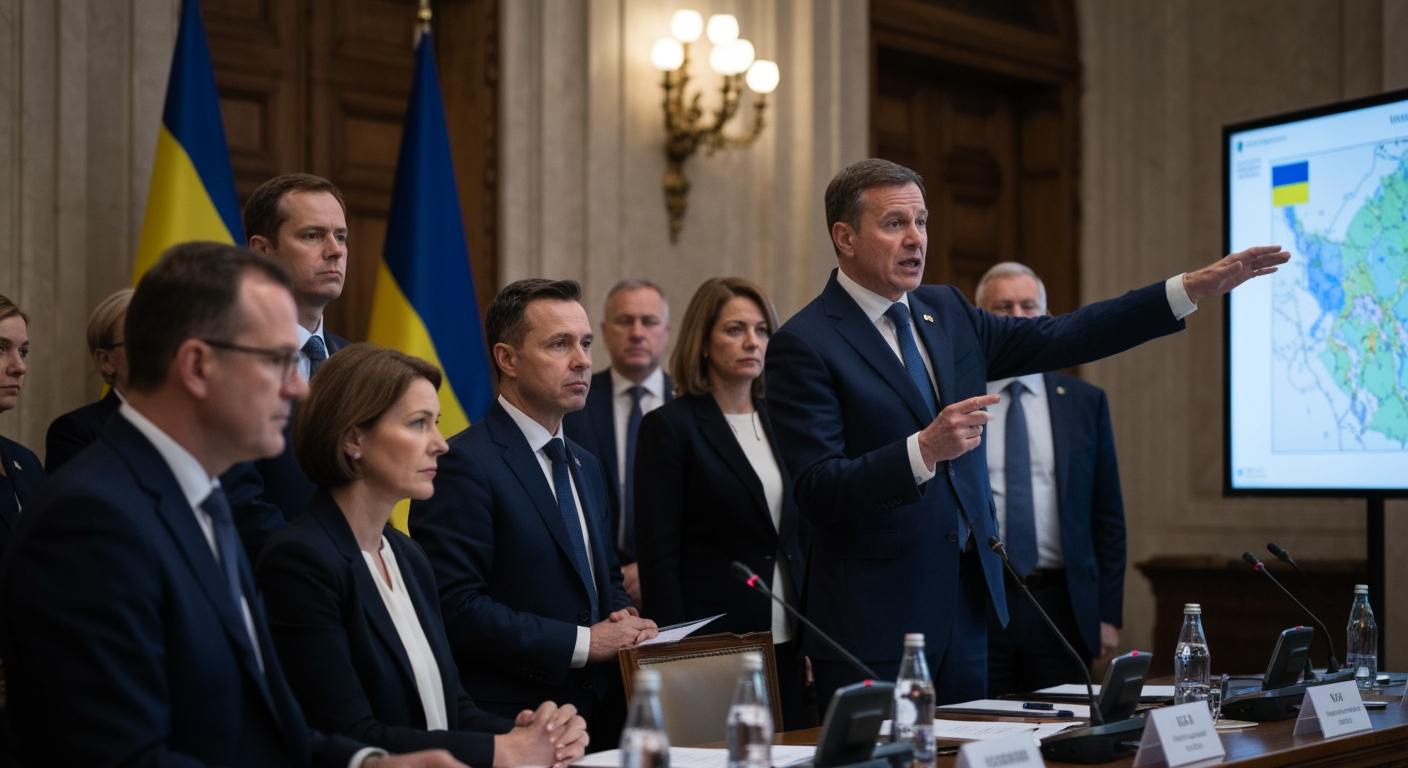
BRUSSELS – NATO defense ministers convened in Brussels on Thursday, February 12, 2026, to reaffirm their unwavering commitment to Ukraine, deliberating on crucial next steps for military and financial aid as the conflict with Russia approaches its fifth year. The high-stakes gathering underscored a pivotal moment for the Alliance, balancing the urgent needs of Kyiv with the broader challenges of European defense, increasing pressure for burden-sharing among allies, and a notable pivot in U.S. strategic priorities.
Unwavering Resolve: Concrete Pledges for Ukraine's Defense
The meeting saw NATO members solidify their resolve to bolster Ukraine's defense capabilities. A central focus was the continued implementation of the Pledge of Long-Term Security Assistance for Ukraine, agreed upon at the 2024 Washington Summit. Under this pledge, Allies committed a minimum baseline funding of EUR 40 billion in 2024, a figure which was ultimately surpassed, reaching over EUR 50 billion. An additional EUR 35 billion has already been committed for 2025, with expectations for sustained support. British Defense Minister John Healey announced a significant new air defense package for Ukraine, including hundreds of millions of dollars in aid. This commitment encompasses $200 million dedicated to a NATO scheme designed to procure American weaponry for Kyiv, alongside the provision of 1,000 British-made lightweight missiles valued at over $500 million. This comes as Ukrainian Defense Minister Mykhailo Fedorov joined the NATO-Ukraine Council meeting for the first time since assuming his role in January, participating directly in discussions aimed at gathering pledges for new military support. NATO Secretary General Mark Rutte underscored the Alliance's critical role, stating that approximately 99% of all military aid provided to Ukraine has originated from NATO countries and their partners.
The Evolving Landscape of Aid: European Allies Step Up
A significant shift in the dynamics of international support for Ukraine emerged in 2025. Reports indicate a dramatic 99% decrease in direct U.S. military aid to Ukraine during that year, primarily due to the Trump administration's preference for selling weapons through NATO partners rather than direct aid packages. This reduction prompted a substantial increase in military aid from European countries, which rose by 67% in 2025, alongside a 59% increase in humanitarian and financial aid. This compensatory surge from European allies allowed the overall support for Ukraine to remain relatively stable despite the U.S. decline, though total military support still saw a 13% drop below the annual average of 2022-2024. A key mechanism facilitating this reorientation of aid is the Prioritized Ukraine Requirements List (PURL), launched in July 2025. PURL enables non-U.S. NATO members to pool funds and purchase critical defense equipment, including High-Mobility Artillery Rocket Systems (HIMARS) and Patriot air defense batteries, directly from U.S. military stockpiles. This initiative has been crucial in supplying essential air defense components, providing around 75% of Patriot missiles and 90% of missiles for other air defense systems since its inception. Furthermore, coordination of essential military equipment supply and training is managed through a NATO command in Wiesbaden, Germany, while non-lethal aid is channeled via NATO's Comprehensive Assistance Package (CAP), which also supports initiatives like military rehabilitation centers.
Burden-Sharing and Strategic Realignment Within the Alliance
The Brussels meeting also highlighted ongoing internal discussions within NATO regarding burden-sharing and a strategic realignment of responsibilities. With the U.S. increasingly focusing its attention on the Indo-Pacific region, European allies are facing heightened pressure to enhance their defense capabilities and assume a greater share of the collective security burden. This sentiment was underscored by the absence of U.S. Defense Secretary Pete Hegseth, who was represented by Under Secretary Elbridge Colby, marking the second instance of a U.S. Cabinet official skipping a high-level NATO meeting recently. Secretary Hegseth had previously vocalized concerns about Europe's defense spending and explicitly ruled out Ukraine's future NATO membership. U.S. President Donald Trump has actively encouraged NATO members to escalate their defense spending targets from 2% to 5% of their GDP by 2035, emphasizing a shift towards a "serious alliance focused on defense and deterrence." Alongside Ukraine, ministers deliberated on strengthening the Alliance's eastern flank and enhancing Arctic security, reflecting growing concerns over Russia's military activities and China's expanding interests in the region.
Beyond Military Aid: Diplomacy and Ukraine's Future
While military support remains paramount, the path to a lasting peace in Ukraine also necessitates diplomatic engagement. NATO Secretary General Mark Rutte, who visited Kyiv on February 3, 2026, met with President Zelenskyy to convey the Alliance's unwavering support and personally witness the impact of relentless Russian attacks on civilian infrastructure. During the Brussels meeting, Rutte reiterated NATO's openness to any initiatives that could expedite the end of the war, including potential diplomatic contacts with Moscow, stressing the importance of coordination and transparency among allies in such endeavors. However, he distanced himself from a proposal by an EU official suggesting a reduction in Russian armed forces as a precondition for settlement, labeling it a "personal opinion." Ukraine's President Zelenskyy has maintained that sufficient public trust in diplomacy will not be possible as long as Russia continues its aggression and destruction. Discussions also touched upon Ukraine's aspiration for NATO membership. While the 2023 Vilnius Summit removed the requirement for Ukraine to pursue a Membership Action Plan (MAP), effectively streamlining its membership path to a one-step process, a concrete timeframe for an invitation remains undefined. The ministers also began preparations for the next NATO Summit, scheduled for July 7-8, 2026, in Ankara.
Conclusion
The latest NATO Defense Ministers' meeting underscores a complex and evolving landscape for European security. The Alliance has reaffirmed its resolute commitment to supporting Ukraine with critical military and financial aid, adjusting to shifts in global priorities and a rebalancing of responsibilities among its members. As European allies increasingly step up to fill aid gaps and boost their own defense capabilities, the long-term vision for Ukraine's security and a stable European order remains a central, albeit challenging, focus of NATO's strategic agenda. The path forward will undoubtedly demand sustained unity, strategic adaptation, and an enduring commitment to both robust defense and the pursuit of a just and lasting peace.
Related Articles

Ratko Mladić, "Butcher of Bosnia" and Convicted War Criminal, Dies at 84
THE HAGUE, Netherlands – Ratko Mladić, the former Bosnian Serb military commander known as the "Butcher of Bosnia" and convicted of genocide, war crimes, and crimes against humanity, has died at the age of 84. Serbian...


Long-Awaited 9/11 Mastermind Trial Set for 2028, Decades After Attacks
GUANTANAMO BAY, Cuba – Nearly a quarter-century after the devastating terror attacks of September 11, 2001, a military judge has finally set a trial date for Khalid Sheikh Mohammed, the alleged mastermind behind the...