Naval Blockade Looms Over Venezuela, Threatening Maduro Regime and Global Oil Stability
A dramatic escalation in international pressure against Venezuela's Nicolas Maduro regime has thrust the country into the specter of a naval blockade, a move with potentially profound implications for Caracas and ripples across the global oil markets. This intensified strategy, characterized by recent tanker seizures and a forceful declaration from the United States, represents a critical juncture in the long-standing geopolitical standoff, promising to tighten the economic noose around a nation already grappling with profound humanitarian and financial crises.
Escalation at Sea: The Blockade's Genesis
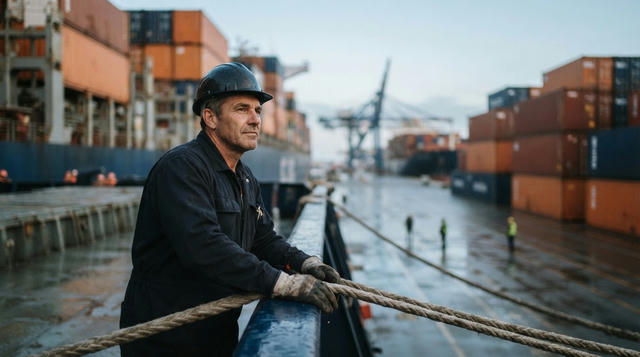
The latest chapter in the campaign against Venezuela unfolded with President Donald Trump's directive for a "total and complete blockade" of all sanctioned oil tankers entering or leaving Venezuelan waters. This declaration follows recent assertive actions, including the U.S. Coast Guard's seizure of a supertanker carrying Venezuelan crude off the Caribbean coast in December 2025, which further intensified Washington's pressure campaign. U.S. officials assert these measures are designed to dismantle "illicit oil shipping networks" that allegedly fund the Maduro government and address "antidemocratic actions" and human rights abuses. Venezuela, home to the world's largest proven oil reserves, has denounced these actions as a violation of international law, an "act of state piracy," and an attempt to seize its natural resources. The Venezuelan Foreign Ministry has already filed a formal complaint with the U.N. Security Council.
Venezuela's Economic Brinkmanship
For Venezuela, a nation where oil constitutes over 90% of its exports and more than half of its fiscal revenue, an effective blockade promises to be economically devastating. The country's economy has been in freefall for years, contracting by 80% between 2014 and 2021, driven by mismanagement, poor infrastructure, and previous U.S. sanctions targeting its state-owned oil company, PDVSA. These prior sanctions, first implemented in 2017, severely restricted Venezuela's access to U.S. and European markets, forcing the Maduro regime to pivot to "shadow fleets" and black-market buyers, primarily in China and India.
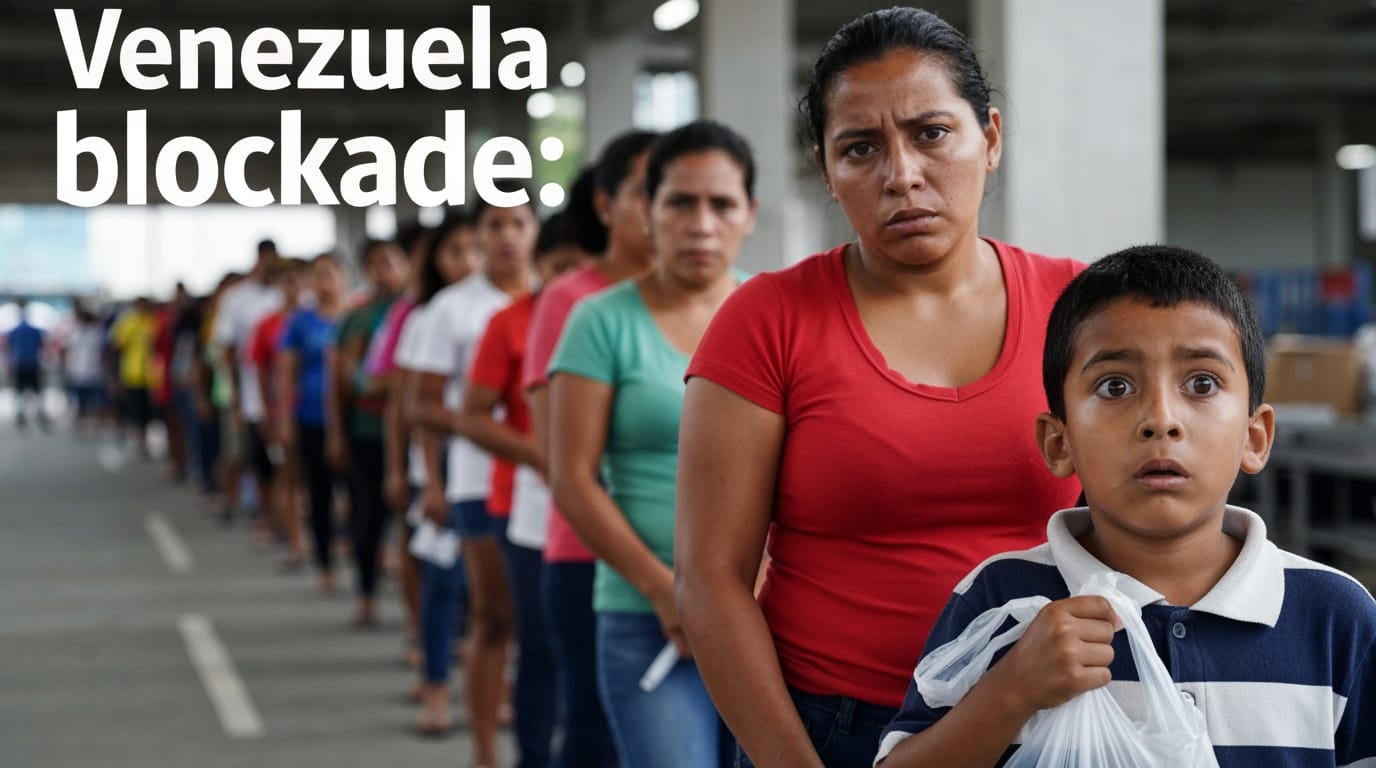
However, even this illicit trade is now under direct threat. If the blockade is fully enforced, it could lead to a "complete collapse in Venezuelan oil exports". Such a scenario would further exacerbate the country's severe humanitarian crisis, marked by hyperinflation, widespread poverty, and critical shortages of food and essential services. Experts warn that cutting off oil revenue could trigger a "massive reduction in food imports" and potentially the "first major famine in the Western Hemisphere in modern history". Venezuelan crude flows have already seen significant reductions; current enforcement operations have cut crude flows to approximately 258,000 barrels per day in December 2025, a 76% reduction compared to the same period in 2024.
Ripple Effect on Global Oil Markets
Despite Venezuela holding immense oil reserves, its current production represents a modest 1% of global supply. Consequently, the immediate impact of a blockade on benchmark global oil prices might be contained, though not negligible. Following the recent blockade announcement, U.S. crude oil futures saw an increase of over 1%. Analysts suggest that a short-term spike in prices is plausible if approximately 30% of Venezuela's oil shipments are indeed at risk.
However, broader market conditions may temper a sustained, dramatic price surge. The global oil market currently exhibits oversupply, coupled with ample strategic petroleum reserves and the capacity for other producers to increase output. Countries like Canada and Iraq, significant producers of heavy crude similar to Venezuela's, could increase their exports to fill any potential void, particularly for specialized U.S. Gulf Coast refineries configured to process such grades. The primary repercussions for global oil markets are therefore likely to be increased price volatility and shifts in regional price differentials, rather than a catastrophic global supply crunch.
Geopolitical Tensions and Legal Precedents
The declaration of a naval blockade raises significant questions under international law. Historically, blockades have been recognized as acts of war, with examples ranging from the Union's blockade of Confederate ports during the American Civil War to the commercial blockades against Germany in the World Wars. Even limited blockades typically require clear enforcement and adhere to international legal frameworks to be recognized by neutral nations. Some U.S. lawmakers, including Representative Joaquin Castro, have echoed these concerns, stating that "a naval blockade is unquestionably an act of war" and expressing doubts about its authorization without congressional approval.
Venezuela's government vows to challenge the legality of the blockade before international bodies, citing potential violations of freedom of navigation and trade. Such legal challenges, reminiscent of cases like Nicaragua v. United States, could create diplomatic pressure and financial liabilities for nations enforcing the blockade. Beyond legalities, the move further strains geopolitical relations, particularly with nations like China and Russia, which maintain economic ties with Venezuela. The risk of regional destabilization and a prolonged standoff remains a serious concern.
A Precarious Future
The imposition of a naval blockade on Venezuela represents a high-stakes maneuver with a deeply uncertain outcome. While proponents aim to hasten the collapse of the Maduro regime by cutting off its primary revenue stream, historical precedents suggest that blockades, while effective in economic warfare, do not always lead to immediate political change and often carry immense humanitarian costs. The Maduro regime has demonstrated resilience in the face of previous severe economic shocks.
The international community watches closely as the humanitarian crisis within Venezuela deepens and the implications for global energy security unfold. The effectiveness of the blockade will hinge on the level of enforcement and the adaptive strategies employed by Venezuela and its allies. The coming months will determine whether this aggressive tactic achieves its stated objectives or primarily exacerbates the suffering of the Venezuelan people while introducing new volatility into an already complex global landscape.