New Era Dawns: Colombia and Venezuela Chart Path Forward in Post-Maduro Landscape
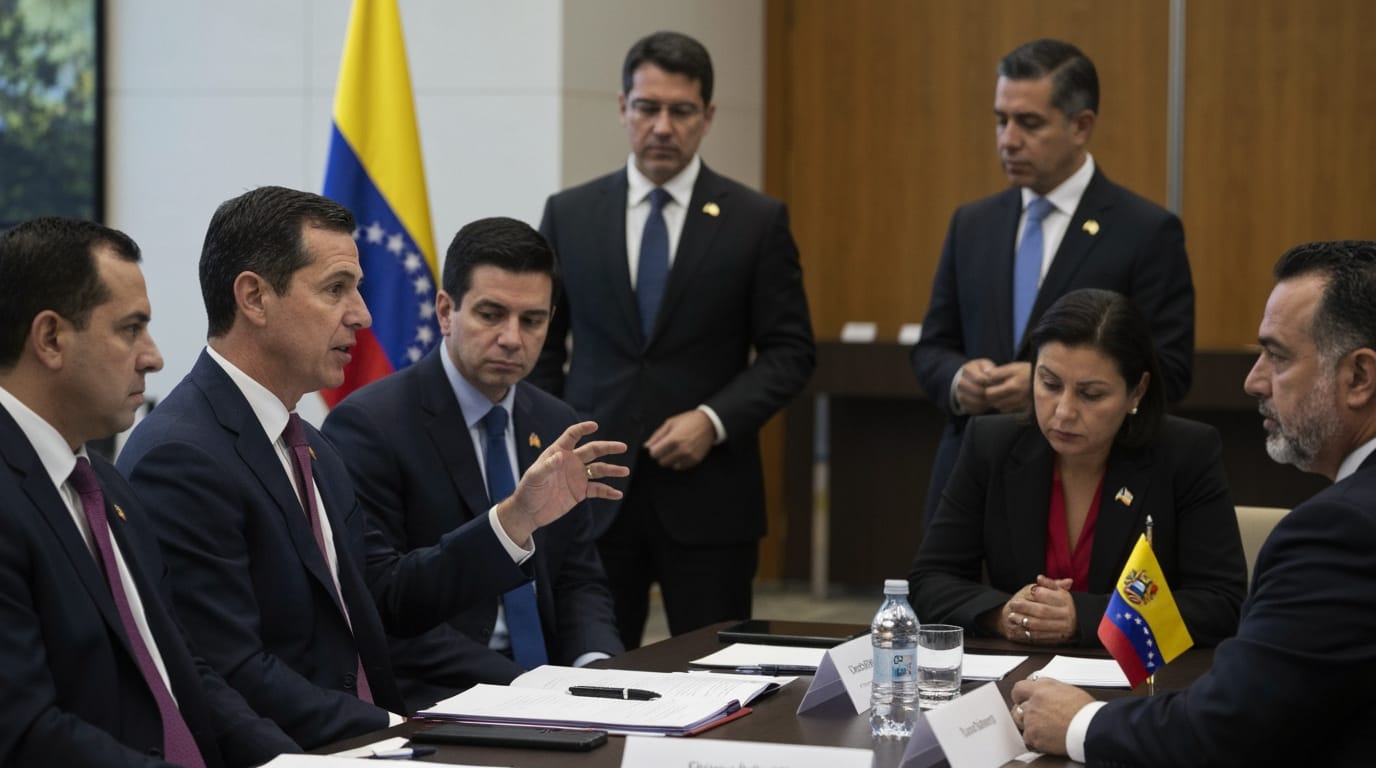
Caracas, Venezuela – In a pivotal diplomatic engagement, Colombian President Gustavo Petro journeyed to Caracas on Friday, April 24, 2026, for key talks with Venezuelan acting President Delcy Rodríguez, marking the first official visit by a head of state to Venezuela since the U.S. military seized former Venezuelan President Nicolás Maduro in January. The high-stakes meeting, held at the Miraflores presidential palace, aimed to recalibrate the historically fraught relationship between the two South American nations, focusing on critical issues of border security, economic cooperation, and migration in a landscape dramatically altered by recent geopolitical shifts.
A Troubled History and a Fresh Start
The relationship between Colombia and Venezuela has long been characterized by a complex interplay of shared heritage and profound political divisions. Both nations trace their origins to the independence movements led by Simón Bolívar, yet their ties have frequently oscillated between periods of cooperation and intense bilateral struggle. Diplomatic relations reached a nadir in 2019, when Venezuela severed ties with Colombia amidst disputes over humanitarian aid and ideological differences. However, the election of Gustavo Petro as Colombia's president in August 2022 ushered in a new era, with his administration prioritizing the restoration of full diplomatic relations, which were formally re-established that same month.
President Petro, despite not having recognized Maduro as Venezuela's legitimate president following the contested July 2024 elections, maintained diplomatic channels with Caracas. The recent and dramatic removal of Nicolás Maduro by U.S. forces in January 2026, leading to his facing drug trafficking charges in New York, has fundamentally reshaped Venezuela's political landscape and opened new avenues for engagement. Delcy Rodríguez, formerly vice president, assumed the acting presidency with the backing of President Donald Trump's administration, which has also signaled a desire to revive Venezuela's economy through foreign investment in its vast natural resources, particularly oil. This evolving context provided the backdrop for President Petro’s historic visit, signaling Colombia's strategic intent to navigate the changing dynamics and foster stability in the region.
Securing the Porous Border: A Shared Imperative
A primary concern for both nations, and a central topic of discussion in Caracas, was the volatile 2,200-kilometer (1,370-mile) shared border, a region notorious for illegal activities and the presence of armed groups. President Petro and acting President Rodríguez publicly committed to enhanced military cooperation to combat various illicit enterprises, including cocaine trafficking, illegal gold mining, human trafficking, and the trade in rare minerals. Petro emphasized the critical need for "close collaboration on intelligence" to prevent unintended civilian casualties in military operations, particularly in the highly contested Catatumbo region.
The Catatumbo region, known for some of Colombia's largest coca crops, remains a hotbed of conflict involving the National Liberation Army (ELN) guerrillas and dissident factions of the now-defunct Revolutionary Armed Forces of Colombia (FARC). Both leaders agreed on developing a joint security plan, which includes improved coordination between their respective armed forces and police, alongside deepened intelligence sharing. This cooperative approach represents a significant departure from past accusations and mistrust, where previous Colombian governments often alleged Venezuelan military complicity with armed groups, an accusation consistently denied by Caracas. The joint efforts underscore a mutual recognition that stability along the border is paramount for the security and development of both nations.
Rekindling Economic Lifelines and Energy Futures
Beyond security, the bilateral agenda encompassed a broad spectrum of economic cooperation, industrial development, and trade. The meeting served as a platform to further capitalize on the significant rebound in bilateral trade, which has seen remarkable growth since diplomatic ties were restored. Official figures indicate trade soared from approximately $200 million three years ago to over $1 billion in 2025, with some reports citing $1.5 billion last year. Colombia alone recorded a $1 billion trade surplus with Venezuela in 2025. Projections suggest that bilateral trade could exceed $2.5 billion by the end of 2026, signaling robust economic incentives for continued collaboration.
A key element of future economic integration involves the energy sector. Colombia has expressed strong interest in becoming a buyer of Venezuelan gas and has actively lobbied for an exemption from U.S. sanctions to enable investment in Venezuelan electricity projects and natural gas ventures. Discussions included the potential reopening of the Antonio Ricaurte binational gas pipeline and agreements with Venezuela's state-owned oil company PDVSA to facilitate pipeline replacement in the Colombian section. Furthermore, both governments are prioritizing an import substitution policy, aiming to boost local production and consumption of goods from both countries, thereby fostering greater economic sovereignty and resilience. These initiatives aim not only to strengthen their respective economies but also to position both nations as crucial players in the regional energy landscape.
Addressing the Venezuelan Crisis and Humanitarian Challenges
The humanitarian aspect of Venezuela's protracted crisis, particularly the large-scale migration into Colombia, was also a significant point of discussion. Millions of Venezuelans have sought refuge in Colombia, straining public services and presenting substantial social and economic challenges for the host country. While the meeting aimed to "contribute to a resolution of Venezuela's political crisis," the path forward remains complex. President Petro had previously advocated for a power-sharing arrangement between Chavismo and the opposition for a transitional period, believing it could pave the way for genuinely free elections.
However, the effectiveness of Colombia’s mediation efforts faces limitations, primarily due to President Petro’s term concluding in August. Researchers note that his leverage as a mediator might be constrained by this timeline, and future ties will likely be influenced by who succeeds him in Colombia. Nonetheless, the willingness of both nations to openly discuss these sensitive issues, including migration and political stability, signals a shared understanding of their intertwined destinies and the need for collaborative solutions to regional challenges.
Looking Ahead: A Cautious Optimism
The talks between President Petro and acting President Rodríguez signify a crucial step in normalizing relations and fostering cooperation between Colombia and Venezuela in the post-Maduro era. While the historical tensions and deep-seated issues along their shared border and within Venezuela itself present formidable challenges, the tangible commitments to military cooperation, economic integration, and dialogue on the Venezuelan political crisis offer a cautious path forward. The success of these initiatives will hinge on sustained political will, effective implementation of agreements, and ongoing regional and international support. As both nations navigate this new chapter, their ability to work together will be a decisive factor in shaping the future stability and prosperity of the Andean region.


