New Film Challenges Canonized Image of Mother Teresa, Portraying Deep Spiritual Turmoil
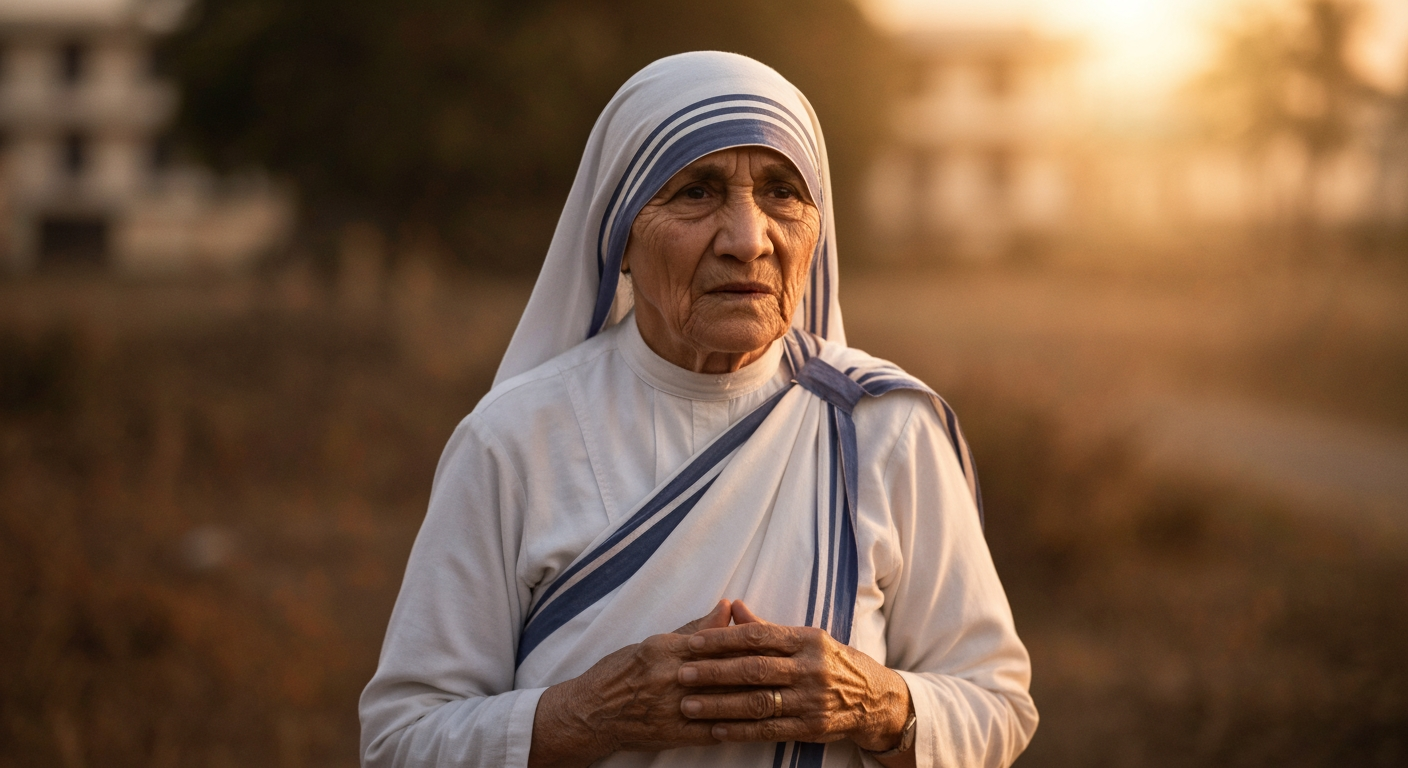
A new narrative film, "Mother Teresa and Me," has ignited considerable discussion by presenting a nuanced and, to some, controversial depiction of the revered Catholic saint, highlighting her profound spiritual struggles and moments of intense doubt. The film challenges the long-held public perception of Mother Teresa as an unwavering icon of faith and charity, instead delving into a more humanized portrayal that acknowledges periods where she reportedly felt a loss of connection with God. This reinterpretation comes at a time when the legacy of Mother Teresa continues to be examined through multiple lenses, both laudatory and critical, decades after her impactful work in Calcutta.
The film, released in late 2023, employs a dual narrative structure, intertwining the story of Mother Teresa with that of a fictional modern-day British-Indian woman confronting personal challenges, including a consideration of abortion. This contemporary framing device aims to draw parallels between the spiritual and existential dilemmas faced across generations. Central to the film's portrayal of Mother Teresa is her "dark night of the soul," a period of pervasive religious doubt that lasted for decades, even as she continued her tireless work among the poorest of the poor. Director Kamal Musale suggested the film's depiction of Teresa having "lost her faith" and "never recovered from it" offers a more "true to life" perspective on the saint's inner life. This interpretation suggests a significant internal transformation from an initial spiritual intensity to disillusionment regarding her connection with the divine.
The filmmakers' approach, however, has drawn criticism from official Catholic circles, notably from Father Brian Kolodiejchuk, the postulator for Mother Teresa's cause for canonization and director of the Mother Teresa Center. Kolodiejchuk asserted that the film contains "several crucial errors," arguing that Mother Teresa's personal writings indicate an "unbroken union [with God]" even amidst her periods of "darkness" and uncertainty. He maintains that her struggles, while profound, never constituted a loss of faith but rather a deeper spiritual experience, a sentiment echoed by other advocates who view her perseverance through doubt as a testament to her sanctity. Despite these objections, "Mother Teresa and Me" has garnered acclaim at various international Catholic film festivals, signaling a divided reception even within religious communities.
Beyond the spiritual doubts highlighted in "Mother Teresa and Me," the broader public discourse surrounding Mother Teresa has often included other, long-standing criticisms that contribute to a more complex understanding of her iconic status. Critics have pointed to issues such as the reportedly inadequate medical care and poor sanitary conditions in some of the Missionaries of Charity's hospices. Accounts from former volunteers and academic studies have raised concerns about the reuse of needles and a lack of modern medical practices, with some comparing the conditions to those of medieval hospitals rather than modern care facilities. This led to allegations that Mother Teresa glorified suffering rather than actively working to alleviate it through readily available pain relief or improved hygiene, a stance attributed by some to her specific Catholic beliefs regarding suffering as a path to the afterlife.
Further areas of contention include the management of the vast sums of money donated to her order. Questions have been raised about financial transparency, with some suggesting a lack of accountability for the substantial funds received. There have also been accusations of accepting donations from questionable sources and of controversial practices such as the baptism of dying non-Catholics without their informed consent. These criticisms often stand in stark contrast to the public image of selfless devotion and impeccable integrity that largely defined her global recognition and eventual canonization by Pope Francis in 2016.
The emergence of films like "Mother Teresa and Me" signals a continuing public and cultural engagement with the lives of prominent religious figures, seeking to explore their full humanity beyond hagiographical narratives. By focusing on Mother Teresa's internal struggles, the film invites viewers to consider the complexities of faith, doubt, and service, challenging simplistic portrayals and fostering a more nuanced appreciation of a woman who, despite her global impact and saintly recognition, navigated profound personal challenges. This ongoing examination ensures that while her legacy as a humanitarian remains undeniable, her story continues to be told and re-evaluated through a spectrum of perspectives, ultimately enriching the understanding of one of the 20th century's most influential figures.
Related Articles


Yayoi Kusama, Visionary Artist Whose Polka Dots and Infinity Rooms Transformed Modern Art, Dies at 97
TOKYO – Yayoi Kusama, the avant-garde Japanese artist whose kaleidoscopic visions of polka dots, immersive "Infinity Mirror Rooms," and profound exploration of mental health captivated global audiences for over six...


Martin Walser: Germany's Acclaimed Author and Enduring Enigma
Martin Walser, a literary titan whose prolific career spanned decades and garnered numerous accolades, carved out a unique and often contentious space within German letters. While celebrated for his keen observations of...