New Fossil Discoveries Reshape Understanding of Dinosaur Evolution
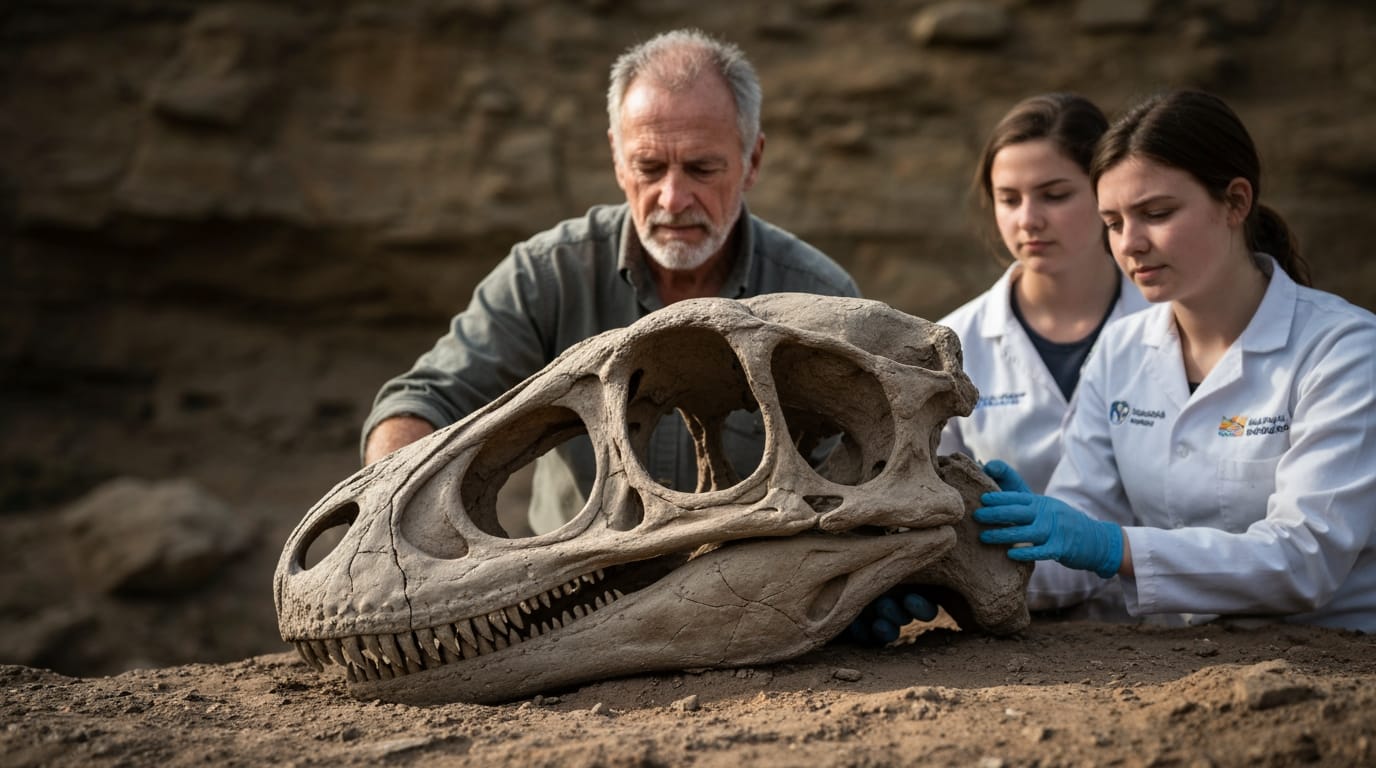
Recent paleontological finds are fundamentally altering long-standing theories on dinosaur evolution, revealing unexpected diversity, filling critical gaps in the fossil record, and shedding new light on the origins of iconic traits. These discoveries, spanning continents and millions of years, challenge conventional narratives and underscore the dynamic, adaptive nature of prehistoric life. From pint-sized herbivores rewriting family trees to early armored behemoths and peculiar clawed creatures, scientists are piecing together a far more intricate picture of the Mesozoic Era.
Miniature Marvels and a Missing Chapter
Among the most impactful recent discoveries is Foskeia pelendonum, a diminutive plant-eating dinosaur unearthed in northern Spain. Representing at least five individuals, these fossils from the Early Cretaceous period, approximately 120 million years ago, depict a bipedal ornithischian roughly the size of a modern chicken. Initially, the small size suggested juvenile specimens, but anatomical studies confirmed them as fully grown adults. This finding alone challenges the common perception that major evolutionary shifts were primarily driven by large, imposing species.
The significance of Foskeia pelendonum extends far beyond its modest stature. Researchers report that this new species fills a substantial 70-million-year void in the ornithopod evolutionary record, offering a crucial "key that unlocks a vast missing chapter." Its "weird and hyper-derived" skull, coupled with specialized dentition and evidence of shifting posture, indicates that miniaturization did not equate to evolutionary simplicity. Bone studies further reveal rapid maturation and a metabolism akin to modern birds or mammals, suggesting an agile existence within dense forests. A new phylogenetic analysis places Foskeia as a close relative to the Australian Muttaburrasaurus, expanding the European Rhabdodontia clade and reviving the long-debated "Phytodinosauria" — the concept that all plant-eating dinosaurs form a natural, distinct group. This tiny dinosaur proves that evolution experimented just as radically at small body sizes as at large ones, prompting paleontologists to pay closer attention to fragmented, smaller fossils.
Redefining Tyrannosaur Lineages and Armored Ancestry
The iconic Tyrannosaurus rex has a newly identified cousin, Tyrannosaurus mcraeensis, discovered through the analysis of partial skull remains in New Mexico. Announced in early 2024, this species lived approximately 71 to 73 million years ago, making it 5 to 7 million years older than its famous relative. Initially misidentified as a T. rex skull, further examination confirmed it as a distinct species, expanding the known diversity of the tyrannosaur family tree. This discovery suggests that the tyrannosaur lineage was more complex than previously understood, with multiple groups of these formidable predators roaming different regions of North America before the emergence of T. rex.
Meanwhile, an unprecedented find in Morocco has provided the first-ever ankylosaur fossil from Africa, named Spicomellus afer. Discovered in the Atlas Mountains, this armored dinosaur is also the oldest ankylosaur found on the continent. Its unique morphology features a spiky collar, meter-long spikes, and a tail weapon, alongside a shield over the hip region that also bore large spikes. This challenges previous assumptions about the evolutionary timeline of complex ankylosaur armor, suggesting that traits like tail weapons and hip shields appeared much earlier and were more broadly distributed across different ankylosaur groups than once thought. The unusual nature of Spicomellus indicates that the evolution of defensive adaptations in armored dinosaurs was diverse and occurred over a longer period.
Claws of Mystery: Reimagining Ancient Behaviors
Another fascinating revelation centers on the alvarezsaurs, a group of enigmatic dinosaurs known for their unusually small, yet powerful forelimbs. The recent description of Manipulonyx, based on a partial skeleton excavated from Mongolia's Gobi Desert in 1979, highlights the bizarre nature of these creatures. Manipulonyx possessed hands unlike any other dinosaur, featuring a large central claw flanked by two tiny fingers and a thumb-like spur. For decades, paleontologists speculated that alvarezsaurs, with their short, robust arms and large claws, were ancient ant-eaters, drawing parallels to modern pangolins and anteaters.
However, the new study on Manipulonyx proposes a different, intriguing hypothesis: that these dinosaurs were "egg thieves." Researchers suggest their specialized arms and claws were perfectly adapted for gripping and carrying stolen eggs close to their bodies as they fled. This reinterpretation offers a significant shift in understanding alvarezsaur behavior and diet. The evolution of alvarezsaurs from carnivorous, raptor-like ancestors to smaller, specialized forms also demonstrates convergent evolution, where similar traits (like powerful chest muscles) developed in both alvarezsaurs (for digging) and early birds (for flight) independently.
Avian Origins and the Ongoing Quest
The journey from terrestrial dinosaurs to flying birds continues to be illuminated by detailed studies of iconic fossils like Archaeopteryx. The careful re-examination of a Field Museum specimen, taking over a year of meticulous preparation, has yielded groundbreaking insights into the earliest known avian animal. Dating back 150 million years, this raven-sized creature reveals "weird little features in the mouth" that are also present in modern birds. These newly analyzed anatomical markers provide clearer criteria for distinguishing between avian dinosaurs and other feathered dinosaurs that were not true birds. The findings trace specific attributes of today's birds directly back to Archaeopteryx, enhancing our comprehension of the evolutionary steps that led to flight.
These recent waves of fossil discoveries, some brought to light by advanced techniques like AI-driven footprint analysis, collectively underscore the vast unknowns that still exist within paleontology. Each new specimen, from the tiny Foskeia to the formidable Tyrannosaurus mcraeensis and the peculiar Manipulonyx, serves as a critical piece in the ongoing puzzle of life's ancient history. They not only expand the dinosaur family tree but also deepen our understanding of their behaviors, ecosystems, and the intricate evolutionary pathways that shaped the planet's past. The continuous unveiling of these prehistoric secrets ensures that the study of dinosaurs remains a vibrant and ever-evolving field, constantly rewriting the story of life on Earth.


