New 'Wuthering Heights' Film Ignites Whitewashing Debate Over Heathcliff Casting
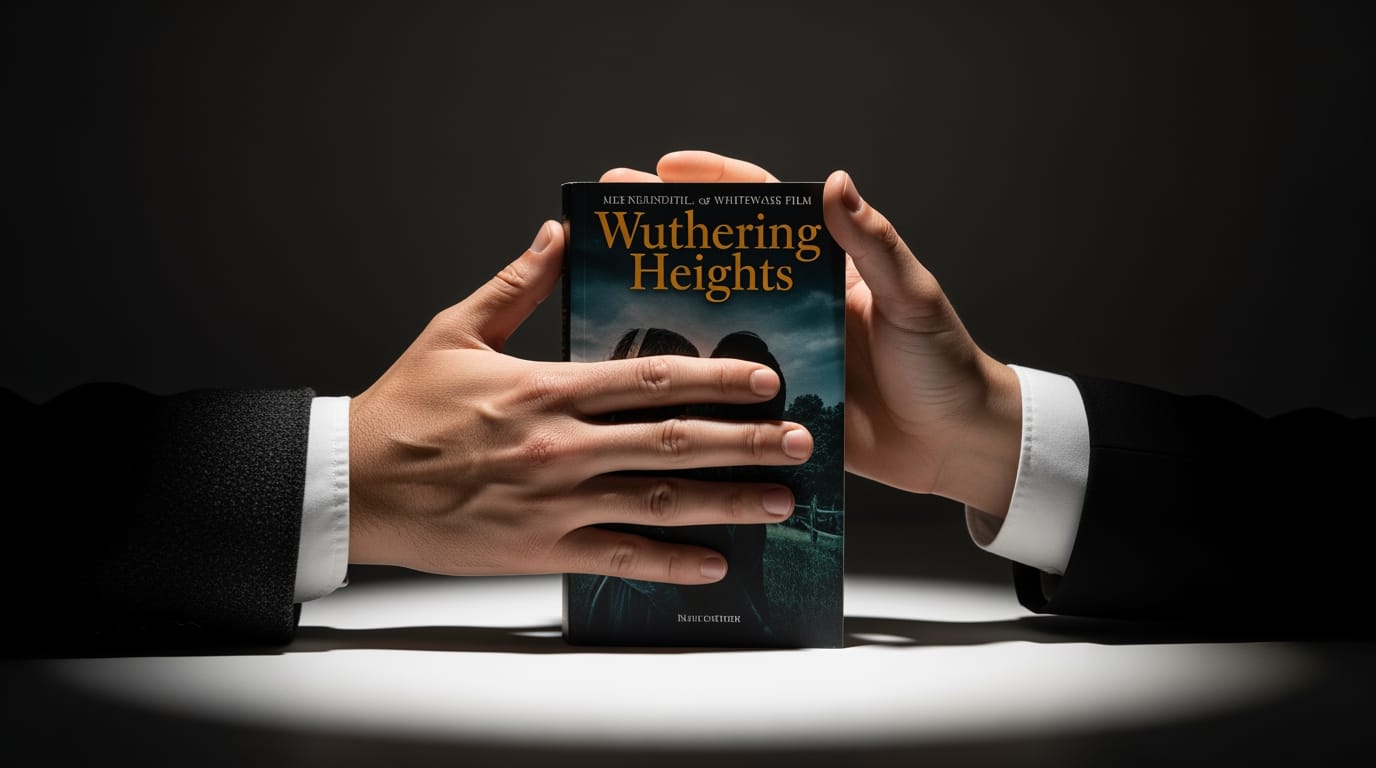
A forthcoming adaptation of Emily Brontë's classic novel, "Wuthering Heights," directed by Emerald Fennell and starring Margot Robbie and Jacob Elordi, has become the subject of intense controversy months ahead of its February 2026 release. Accusations of "whitewashing" have surged, primarily centered on the casting of white Australian actor Jacob Elordi as Heathcliff, a character widely interpreted by scholars and readers as non-white. This casting decision has sparked a fervent debate about fidelity to the source material, the historical context of the novel, and Hollywood's persistent issues with representation.
The Heart of the Controversy: Heathcliff's Ambiguous Origins
Emily Brontë's 1847 novel describes Heathcliff with deliberately ambiguous, yet distinct, racial descriptors, often referring to him as "dark-skinned" and at various points as a "gipsy" or "Lascar." These descriptions, coupled with his mysterious arrival in Liverpool, a major hub for the transatlantic slave trade in the 18th century, have led many to conclude that Heathcliff was not intended to be perceived as white. Scholars and fans alike argue that Heathcliff's racial ambiguity and the resulting social ostracization he faces are fundamental to his character's development and motivations, driving much of the novel's central conflict and its exploration of class and race. Critics contend that casting a white actor undermines these crucial thematic elements, stripping the character of an integral aspect of his identity and the narrative's social commentary.
Filmmakers Defend Casting Choices Amidst Backlash
Director Emerald Fennell, known for "Promising Young Woman" and "Saltburn," has publicly defended her choice of Elordi. She stated that the actor "looked exactly like the illustration of Heathcliff on the first book that I read," implying a visual alignment with her personal interpretation of the character. Margot Robbie, who not only stars as Catherine Earnshaw but also serves as a producer on the film through her LuckyChap Entertainment company, echoed this sentiment. She urged audiences to reserve judgment, affirming that Elordi "is Heathcliff" and promising that viewers "will be happy" with his portrayal. This defense, however, has done little to quell the concerns of those who believe the textual evidence of Heathcliff's non-white identity is undeniable and central to the novel's enduring power.
Historical Interpretations and Literary Significance
The discussion surrounding Heathcliff's ethnicity is not new. For generations, literary analyses have delved into the implications of his dark complexion and unknown parentage. The term "Lascar," used in the novel, historically referred to sailors or laborers from the Indian subcontinent, suggesting a South Asian heritage. Additionally, the derogatory term "gipsy" was commonly used to describe Romani people, whose origins trace back to the Indian subcontinent. The Brontë Parsonage Museum has even explored interpretations linking Heathcliff to Black African heritage, considering Liverpool's role in the slave trade and the possibility of him being a "foundling" brought to England through such routes. These varied interpretations underscore the importance of his racial identity in understanding the novel's critique of societal prejudices in 19th-century England.
A Pattern of Erasure? Previous Adaptations and the Path Forward
The current controversy also draws attention to a historical pattern in "Wuthering Heights" adaptations. Many past film versions, including those starring Laurence Olivier, Richard Burton, and Ralph Fiennes, have cast white actors in the role of Heathcliff, largely overlooking the character's nuanced racial background. An notable exception was Andrea Arnold's 2011 adaptation, which cast Black actor James Howson as Heathcliff, a decision praised for its faithfulness to the novel's implications and for bringing the theme of race to the forefront. This prior example highlights a conscious choice to engage with the text's deeper meanings, offering a contrast to the current film's approach. Beyond the racial debate, some critics have also expressed apprehension about the film's "overly erotic" marketing, fearing that a focus on sensationalism might overshadow the novel's complex themes of violence, cruelty, social class, and the enduring impact of prejudice.
The debate surrounding the new "Wuthering Heights" adaptation serves as a potent reminder of the ongoing tension between creative interpretation and fidelity to source material, particularly when issues of race and representation are at stake. As the release date approaches, the film will undoubtedly face continued scrutiny, with many watching to see how Fennell's vision reconciles with the deeply ingrained expectations and scholarly interpretations of Emily Brontë's enduring masterpiece.