New Zealand and India Forge Landmark Free Trade and Investment Pact
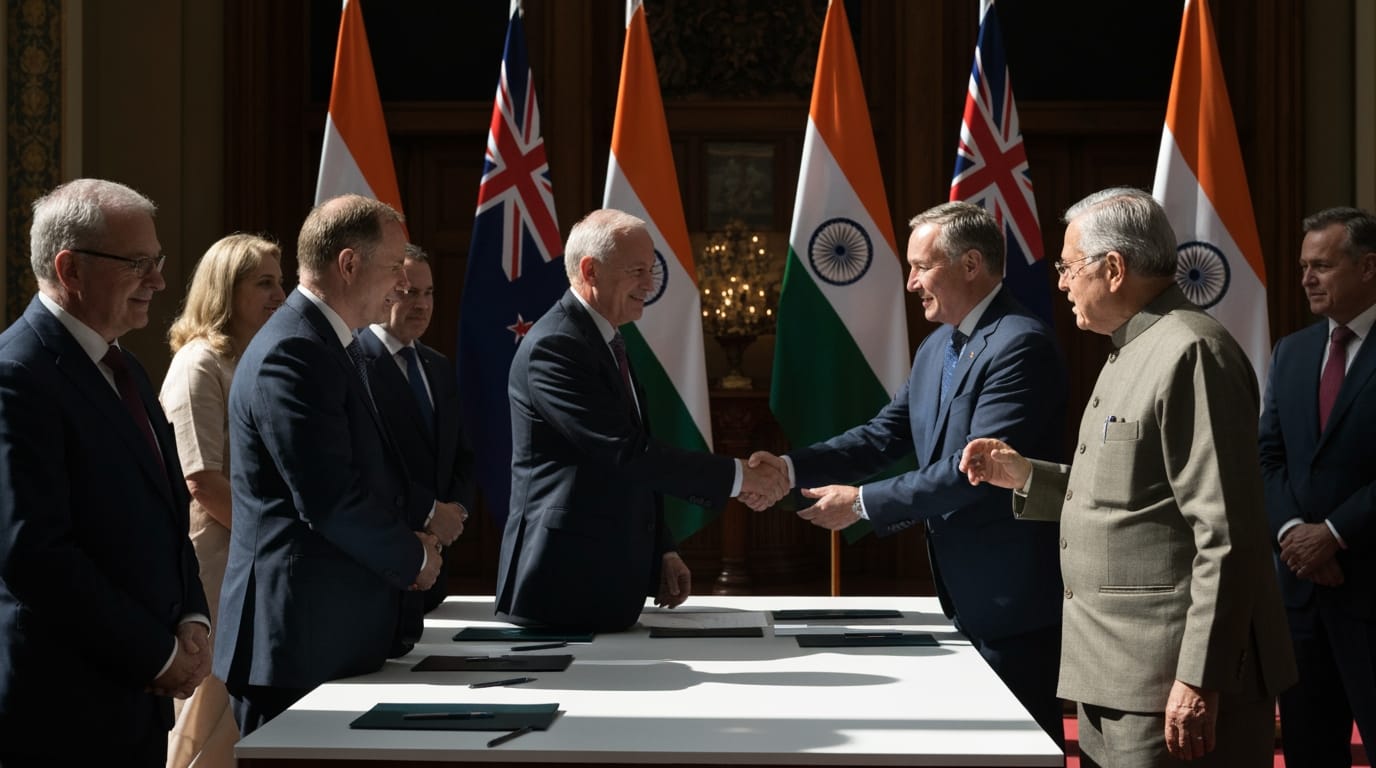
WELLINGTON, NEW DELHI – In a significant move poised to reshape economic landscapes, New Zealand and India have finalized a comprehensive Free Trade Agreement (FTA) and an ambitious investment plan, concluding nine months of intensive negotiations. Announced on Monday, December 22, 2025, this landmark accord aims to dramatically boost bilateral trade, foster substantial investment, and deepen strategic ties between the two nations. The agreement, one of India's fastest concluded FTAs with a developed economy, is slated for formal signing in the first half of 2026, marking a pivotal moment in their long-standing relationship.
The newly minted agreement represents a concerted effort by both countries to unlock new economic opportunities, particularly within India's burgeoning market of 1.4 billion consumers and its rapidly expanding economy, projected to reach NZ$12 trillion by 2030. Leaders from both nations expressed confidence that the FTA will significantly accelerate progress toward New Zealand's goal of doubling export value over the next decade, while simultaneously advancing India's vision for "Viksit Bharat 2047" by spurring innovation, generating employment, and bolstering manufacturing capabilities.
Sweeping Tariff Reductions and Market Access
A cornerstone of the Free Trade Agreement is the substantial reduction and elimination of tariffs across a wide array of goods. For New Zealand, the agreement will see tariffs eliminated or reduced on 95 percent of its exports to India. Notably, almost 57 percent of these exports will enjoy duty-free access from the agreement's inception, a figure set to rise to 82 percent upon full implementation, with the remaining 13 percent benefiting from significant tariff cuts. This positions New Zealand exporters on a more competitive footing within the Indian market.
Key New Zealand sectors poised for immediate gains include agriculture and primary industries. Sheep meat, wool, coal, and over 95 percent of forestry and wood exports will benefit from immediate duty-free access. Additionally, most seafood exports, such as mussels and salmon, will gain duty-free entry over a seven-year period, alongside similar concessions for iron, steel, and scrap aluminum products within a decade. The deal also secures preferential market access for specific horticultural products, including a large kiwifruit quota and, for the first time in an FTA with India, preferential access for apples and Mānuka honey, albeit with quotas and minimum import prices for these sensitive items.
Conversely, India will secure zero-duty export access for all its goods entering New Zealand. New Zealand has committed to tariff liberalization on 70 percent of tariff lines, encompassing 95 percent of bilateral trade with India. This comprehensive access is expected to significantly enhance the competitiveness of India's labor-intensive sectors, including textiles, apparel, leather, footwear, marine products, gems and jewelry, handicrafts, engineering goods, and automobiles. The agreement also ensures duty-free access for crucial industrial inputs like wooden logs, coking coal, and metal waste, which will help lower manufacturing costs in India.
However, certain sectors in India remain protected due to domestic sensitivities. Dairy imports, including milk, cream, whey, yogurt, and cheese, along with animal and vegetable products such as goat meat, onions, and almonds, have been excluded from the agreement.
Significant Investment and Services Opportunities
Beyond tariff reductions, the FTA is underpinned by a substantial investment commitment. New Zealand has pledged to facilitate US$20 billion (approximately NZ$34.6 billion) in investments into India over the next 15 years. These investments are strategically directed towards bolstering India's manufacturing capabilities, developing industrial infrastructure, fostering innovation in services, and generating employment opportunities in alignment with the "Make in India" initiative.
The services sector is another key area of enhanced cooperation. New Zealand has offered its most ambitious services market access in any FTA to date, covering 118 service sectors. These include critical areas such as information technology, professional services, financial services, e-payments, FinTech, tourism, construction, and telecommunications. India, in turn, has secured Most Favoured Nation (MFN) treatment in approximately 139 service sub-sectors, which aims to provide a robust and future-proof framework for services trade.
Enhanced Mobility and People-to-People Connections
A significant human interest element of the agreement involves enhanced labor mobility and student pathways. New Zealand will annually offer 1,667 three-year skilled work visas for Indian professionals, targeting sectors facing skill shortages, such as healthcare, education, and engineering. Furthermore, a Temporary Employment Entry Visa pathway will be established, offering a quota of 5,000 visas for professionals across various occupations including IT specialists, engineers, healthcare workers, yoga instructors, chefs, and music teachers.
For students, the agreement provides more attractive post-study work visa options, allowing graduates to gain global experience. STEM Bachelor's and Master's graduates will be eligible for up to three years of post-study work rights, while doctoral scholars can secure up to four years. Additionally, 1,000 Work and Holiday Visas will be made available, fostering greater cultural exchange and strengthening bilateral ties. This focus on professional and student mobility underscores a strategic commitment to cultivating stronger people-to-people links and shared expertise.
Historical Context and Future Trajectory
The journey towards this FTA has spanned over a decade, with preliminary discussions and studies on a free trade agreement between India and New Zealand dating back to 2007. Formal negotiations commenced in 2010 but had previously stalled, largely due to disagreements over agricultural subsidies and market access for sensitive products. The relationship, historically described as "warm, but not deep," has gained significant momentum in recent years, driven by New Zealand's recognition of India's growing economic and geopolitical influence.
The successful conclusion of negotiations in just nine months, initiated during New Zealand Prime Minister Christopher Luxon's visit to India in March 2025, reflects renewed political will and a shared strategic vision. Both Prime Minister Luxon and Indian Prime Minister Narendra Modi hailed the agreement as comprehensive, balanced, and forward-looking, signaling a new era of economic partnership.
While the agreement has garnered widespread support from business communities in both countries, it has also encountered some domestic dissent. New Zealand First leader Winston Peters publicly opposed the deal, labeling it "neither free nor fair" and a "bad deal" for New Zealand, citing concerns over immigration concessions and insufficient gains for the dairy sector. Despite this internal political disagreement, the New Zealand government confirmed its commitment to the agreement, with the Trade Minister emphasizing its importance for jobs and exports.
Conclusion
The Free Trade Agreement and investment plan between New Zealand and India marks a significant milestone, promising to inject substantial dynamism into their bilateral relationship. By dismantling trade barriers, facilitating billions in investment, and opening pathways for skilled professionals and students, the accord is poised to foster unprecedented economic growth and deepen strategic alignment. While challenges remain, particularly in navigating specific sectoral sensitivities, the agreement sets a clear trajectory for increased collaboration, mutual prosperity, and a more robust partnership in the Indo-Pacific region. The coming years will reveal the full extent of this transformative agreement's impact on trade, innovation, and the shared future of both nations.


