Nigeria Forges Deeper Security Alliances Amid Resurgent Insurgency Threats
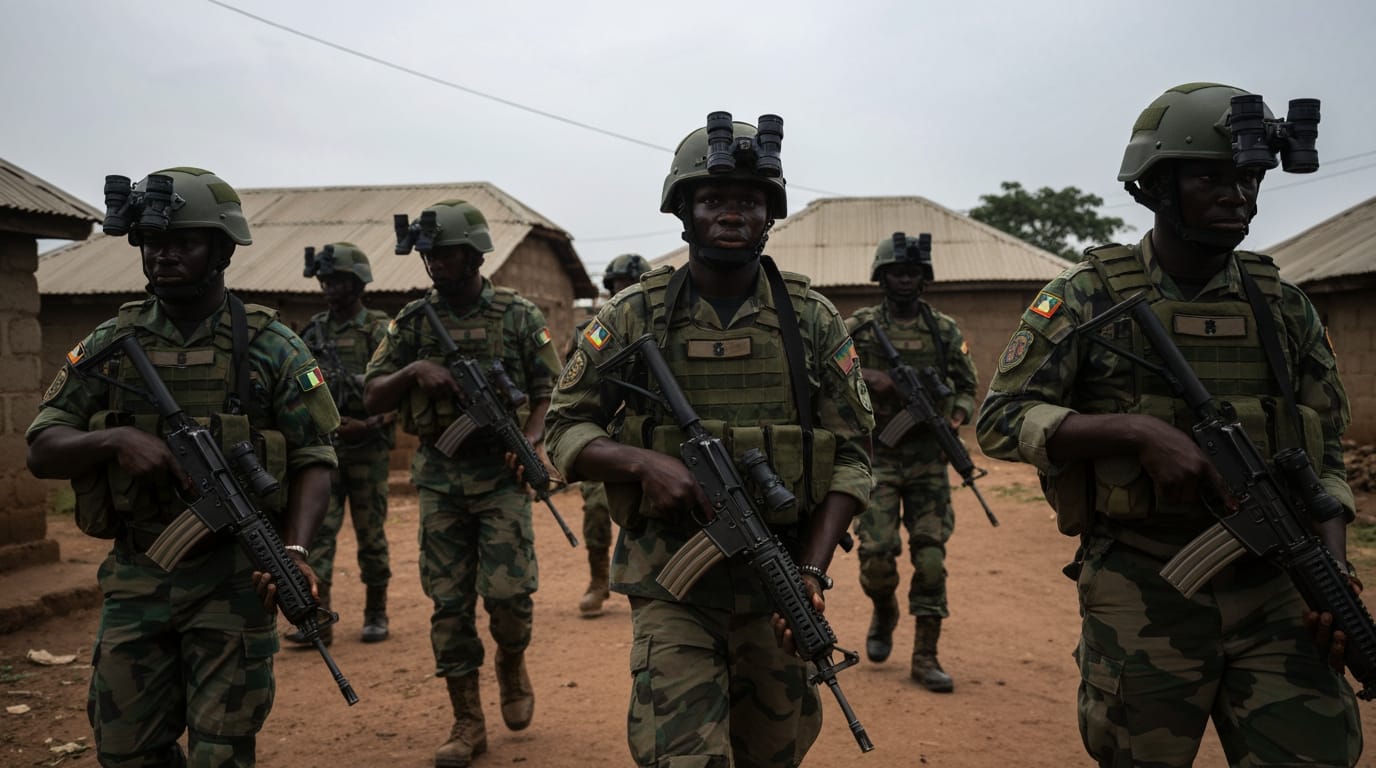
Abuja, Nigeria – Facing a persistent and evolving landscape of insurgency, banditry, and violent extremism, Nigeria is actively expanding its security alliances with both international and regional partners. This intensified diplomatic and military engagement aims to bolster the nation's capacity to counter groups such as Boko Haram and the Islamic State West Africa Province (ISWAP), whose activities continue to pose significant threats to national stability and regional peace. The strategic pivot underscores a recognition that multifaceted security challenges demand collaborative, cross-border solutions, integrating intelligence sharing, coordinated operations, and capacity building.
The Unrelenting Tide of Insecurity
Nigeria continues to grapple with a complex web of security threats that have destabilized various parts of the country for over a decade. The North-East remains a stronghold for Boko Haram and ISWAP, which have been battling Nigerian security forces for more than 15 years, with attacks that include suicide bombings, mass abductions, and village raids. ISWAP, in particular, has claimed responsibility for deadly strikes against civilians, and both groups have reportedly mobilized fighters and high-caliber weapons for offensive operations. Beyond these established extremist groups, a surge in banditry and kidnapping has plagued the North-West, North-Central, and even extended to the Federal Capital Territory (FCT) and Lagos. These various forms of insecurity collectively threaten the cohesion, stability, and integrity of the Nigerian state.
Security experts note a recent resurgence of violence, signaling a dangerous new phase in the insurgency. This involves the exploitation of security vacuums in ungoverned spaces and the adaptation of tactics, including the potential use of armed drones and roadside improvised explosive devices. The inconsistent presence of security forces in previously liberated areas has allowed terrorist groups to regroup, recruit, and launch increasingly bold attacks on both civilians and military targets. Moreover, weak border controls facilitate the flow of fighters and weapons from the wider Sahel region, exacerbating the problem.
Strengthening International Partnerships
In response to these escalating threats, Nigeria has affirmed its commitment to structured security cooperation with international partners. The United States and the United Kingdom have emerged as key allies in these efforts. Nigeria's Ministry of Foreign Affairs confirmed ongoing collaboration with the U.S. to combat terrorism and violent extremism. This cooperation includes intelligence sharing and strategic coordination that has led to precision airstrikes on terrorist targets in Nigeria's North-West region. All counter-terrorism operations are conducted in line with international law, prioritizing the protection of civilian lives, preserving national unity, and upholding the rights and dignity of all citizens. The U.S. has also provided substantial support, including over $8 million worth of training, equipment, and advisory support for counterterrorism efforts between fiscal years 2019 and 2023. Significant sales include 12 A-29 Super Tucano aircraft and 12 AH-1Z Attack Helicopters, with efforts focused on increasing cooperation on maritime and border security, military professionalization, and strengthening governance of the security sector.
Similarly, Nigeria and the United Kingdom are finalizing a comprehensive security alliance to strengthen defense ties and enhance counter-terrorism operations. This proposed agreement is expected to deepen intelligence sharing, expand joint military training, and improve coordination in tackling transnational threats, particularly terrorism, organized crime, and maritime insecurity in the Gulf of Guinea. The UK is also set to provide technical support, capacity building, and advanced training for Nigerian security forces. This partnership builds on existing frameworks, introducing more robust mechanisms for real-time intelligence exchange and rapid response coordination to address both immediate threats and long-term regional stability. The two nations have also focused on disrupting terrorism financing, with the UK assisting Nigeria in updating its national counterterrorism strategy and transforming its National Counterterrorism Center into a regional center of excellence.
Bolstering Regional Fronts
Beyond international collaborations, Nigeria actively pursues regional partnerships as a critical component of its security strategy. The nation works closely with the Economic Community of West African States (ECOWAS) to address insecurity across the West African region. President Muhammadu Buhari previously emphasized that challenges like kidnapping, banditry, and terrorism transcend the capabilities of any single country, necessitating bilateral and multilateral cooperation.
A key regional platform for cooperation is the Lake Chad Basin Commission (LCBC), which includes Cameroon, Chad, Niger, Nigeria, and the Central African Republic. Nigeria has reaffirmed its commitment to regional coexistence and cooperation through the LCBC to tackle environmental and security challenges. The LCBC plays a pivotal role in fostering peace and stability through coordinated regional action, providing civilian leadership to the Multinational Joint Task Force (MNJTF), an African Union-sanctioned cross-border military operation. The MNJTF, comprising forces from Nigeria, Niger, Cameroon, Chad, and Benin, was established to address the Boko Haram insurgency that had spread across the Lake Chad Basin.
Furthermore, despite recent geopolitical shifts where Mali, Burkina Faso, and the Niger Republic withdrew from ECOWAS, Nigeria has maintained its alignment with these "breakaway Sahel states" to confront shared security threats. Nigeria's Chief of Defence Staff, General Christopher Musa, highlighted the urgency of cross-border cooperation due to increasingly fragile state security and porous borders. This pragmatic approach prioritizes security collaboration over political estrangement, with Nigeria aiming to sustain operational links to combat jihadist insurgencies, arms trafficking, and humanitarian crises spilling across borders.
The Broader Implications and Way Forward
The pervasive insecurity in Nigeria has profound implications for national development. It disrupts economic activities, deters foreign investment, and diverts critical resources from developmental programs to security operations. Insecurity undermines investor confidence, damages infrastructure, and increases economic uncertainty, ultimately hindering economic growth. Studies indicate a strong negative correlation between insecurity and economic growth, with the issue leading to reduced government revenue, increased unemployment, and business relocations.
While military responses are crucial, there is a growing consensus that tackling insecurity requires addressing its root causes, such as poverty, unemployment, corruption, and weak governance. Experts suggest a shift from purely militarized responses to strategies rooted in dialogue, justice, and inclusive governance, strengthening institutions, enforcing the rule of law, and creating economic opportunities for youth. Efforts must also target the financial networks sustaining insurgency and banditry, as focusing solely on military operations without addressing funding sources yields limited results.
Nigeria's pursuit of broader security alliances reflects a strategic imperative to combine robust domestic strategies with effective international collaboration. This multifaceted approach, encompassing intelligence sharing, joint operations, capacity building, and addressing socio-economic drivers of conflict, is deemed essential for restoring peace and fostering sustainable development in a region fraught with evolving security challenges.
Conclusion
Nigeria's intensified efforts to broaden security alliances represent a critical and ongoing commitment to confronting deep-seated insurgency threats. Through enhanced cooperation with international partners like the United States and the United Kingdom, and reinforced engagement with regional bodies such as ECOWAS and the Lake Chad Basin Commission, Nigeria seeks to fortify its defenses and operational capabilities. These alliances, coupled with a concerted focus on intelligence sharing, strategic coordination, and addressing the underlying socio-economic factors driving insecurity, are vital for stabilizing the nation and the wider West African region. The path ahead remains complex, but the strategic emphasis on collaborative solutions signifies Nigeria's resolve to overcome its security challenges and pave the way for a more secure and prosperous future.


