Nigeria's Sachet Alcohol Ban Ignites Nationwide Debate, Sparks Economic Fears
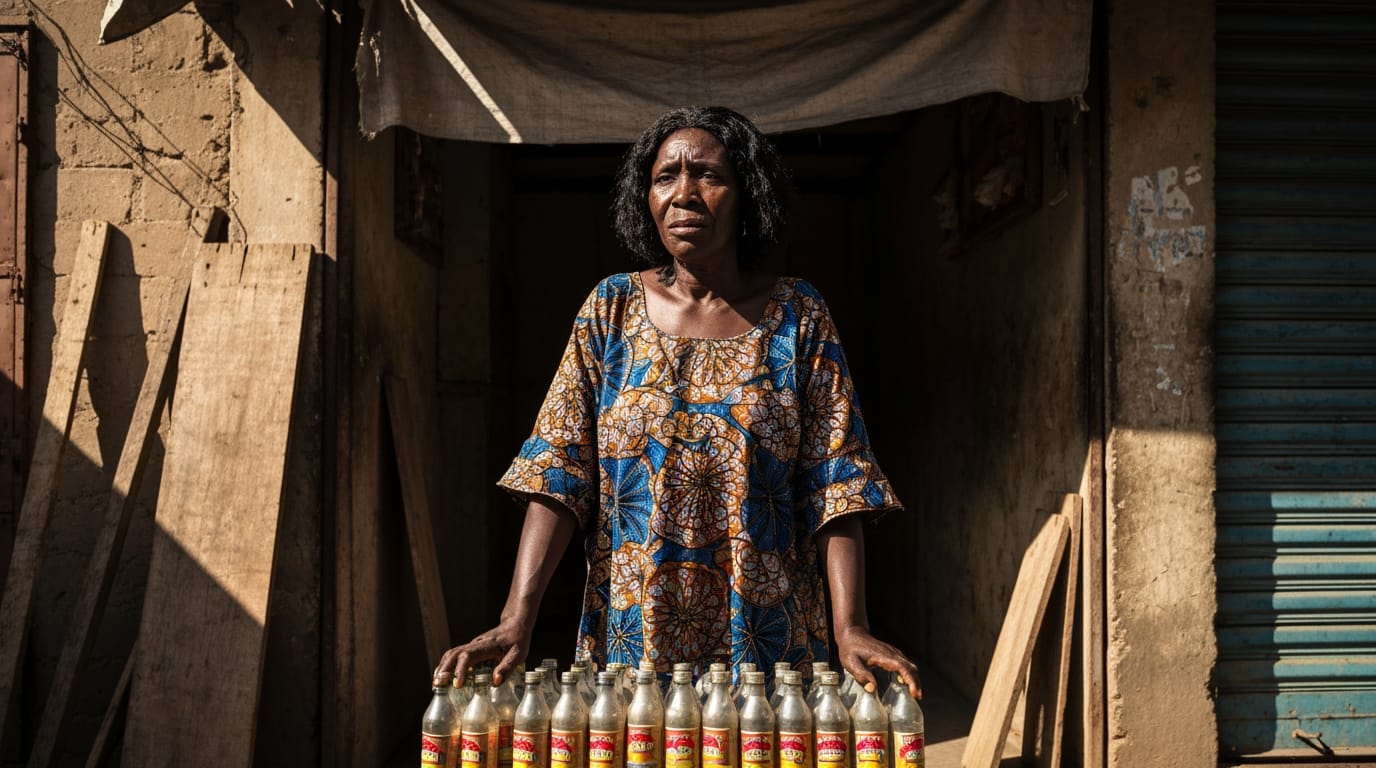
Abuja, Nigeria – A contentious ban on alcoholic beverages sold in small sachets and PET bottles under 200ml, enforced by Nigeria's National Agency for Food and Drug Administration and Control (NAFDAC), has plunged the nation into a heated debate, pitting public health concerns against significant economic fallout. The directive, which saw active enforcement commence around January 21, 2026, has ignited widespread uncertainty on the streets, triggering protests from workers, industry stakeholders, and civil society organizations who warn of devastating consequences for millions of livelihoods.
NAFDAC's Stance: Public Health Imperative
NAFDAC initiated the ban, citing grave public health concerns as its primary motivation. The agency’s Director-General, Mojisola Adeyeye, has repeatedly emphasized that the prohibition aims to curb the unchecked circulation and accessibility of alcohol, particularly among young Nigerians. Supporters of the ban, including some concerned groups who have staged counter-protests, argue that these small, affordable alcoholic beverages contribute significantly to alcohol abuse, particularly affecting teenagers and youth, with visible impacts on public health. They advocate for NAFDAC to maintain its stance, asserting that national interest and the future of Nigeria depend on curbing such accessibility. Adeyeye has maintained that the enforcement will continue, stressing that only government legislation could halt the action.
Economic Shockwaves and Industry Backlash
The implementation of the ban has sent economic shockwaves across Nigeria, drawing fierce opposition from various sectors. Employees of companies manufacturing sachet alcohol, operating under unions like the Food, Beverages, and Tobacco Senior Staff Association and the National Union of Food, Beverages, and Tobacco Employees, have warned that the ban could indirectly or directly impact no fewer than five million Nigerians. These unions have engaged in protests at NAFDAC's offices in Lagos and Abuja, expressing grievances over disruptions to company operations and potential job losses across manufacturing, distribution, transportation, retail, and agriculture sectors.
Industry representatives, including the Association of Food, Beverage & Tobacco Employers (AFBTE), argue that the products currently in the market were duly tested, registered, and approved by NAFDAC itself. They contend that licensed distilleries operate within internationally accepted alcohol limits and that claims of excessively high alcohol content (e.g., 50-90 percent) are untrue. Protesters have questioned NAFDAC's regulatory competence and integrity, asking why products previously approved are now deemed dangerous. The ban is perceived by some as a direct assault on over 25 beverage companies and myriad small businesses. Small-scale vendors, whose livelihoods are intrinsically tied to the sale of these affordable drinks, report that the ban will drastically affect their income.
Livelihoods Versus Regulation: A Divisive Issue
The core of the dispute lies in the tension between public health regulation and economic realities. While NAFDAC champions the public health benefits of reducing alcohol-related harm, particularly among vulnerable populations, opponents highlight the severe economic repercussions for low-income earners and those dependent on the distillery value chain.
A coalition of unemployed people in Nigeria has framed the issue not as a moral or health crusade, but as an economic emergency. They argue that banning sachets based on affordability is inconsistent, suggesting that by similar logic, single-stick cigarettes, single-dose medicines, and other affordable consumer items should also be prohibited. Furthermore, they challenge environmental arguments against sachets, noting that such packaging is prevalent across industries like water, milk, and detergents, suggesting improved waste management rather than outright prohibition as a solution. Critics also accuse NAFDAC of selective morality, pointing out that the agency has seemingly overlooked the abuse of other psychoactive substances like tramadol and codeine mixtures among Nigerian youth while singling out alcohol.
Some stakeholders also suggest that the small size of sachet drinks encourages more responsible consumption, as individuals are less likely to buy and consume an entire large bottle. Instead of an outright ban, alternatives like taxation and tariffs have been proposed as means to control sales and consumption without crippling an entire industry.
Enforcement Challenges and the Path Forward
Despite the vehement protests and calls for suspension, NAFDAC has indicated its resolve to continue enforcing the ban. Union leaders, however, have vowed to escalate their actions, hinting at nationwide protests involving central labor unions if their demands are not met. Some have even threatened to take their grievances to the National Assembly, hoping to pressure lawmakers to intervene.
The ongoing enforcement presents significant challenges for the government, particularly amidst an already struggling economy characterized by high unemployment, inflation, and general instability. The ban's intersection with broader socio-economic issues, including poverty and inequality, means its impact on vulnerable populations, whether for livelihoods or as coping mechanisms, demands careful consideration. The current situation underscores a complex policy dilemma, balancing the imperative of public health with the immediate socio-economic well-being of millions of Nigerians. The coming months will likely reveal the true extent of the ban's effects and whether a compromise can be reached between regulatory ambition and economic reality.


