North Korea Accelerates Nuclear Ambitions Amid Global Concerns
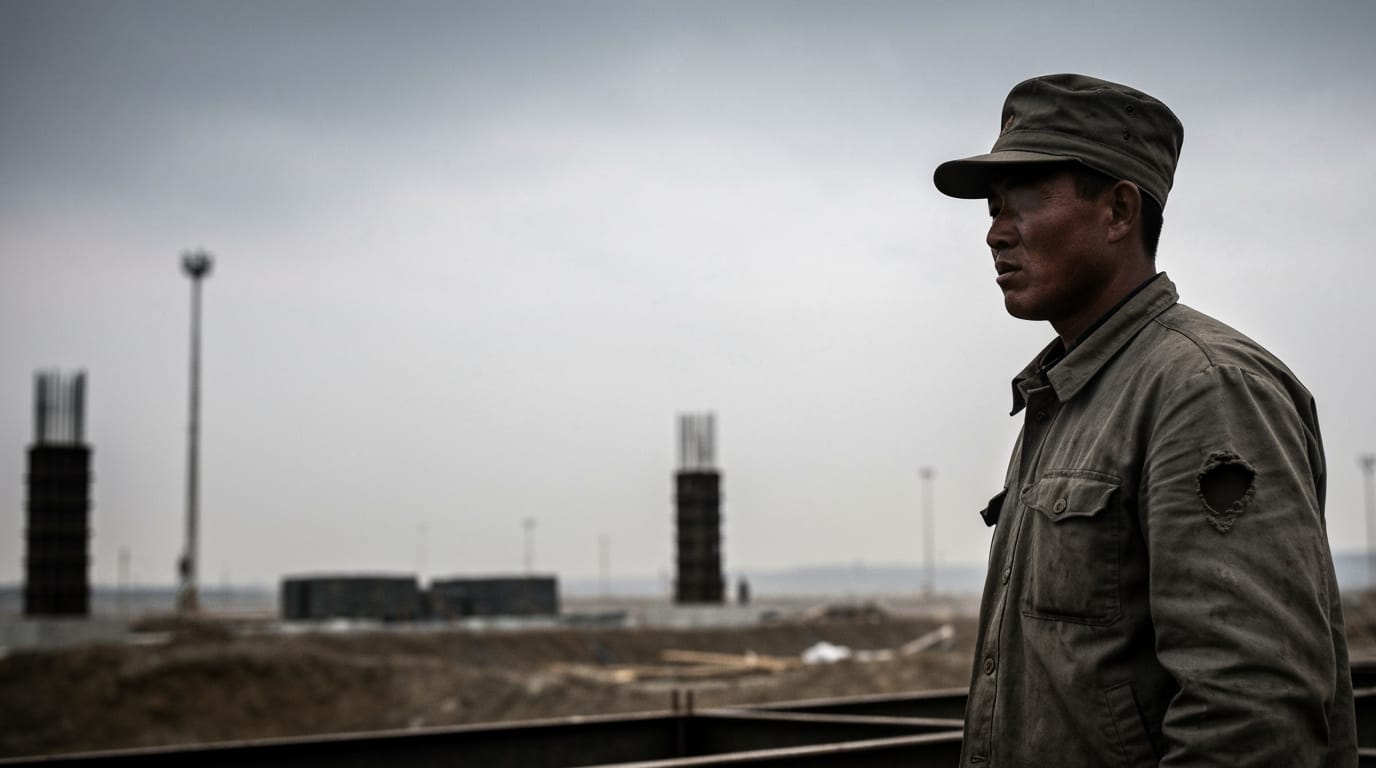
North Korea has dramatically escalated its pursuit of nuclear weapons and advanced delivery systems, with recent intelligence assessments and satellite imagery revealing a quiet but significant expansion of its capabilities. This accelerated program, marked by intensified fissile material production and the development of a diverse arsenal of sophisticated missiles, presents an increasingly complex challenge to regional and global security, raising alarms among international observers and rival nations. Leader Kim Jong Un has explicitly articulated a strategy of "exponential growth" for the country's nuclear forces, signaling a definitive shift away from denuclearization talks and solidifying North Korea's status as a nuclear-armed state.
The Unseen Expansion: Fissile Material Production Surges
Recent reports indicate a substantial increase in North Korea's capacity to produce weapons-grade fissile material, the critical components for nuclear warheads. Leader Kim Jong Un recently claimed that the country's production capacity for such materials has more than doubled over the past five years. This assertion is corroborated by satellite imagery and expert analysis, which reveal ongoing expansion and heightened activity at key nuclear sites.
The Yongbyon Nuclear Scientific Research Centre, often referred to as "the heart" of North Korea's nuclear program, remains central to these efforts. Analysts have tracked the construction of new facilities linked to uranium enrichment at Yongbyon, with satellite images in late 2025 showing a new semi-buried concrete facility and fresh excavations, suggesting further expansion. What began as ground excavation quickly transformed into a sealed facility, demonstrating a concerted effort to increase uranium enrichment capacity. This expansion is significant because highly enriched uranium is often considered easier to weaponize than plutonium, and centrifuge facilities, unlike plutonium reactors, can be concealed more readily. Furthermore, thermal infrared imagery in May 2024 indicated sustained activity at Yongbyon's radiochemical laboratory and uranium enrichment facility, consistent with processing spent fuel rods into plutonium and producing highly enriched uranium.
Beyond Yongbyon, there are strong indications of at least one, and potentially more, undeclared uranium enrichment plants. A facility believed to be the Kangson complex near Pyongyang was revealed in September 2024, and North Korea publicly disclosed a third uranium enrichment facility in June 2026. While the exact location of the newest site remains undisclosed by Pyongyang, preliminary analysis suggests it may correspond to an additional Yongbyon facility monitored by the International Atomic Energy Agency (IAEA) since 2025. These developments suggest that North Korea is systematically increasing its fissile material stockpile, estimated by a March 2026 Congressional Research Service report to be enough for up to 90 warheads, with approximately 50 already assembled. Some independent analysts place the total arsenal even higher, above 100 warheads.
A Proliferation of Delivery Systems: Missiles and Beyond
Parallel to the boost in fissile material production, North Korea has been relentlessly diversifying and advancing its nuclear weapon delivery systems. Kim Jong Un's January 2021 report to the Eighth Party Congress outlined goals to develop 13 new nuclear and missile systems, many of which have since seen significant progress.
Solid-propellant intercontinental ballistic missiles (ICBMs) represent a critical advancement. The Hwasong-18 (HS-18) was flight-tested in April 2023 and likely operationally deployed by December 2023, followed by the Hwasong-19 (HS-19) in October 2024. The "next generation" HS-20 solid ICBM was displayed in October 2025. Solid-propellant missiles offer several strategic advantages: they are faster to launch, easier to hide, and harder to preempt, thereby enhancing North Korea's nuclear deterrent credibility. The Defense Intelligence Agency (DIA) assessed in 2025 that North Korea possessed ten or fewer ICBMs but projected that number could reach 50 by 2035. U.S. defense officials testified in April 2026 that North Korea's nuclear forces are "increasingly capable of targeting the U.S. Homeland."
Beyond ICBMs, Pyongyang has been developing a wide array of other systems:
- Tactical Nuclear Weapons: Kim's 2021 report made tactical nuclear weapons a development objective, emphasizing the technology to "miniaturize, lighten and standardize" nuclear weapons. By March 2023, a tactical nuclear weapon designated Hwasan-31 was revealed, designed for interchangeable use with various delivery systems.
- Hypersonic Glide Vehicles (HGVs): Tests of HGVs have been conducted using liquid-booster rockets (Hwasong-8 in September 2021) and solid-propellant IRBMs (Hwasong-16 in April 2024 and January 2025). North Korea also claimed to have launched "hypersonic projectiles" with SRBM range in October 2025.
- Land-Attack Cruise Missiles (LACMs): The "Pulhwasal-3-31" was unveiled in January 2024, including a submarine-launched variant, and LACMs have been launched from warships. These provide a significant complement to ballistic missiles for both nuclear and conventional roles.
- Unmanned Underwater Vehicles (UUVs): The "Haeil" nuclear-armed UUV, unveiled in March 2023, has featured in parades as recently as October 2025.
- AI-Guided Missiles: In a notable technological leap, North Korea tested AI-guided precision cruise missiles in May 2026, which are reportedly capable of striking targets within 100 kilometers, putting central Seoul within range. This marks the first public reference to AI in North Korean missile guidance systems, raising new concerns about accuracy and lethality.
Missile tests have occurred with increasing frequency. Ballistic missile tests were recorded in January, March, April, and May of 2026 alone. These tests align with Pyongyang's defense modernization goals.
Reactivation of Test Site and the Seventh Test Prospect
The persistent development of new warhead designs and delivery systems points towards the increasing likelihood of a seventh nuclear test. Satellite imagery has shown "visible" signs of North Korea reactivating the Punggye-ri nuclear test site. Since December 2021, increased activity, particularly at the South Portal (also known as Tunnel 3), suggests that Pyongyang has been restoring access to unused tunnels. Experts believe North Korea could restore Tunnel 3 "within a month," rapidly preparing for a nuclear test. The intelligence community assesses that a seventh nuclear test, likely demonstrating further advances in warhead design, "could come at any time" as the test site has been fully restored.
International Condemnation and Evolving Geopolitics
The accelerated pace of North Korea's nuclear and missile programs has drawn strong condemnation from the international community. The United Nations Security Council has adopted numerous resolutions demanding North Korea dismantle its nuclear program in a "complete, verifiable and irreversible" manner. However, these resolutions and accompanying sanctions have largely failed to halt Pyongyang's progress.
The diplomatic landscape surrounding North Korea has grown more complex. Russia notably backed off enforcement of UN sanctions in March 2024 and vetoed new UN sanctions in 2022, declaring North Korea's nuclear program a "closed issue" in 2024. China has also abstained from fully addressing the matter and continues to trade with North Korea, facilitating elements of Pyongyang's "shadow economy." In response to these challenges, 11 nations, including the U.S., South Korea, Japan, and Australia, established the Multilateral Sanctions Monitoring Team in October 2024 to assess North Korea's compliance.
The U.S. and South Korea have expressed deep concern over the "clear and present danger" posed by North Korea's growing nuclear capabilities. South Korea's government views North Korea's nuclear activities as "a clear violation of multiple United Nations Security Council resolutions and a challenge to international peace and security." Despite diplomatic efforts and offers to restart dialogue, Kim Jong Un has repeatedly rebuffed such overtures, framing denuclearization as non-negotiable.
A Calculated Ambition: National Security and Leverage
North Korea's motivations for this relentless nuclear buildup appear deeply rooted in national security perceptions and a desire for international leverage. Kim Jong Un has emphasized that the nuclear expansion is necessary due to "escalating security threats and the protracted confrontation with our most ruthless enemies." At a February 2026 party congress, Kim declared the country an "irreversible" nuclear-armed state, signaling no intention of negotiating away its arsenal.
The development of diverse delivery systems, including tactical nuclear weapons and hardened ICBMs, aims to ensure the survivability of its nuclear deterrent and the ability to respond to any perceived aggression. By diversifying its launch platforms and developing conventional weapons that can also be nuclear-armed, North Korea seeks to complicate defensive strategies by its adversaries. This strategic shift underscores Pyongyang's determination to cement its status as a nuclear power, leveraging its capabilities to deter external threats and enhance its geopolitical standing.
The trajectory of North Korea's nuclear program indicates a profound and enduring challenge for international diplomacy. With fissile material production accelerating and a sophisticated arsenal of delivery systems rapidly developing, the path to denuclearization appears increasingly distant. The implications for regional stability, the global non-proliferation regime, and the security of nations within striking distance of North Korea's expanding capabilities remain a paramount concern, demanding sustained vigilance and creative diplomatic engagement in the years ahead.


