North Korea Fires Ballistic Missiles, Escalating Tensions Ahead of Key Diplomatic Engagements
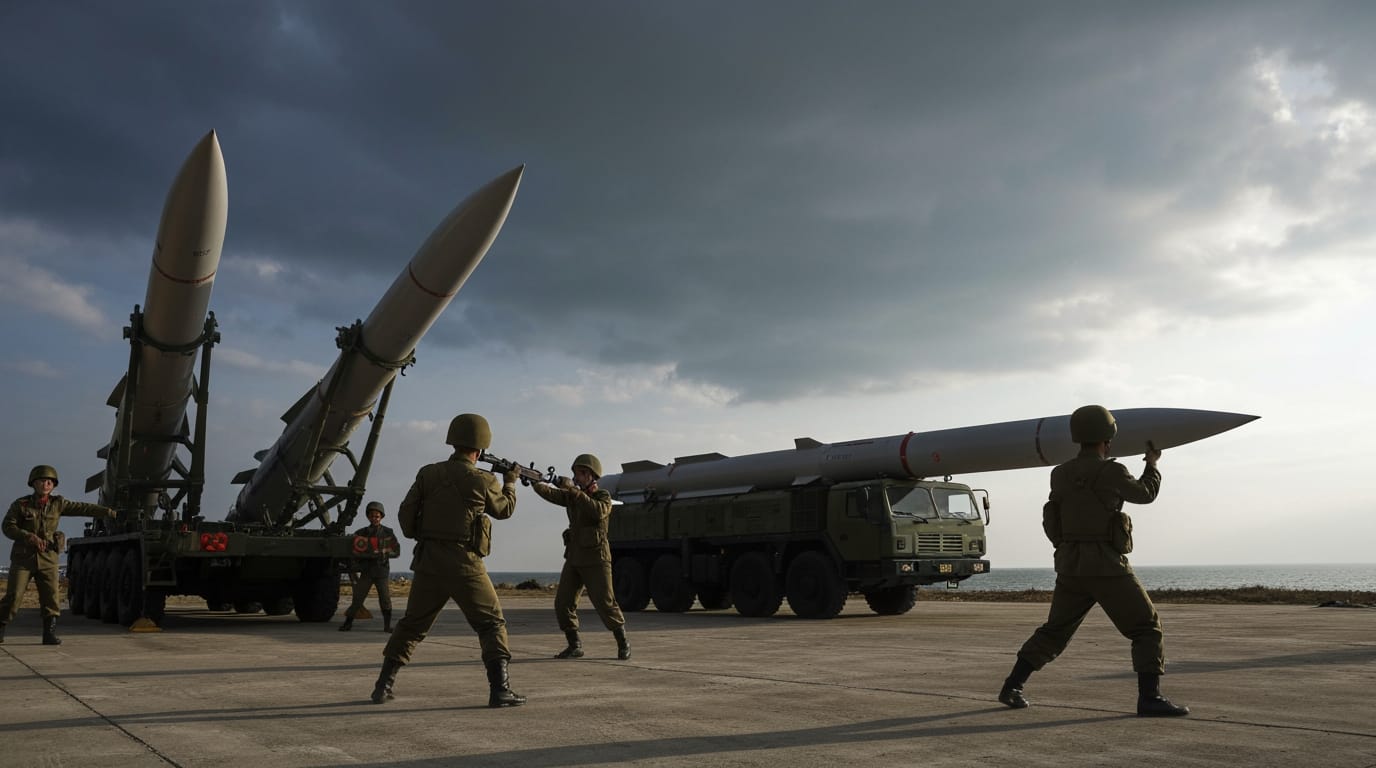
SEOUL – North Korea launched multiple ballistic missiles into the sea off its east coast Sunday morning, according to South Korea and Japan, in a stark and provocative move that further destabilizes regional security. The missile tests occurred just hours before South Korean President Lee Jae Myung was scheduled to depart for China for critical talks, where North Korea's nuclear program was expected to be a central topic. This latest display of military power by Pyongyang underscores its continued defiance of international sanctions and its commitment to advancing its weapons capabilities.
Pyongyang's Latest Provocation
South Korea's Joint Chiefs of Staff (JCS) reported detecting "several ballistic missile launches" from North Korea's capital region around 7:50 a.m. local time on Sunday. The missiles were fired towards the East Sea, also known as the Sea of Japan. While South Korean and U.S. authorities are still analyzing the specifics of the launches, Japan's Defense Ministry indicated that two missiles were detected, traveling approximately 900 kilometers (560 miles) and 950 kilometers respectively, and reaching an altitude of 50 kilometers. There were no immediate reports of damage from the launches.
In response to the launches, South Korea's National Security Council convened an emergency meeting. Seoul condemned the action as a "provocative act in violation of UN Security Council resolutions," and affirmed its commitment to maintaining a robust readiness posture. Japan's Defense Minister Shinjiro Koizumi echoed this condemnation, stating that North Korea's nuclear and missile development poses an "absolutely intolerable" threat to the peace and stability of the region and the international community. The United States, South Korea, and Japan are closely coordinating and exchanging information regarding the incident, with Washington reiterating its "ironclad" commitment to the defense of its allies.
Geopolitical Backdrop and Strategic Timing
The timing of North Korea's missile launches appears strategically chosen to maximize their impact on regional diplomacy. The launches took place on the very day South Korean President Lee Jae Myung began a four-day state visit to China, where discussions with President Xi Jinping were anticipated to include strategies for addressing North Korea's escalating nuclear and missile threats. President Lee's office had indicated plans to urge China to play a "constructive role" in promoting peace on the Korean Peninsula.
This marks Pyongyang's first ballistic missile test since November and follows a series of recent weapons demonstrations. Earlier in the week, North Korea had announced the firing of long-range strategic cruise missiles, reportedly off its west coast, to test its nuclear deterrence capabilities. Experts suggest that North Korea is likely accelerating its weapons tests as a means to showcase its achievements in the defense sector, particularly ahead of an upcoming ruling Workers' Party congress. This congress, the first in five years and expected in January or February, is a key event where North Korean leader Kim Jong Un typically outlines new policy directions. Recent state media reports have also highlighted Kim Jong Un's visits to munitions factories, where he reportedly called for a significant increase in the production of tactical guided weapons.
A Pattern of Defiance and Programmatic Advancement
North Korea's ballistic missile program remains a central element of its national security strategy, consistently pursued in defiance of numerous United Nations Security Council (UNSC) resolutions. Since 2006, the UNSC has adopted multiple resolutions condemning North Korea's nuclear and missile activities, demanding a cessation of such actions and a return to non-proliferation commitments. These resolutions prohibit North Korea from conducting any launches using ballistic missile technology and impose economic sanctions aimed at curbing its weapons development. Despite these international efforts, Pyongyang has continued to develop and test a diverse array of missile systems, including short-range ballistic missiles (SRBMs), submarine-launched ballistic missiles (SLBMs), and intercontinental ballistic missiles (ICBMs).
The ongoing missile launches are viewed as part of a broader strategy to enhance North Korea's ability to evade missile defenses, improve precision strike capabilities, and pose a credible threat to the U.S. and its allies. North Korea has openly stated its objectives to increase its stockpile of nuclear warheads and diversify its delivery systems, with some non-governmental experts estimating it has produced enough fissile material for a significant number of warheads.
Continuing Regional Instability
The latest ballistic missile launches by North Korea signify a persistent challenge to regional and global security. The cycle of provocations, followed by international condemnation and intensified calls for diplomacy, has become a familiar pattern. With North Korea's leadership pushing for further advancements in its military capabilities, and regional powers responding with heightened vigilance and coordinated defense postures, the Korean Peninsula remains a focal point of geopolitical tension. The international community, led by the UN, continues to seek a diplomatic resolution, but Pyongyang's actions repeatedly underscore the formidable obstacles to denuclearization and lasting peace in the region.


