North Korea Unveils Advanced Nuclear Fuel Production Facility, Escalating Global Concerns
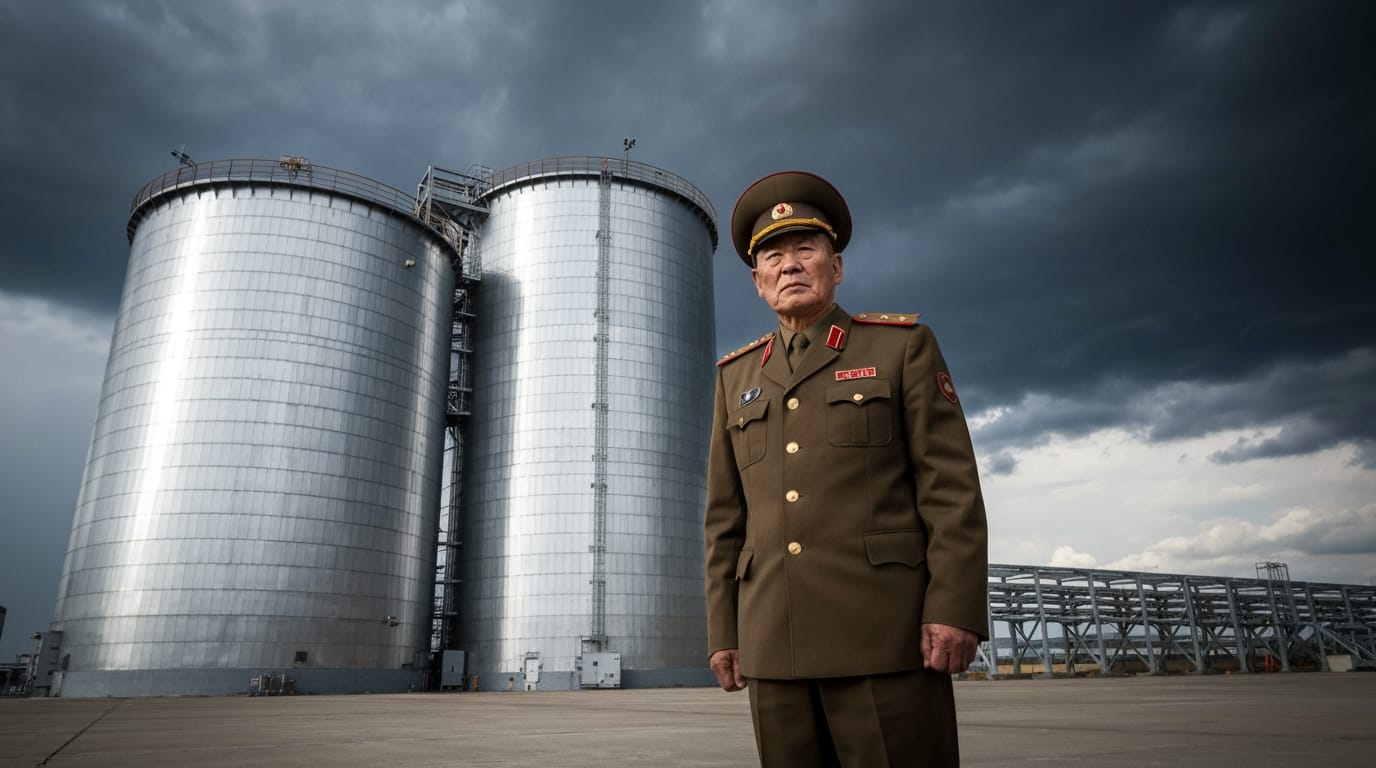
Pyongyang, DPRK – North Korea today revealed a new facility dedicated to the production of nuclear bomb fuels, a move poised to significantly enhance the nation's nuclear weapons capabilities and further complicate international efforts toward denuclearization. Leader Kim Jong Un, during a visit to the undisclosed site on Wednesday, announced plans to expand the country's nuclear forces at an "exponential rate," citing escalating threats from the United States and South Korea. This latest development underscores Pyongyang's unwavering commitment to its nuclear program, despite stringent international sanctions and widespread condemnation.
The official Korean Central News Agency (KCNA) reported that the facility incorporates "more sophisticated technology," though specific details regarding its location and operational timeline remain undisclosed. However, state media photographs depicting a large hall filled with what appeared to be centrifuges, coupled with assessments from South Korea's Joint Chiefs of Staff, strongly suggest the plant is designed for uranium enrichment. The unveiling marks a critical juncture in North Korea's nuclear ambitions, reinforcing concerns about regional stability and global non-proliferation.
The Unveiling and Technical Advancements
The highly choreographed unveiling saw Kim Jong Un inspecting the facility, reviewing its operational metrics and long-term production objectives. While the exact technical specifications were withheld, KCNA's assertion of "more sophisticated technology" is consistent with Pyongyang's ongoing efforts to modernize its nuclear infrastructure. The visual evidence of a centrifuge hall, characterized by "narrow aisles lined with dense rows of silver tubes and pipes," indicates a focus on increasing uranium enrichment capacity. This follows a previous disclosure in September 2024 of another covert uranium-enrichment plant, building upon North Korea's initial public revelation of such a facility to American scholars in 2010.
Leader Kim Jong Un claimed that North Korea's production capacity for weapons-grade nuclear materials has more than doubled in the past five years. Independent verification of this claim is not currently possible. Nevertheless, the consistent reports of expanded activity at the Yongbyon nuclear complex, observed by international monitoring agencies, lend credence to the regime's assertions of accelerated progress.
Intensifying Nuclear Ambitions and Regional Instability
This new facility directly supports Kim Jong Un's stated objective of expanding North Korea's nuclear arsenal "at an exponential rate." Pyongyang justifies this acceleration by citing what it perceives as "escalating U.S.-led military threats" and confrontations with "the most ferocious enemies," a clear reference to the United States and South Korea. The development of advanced nuclear fuel production capabilities suggests a strategic effort to overcome perceived vulnerabilities and enhance the credibility of its deterrence posture.
Analysts previously estimated North Korea's nuclear arsenal to be between 20 and 60 weapons in 2018, with some more recent projections putting the figure at over 100 warheads. The country's capacity to produce additional weapons annually is believed to range from six to as many as 18. The consistent expansion of enrichment facilities, particularly those capable of producing highly enriched uranium, could significantly increase this rate. For instance, a facility with 10,000 centrifuges, as seen in a 2024 disclosure, could theoretically produce enough highly enriched uranium for approximately 10 nuclear weapons per year. This dual-track approach, leveraging both plutonium reprocessing and uranium enrichment capabilities at sites like Yongbyon, provides North Korea with multiple pathways to augment its fissile material stockpile.
International Alarm and Diplomatic Stalemate
The unveiling has drawn sharp international reactions, further straining already tense diplomatic relations. South Korea's Joint Chiefs of Staff promptly assessed the site as a uranium enrichment plant and confirmed close coordination with the United States to monitor North Korea's nuclear activities. The International Atomic Energy Agency (IAEA) Director General Rafael Grossi had previously warned in April 2026 of a "rapid increase" in activities at North Korean nuclear facilities, specifically noting a "very serious increase" in fissile material production capacity at the Yongbyon nuclear site.
The United Nations political affairs chief, Rosemary DiCarlo, recently informed the Security Council that North Korea's continued pursuit of nuclear weapons and ballistic missile development remains "a matter of serious concern," constituting a clear violation of multiple Security Council resolutions. Efforts to enforce international sanctions have been complicated by geopolitical dynamics, notably Russia's veto in 2024 of a Security Council resolution aimed at renewing a UN independent panel tasked with monitoring sanctions against Pyongyang.
Despite continued offers for dialogue from the United States and South Korea, Kim Jong Un has consistently rebuffed diplomatic engagement since high-stakes negotiations with former U.S. President Donald Trump collapsed in 2019. North Korea has explicitly declared that it will not be bound by any non-proliferation treaties and that its status as a nuclear-armed state is "irreversible," rejecting external pressure to change its course. This firm stance reflects a deeply entrenched conviction within Pyongyang that its nuclear arsenal is essential for national security.
Historical Context and Future Trajectories
North Korea's nuclear program has a long and complex history, dating back to the 1950s with initial training and knowledge acquisition. The nation embarked on plutonium production in the 1980s, with the Yongbyon complex becoming operational by 1986 and believed to have provided fissile material for its early weapons. Covert uranium enrichment efforts gained prominence in the early 2000s, adding another dimension to its capabilities. This persistent pursuit of both plutonium and uranium pathways highlights a comprehensive and resilient nuclear development strategy.
Under Kim Jong Un's leadership, North Korea has not only expanded its fissile material production but also diversified its delivery systems. Strategic goals have included the development of tactical nuclear weapons, solid-propellant intercontinental ballistic missiles (ICBMs), and new naval assets such as nuclear-powered strategic guided missile submarines and nuclear-armed unmanned underwater vehicles. These developments indicate a shift towards a more robust and survivable nuclear deterrent.
The unveiling of this new nuclear fuel production plant further complicates the international landscape. While some experts advocate for a pragmatic approach focusing on managing nuclear risk, acknowledging North Korea's nuclear status as a de facto reality, the United States, Japan, and other allies continue to reaffirm their commitment to the complete denuclearization of the Korean Peninsula. The persistent expansion of North Korea's nuclear capabilities, coupled with the ongoing diplomatic stalemate and a fractured international response, presents an enduring and profound challenge to regional and global security.


