North Korea Unveils Luxury Mountain Resort, Kim Ju Ae Takes Center Stage
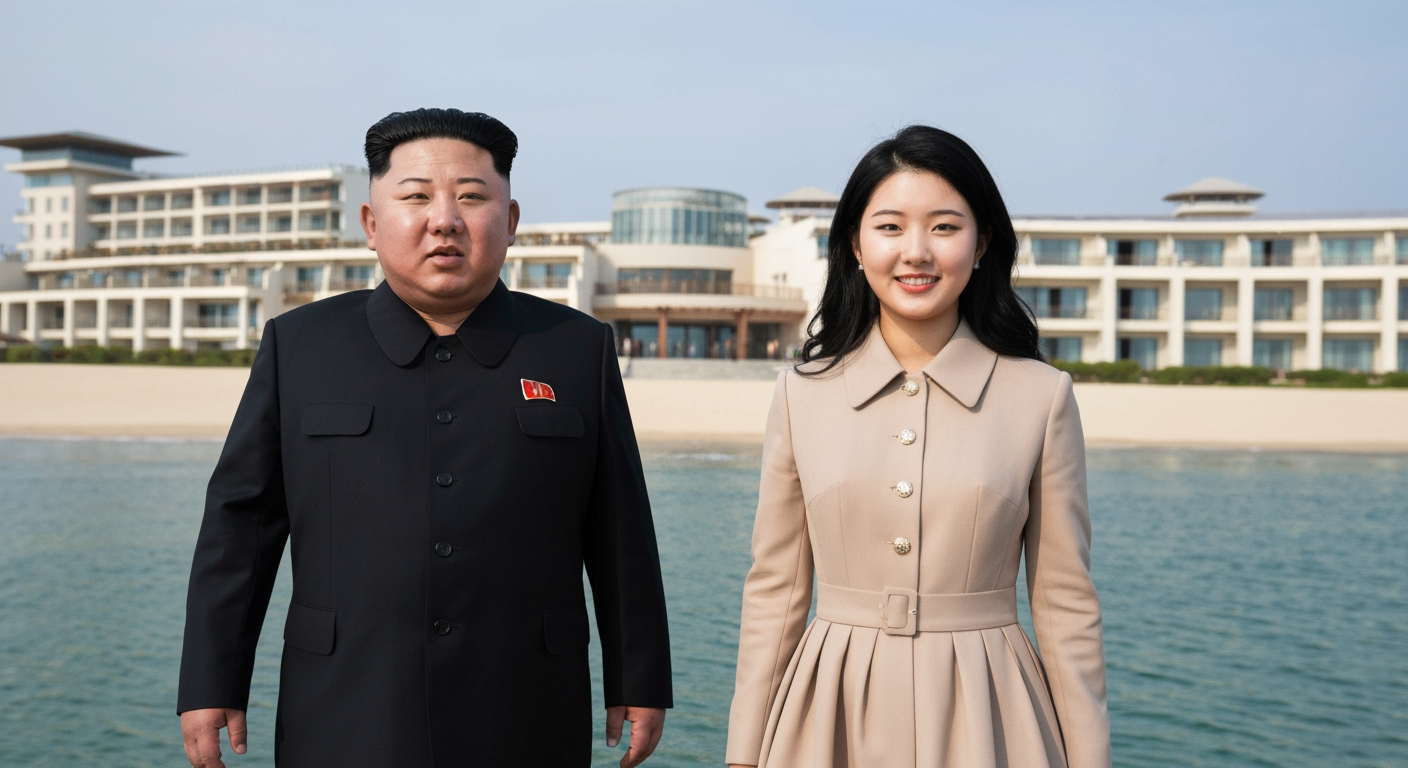
North Korean leader Kim Jong Un, accompanied by his prominent daughter Kim Ju Ae, has officially inaugurated a new cluster of luxury hotels in the Samjiyon mountain region, state media reported Tuesday. The unveiling of five modern hotels, complete with amenities ranging from hot tubs to barbecue restaurants, marks a significant push by Pyongyang to bolster its tourism infrastructure and project an image of economic development, even as international sanctions continue to impact the isolated nation. Kim Ju Ae's high-profile presence at the ceremony further fuels speculation about her potential role in the future leadership of North Korea, signaling a carefully orchestrated public relations strategy aimed at domestic and international audiences.
Samjiyon's Grand Opening: A Vision of Mountain Luxury
The recently completed Samjiyon tourist resort, nestled in North Korea's mountainous north near the revered Mount Paektu, saw its official opening over the weekend, with ceremonies held on December 20 and 21. Kim Jong Un, alongside his daughter, toured the newly constructed facilities, which include the Igak, Milyong, Sobaecksu, Cheongbong, and Botnamu hotels. State media highlighted the lavish offerings, detailing "cozy leisure spaces," indoor and outdoor baths, and extensive dining options, including barbecue restaurants.
During the inspection, Kim Jong Un expressed immense satisfaction with the resort, noting that "all elements are at a high level" in terms of practicality, diversity, and artistic features. He characterized the resort as "clear proof of the ever-growing ideal of our people and our state's potential for development." The North Korean leader also declared his "unshakable will" to transform Samjiyon City into an "innovative and highly civilized city representing the tourism culture of the country," emphasizing the importance of service quality and professional qualifications for hotel staff.
State-released images showcased Kim Ju Ae, in a black coat, accompanying her father, with some photographs depicting them walking hand-in-hand. This intimate portrayal underscored the personal nature of the visit and her elevated status within public appearances. The resort is intended to serve as an "attractive mountainous tourist resort and leisure ground for the people," according to Pyongyang's official Korean Central News Agency (KCNA).
Kim Ju Ae's Growing Public Profile Sparks Succession Talk
Kim Ju Ae's prominent role at the Samjiyon resort opening is the latest in a series of highly publicized appearances that have drawn significant international attention. First introduced to the public in November 2022, her consistent presence at key events – ranging from military parades and factory inaugurations to housing completions and naval vessel launches – has led many analysts to view her as a potential successor to her father. She reportedly accompanied Kim Jong Un for a second consecutive day, following a factory completion ceremony in Sinpo City earlier in the week.
North Korean state television analysis indicates that Kim Ju Ae has appeared on screen on over 600 days in the past three years, with a notable increase in her appearances in 2025. These frequent public showings, often in propaganda videos that laud her father as "Our Great Leader," are seen as a deliberate strategy to embed her image into the public consciousness and normalize the idea of a fourth generation of hereditary rule. Observers suggest that Kim Jong Un, still relatively young, is using his daughter's visibility to highlight the inevitability of continued dynastic succession.
While her mother, Ri Sol-ju, was also present at the Samjiyon events, the focus of North Korean state media reports and imagery remained squarely on Kim Jong Un and his daughter. This strategic spotlight on Kim Ju Ae reinforces the narrative of her burgeoning importance within the regime and potential future leadership.
Tourism as an Economic Lifeline Amidst Sanctions
The development of the Samjiyon resort aligns with North Korea's long-standing ambition to cultivate its tourism industry as a means of generating hard currency and boosting its economy, which remains heavily constrained by international sanctions over its nuclear weapons program. Samjiyon itself holds significant ideological weight, being located near Mount Paektu, a site central to North Korean revolutionary mythology and propaganda as the alleged birthplace of Kim Jong Il, Kim Jong Un's father.
This mountainous retreat is not North Korea's only major tourism project. In June 2025, the Wonsan-Kalma Coastal Tourist Area, a sprawling beach resort on the country's east coast, was also officially opened. Attended by Kim Jong Un, Kim Ju Ae, and Ri Sol-ju, the Wonsan-Kalma complex was initially delayed by sanctions and the COVID-19 pandemic. It features hotels, villas, shopping centers, an indoor waterpark, and sports facilities designed to accommodate up to 20,000 guests. South Korean media dubbed it "North Korea's Waikiki."
Analysts suggest that while state media frames these resorts as facilities for "the people," the primary target clientele is likely foreign tourists, particularly those from China and Russia, or as rewards for loyal, "productive units" of local workers. This strategy attempts to inject foreign exchange into the economy and demonstrate development, even if the general populace cannot afford such luxuries. Recent diplomatic overtures, such as the presence of Russian diplomats at the Wonsan-Kalma opening, indicate a specific outreach to Moscow for tourism. North Korea also permitted Russian tourists to return in early 2024.
A Paradox of Prosperity Amidst Scarcity
The unveiling of these lavish resorts presents a striking paradox in a nation frequently facing food shortages and economic hardship for its majority population. While state media proclaims that the new facilities demonstrate that North Koreans are the "most dignified" and have "nothing to envy in the world," the reality for many citizens is starkly different. The average North Korean reportedly earns a meager income, making access to such luxury destinations an impossibility.
The vast investment in these grand projects raises questions about the allocation of resources within a heavily sanctioned economy. Experts note that the impressive scale and quality of the resorts underscore Pyongyang's determination to project an image of prosperity and self-reliance, even if it contradicts the lived experiences of most North Koreans. The development serves a dual purpose: to attract foreign currency through a limited tourism sector and to reinforce the legitimacy and strength of the Kim regime through visible displays of national construction and progress.
Conclusion
The inauguration of the Samjiyon mountain resort, with Kim Jong Un and his daughter Kim Ju Ae taking center stage, represents a multifaceted message from North Korea. It showcases the regime's unwavering commitment to developing its tourism industry as a strategic economic lever against international sanctions and signals an effort to project an image of a modern, capable nation. Simultaneously, Kim Ju Ae's prominent involvement continues to solidify her public standing, reinforcing the dynastic narrative and fueling speculation about her future leadership role. As North Korea navigates a complex geopolitical landscape, these luxury developments stand as both symbols of national ambition and stark reminders of the persistent economic disparities within the reclusive state.
Related Articles

Ratko Mladić, "Butcher of Bosnia" and Convicted War Criminal, Dies at 84
THE HAGUE, Netherlands – Ratko Mladić, the former Bosnian Serb military commander known as the "Butcher of Bosnia" and convicted of genocide, war crimes, and crimes against humanity, has died at the age of 84. Serbian...

Long-Awaited 9/11 Mastermind Trial Set for 2028, Decades After Attacks
GUANTANAMO BAY, Cuba – Nearly a quarter-century after the devastating terror attacks of September 11, 2001, a military judge has finally set a trial date for Khalid Sheikh Mohammed, the alleged mastermind behind the...