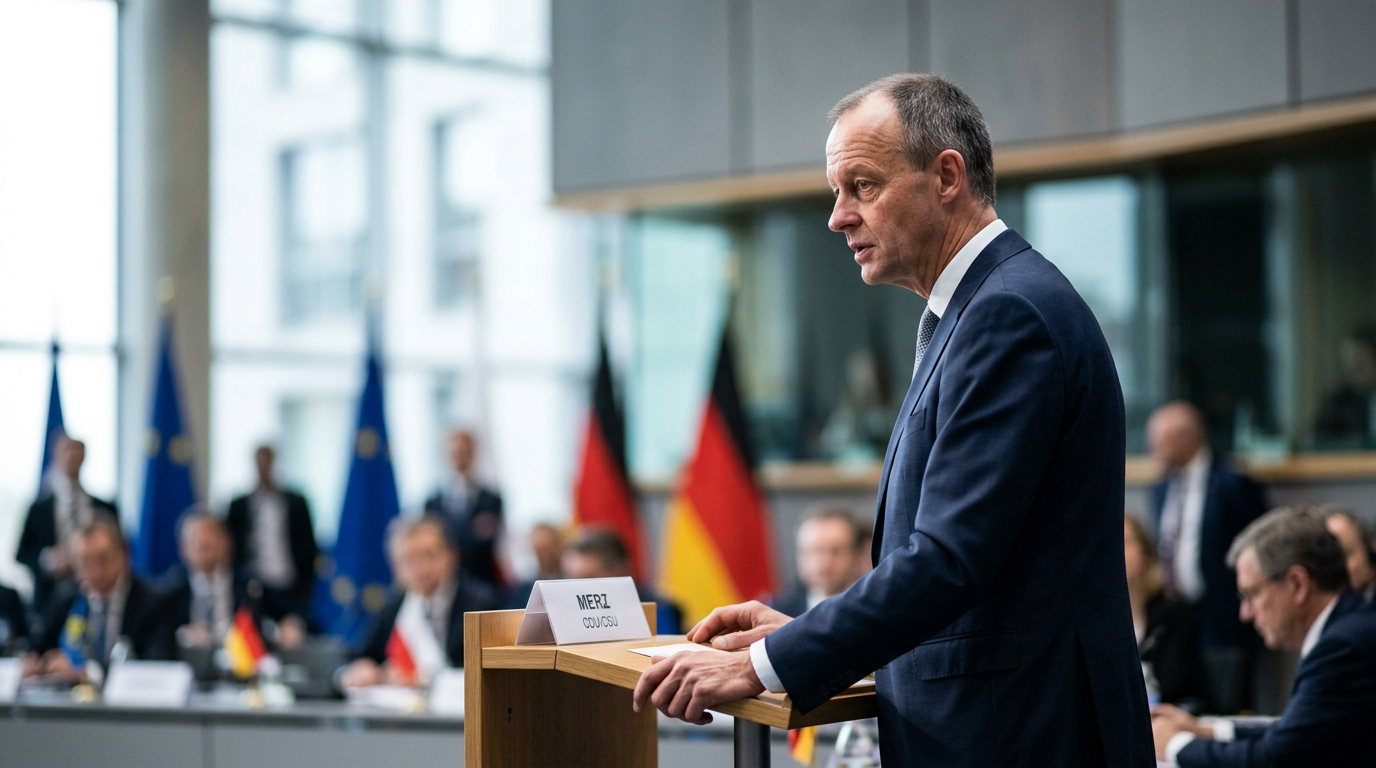
Nuclear Arms Control at a Crossroads: Trump Calls for New Treaty Amidst Expiration of New START
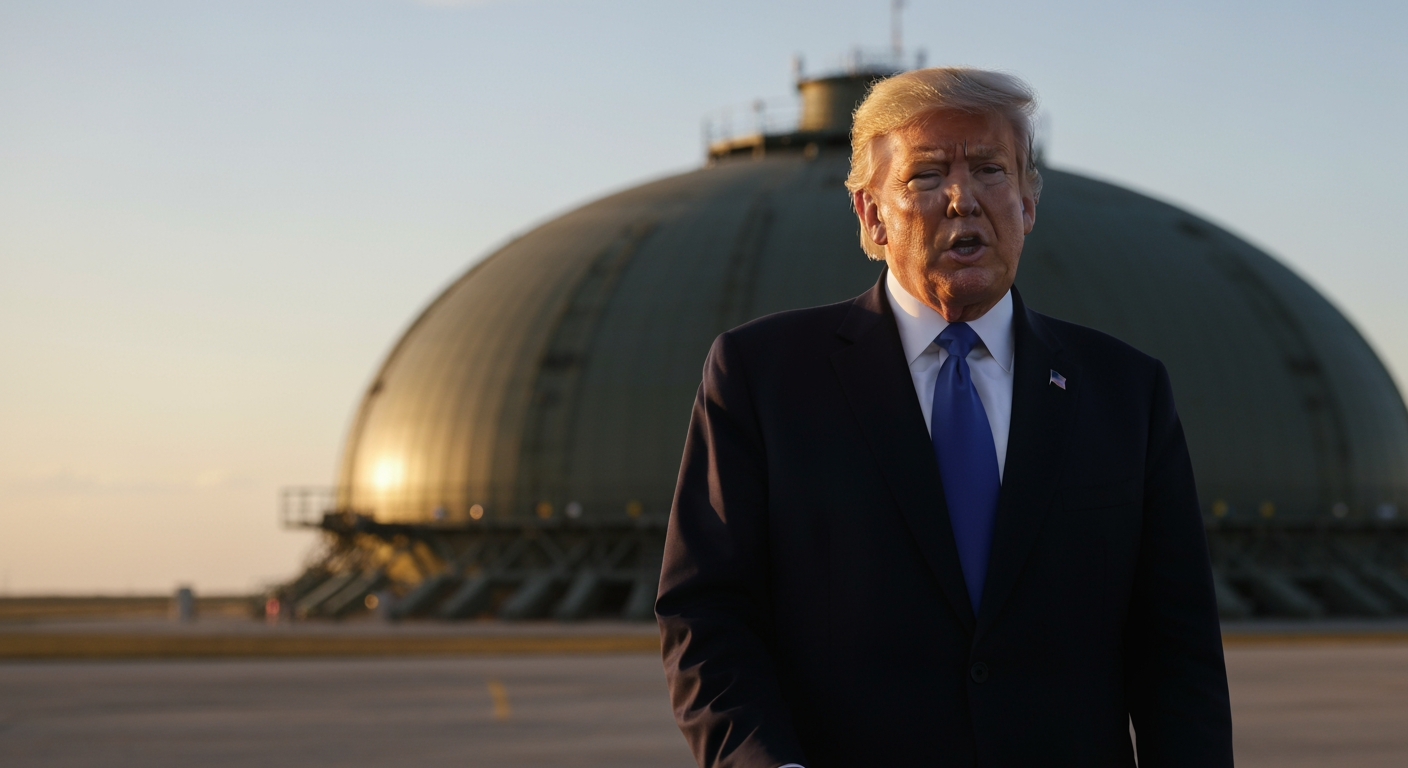
WASHINGTON — The landscape of global nuclear arms control has fundamentally shifted with the expiration of the New Strategic Arms Reduction Treaty (New START) on February 5, 2026, leaving the world's two largest nuclear arsenals, those of the United States and Russia, without legally binding limitations for the first time in over five decades. In the wake of this development, former President Donald Trump has called for the immediate negotiation of a new, modernized nuclear treaty, emphasizing the necessity of including China in any future agreement. This push sets the stage for a complex and potentially contentious re-evaluation of international nuclear security architecture.
The Former President's Push for a Modernized Framework
Former President Trump articulated his vision for a successor agreement shortly after New START formally lapsed. In statements, he asserted that the 2010 treaty was "badly negotiated" and had been "grossly violated." He advocated for "Nuclear Experts [to] work on a new, improved, and modernized Treaty that can last long into the future." This stance is consistent with his previous expressions of noncommittal attitude towards New START, having remarked that "If it expires, it expires. We'll just do a better agreement," and stressing the importance of involving "a couple of other players involved also." The central tenet of his proposal lies in expanding the scope of arms control beyond the traditional U.S.-Russia bilateral framework to include rising nuclear powers, particularly China.
New START: The End of an Era
The New START Treaty, signed in 2010 by then-Presidents Barack Obama and Dmitry Medvedev, served as the bedrock of strategic arms control between the United States and Russia for over a decade. It entered into force on February 5, 2011, establishing verifiable limits on the deployed strategic nuclear arsenals of both nations. The treaty capped each country at no more than 1,550 deployed strategic warheads and 700 deployed strategic delivery systems, which included intercontinental ballistic missiles (ICBMs), submarine-launched ballistic missiles (SLBMs), and heavy bombers. A critical component of New START was its robust verification regime, which involved regular data exchanges and on-site inspections designed to ensure compliance and build confidence between the rival powers.
The treaty was initially set to expire in 2021 but was extended for an additional five years by President Joe Biden, ensuring its continuation until February 4, 2026. However, the treaty faced increasing strain in recent years. On-site inspections were suspended in 2020 due to the COVID-19 pandemic and never fully resumed. Further eroding its implementation, Russia formally suspended its participation in New START in February 2023, citing U.S. and NATO support for Ukraine amidst the ongoing conflict. Despite this suspension, Moscow indicated it would continue to abide by the treaty's numerical limits, though the lack of verification mechanisms introduced significant uncertainty. With its definitive expiration, an important channel for transparency and predictability regarding the world's two largest nuclear arsenals has ceased to exist.
The Complexities of a Trilateral Framework
A significant aspect of the call for a new treaty is the insistence on China's participation. Proponents argue that with China's rapidly expanding nuclear capabilities, any future arms control agreement must be trilateral to be effective. China's nuclear arsenal, while still smaller than those of the U.S. and Russia, has reportedly doubled from an estimated 300 to 600 warheads over the past five years. Some analyses suggest that China could possess as many intercontinental ballistic missiles (ICBMs) as Russia and the United States by 2030. This expansion presents a new dynamic, leading some U.S. defense planners to consider a "two-tier deterrence environment," requiring strategies to counter the combined nuclear forces of both China and Russia.
However, integrating China into arms control negotiations presents substantial challenges. Beijing has consistently rejected calls to join such talks, maintaining that its arsenal is considerably smaller than those of the U.S. and Russia and that it adheres to a defensive "no-first-use" nuclear policy. Chinese officials have stated they would only consider engaging in arms control once the United States and Russia make deeper cuts to their significantly larger stockpiles. China also views demands for greater transparency regarding its nuclear capabilities as potentially undermining its second-strike capabilities.
Global Implications and the Race Ahead
The expiration of New START, without an immediate successor in place, raises serious concerns among arms control advocates and international security experts about the potential for a renewed global nuclear arms race. Without legally binding constraints, the risk of an unconstrained buildup of nuclear weapons increases, potentially leading to less transparency, reduced predictability, and an elevated danger of miscalculation. This situation could also undermine the Nuclear Non-Proliferation Treaty (NPT), which relies on nuclear-weapon states making progress towards disarmament.
Historically, a series of treaties, beginning with the Strategic Arms Limitation Talks (SALT) in the 1970s and continuing through START I, have played a crucial role in managing the nuclear threat between the U.S. and the Soviet Union/Russia, even during periods of intense geopolitical tension. These agreements helped to curb the nuclear arms race that characterized the Cold War. The current void threatens to reverse decades of diplomatic effort to reduce nuclear arsenals and enhance stability. The absence of a treaty means that both the U.S. and Russia could potentially expand their deployed strategic arsenals without any external constraints, leading to significant financial outlays for new weapons and increased global insecurity.
The call for a new, comprehensive nuclear treaty represents a critical juncture in international security. While the desire for modernized agreements that address a multipolar nuclear landscape is understandable, the path to achieving such a treaty is fraught with diplomatic complexities and deeply entrenched national security considerations. The challenge lies in forging a consensus that balances the interests of major nuclear powers and prevents a destabilizing arms race in an increasingly uncertain global environment.
Related Articles


Ratko Mladić, "Butcher of Bosnia" and Convicted War Criminal, Dies at 84
THE HAGUE, Netherlands – Ratko Mladić, the former Bosnian Serb military commander known as the "Butcher of Bosnia" and convicted of genocide, war crimes, and crimes against humanity, has died at the age of 84. Serbian...


Long-Awaited 9/11 Mastermind Trial Set for 2028, Decades After Attacks
GUANTANAMO BAY, Cuba – Nearly a quarter-century after the devastating terror attacks of September 11, 2001, a military judge has finally set a trial date for Khalid Sheikh Mohammed, the alleged mastermind behind the...