Taiwan's President Defies Beijing with Diplomatic Visit to Eswatini Amidst Chinese Pressure
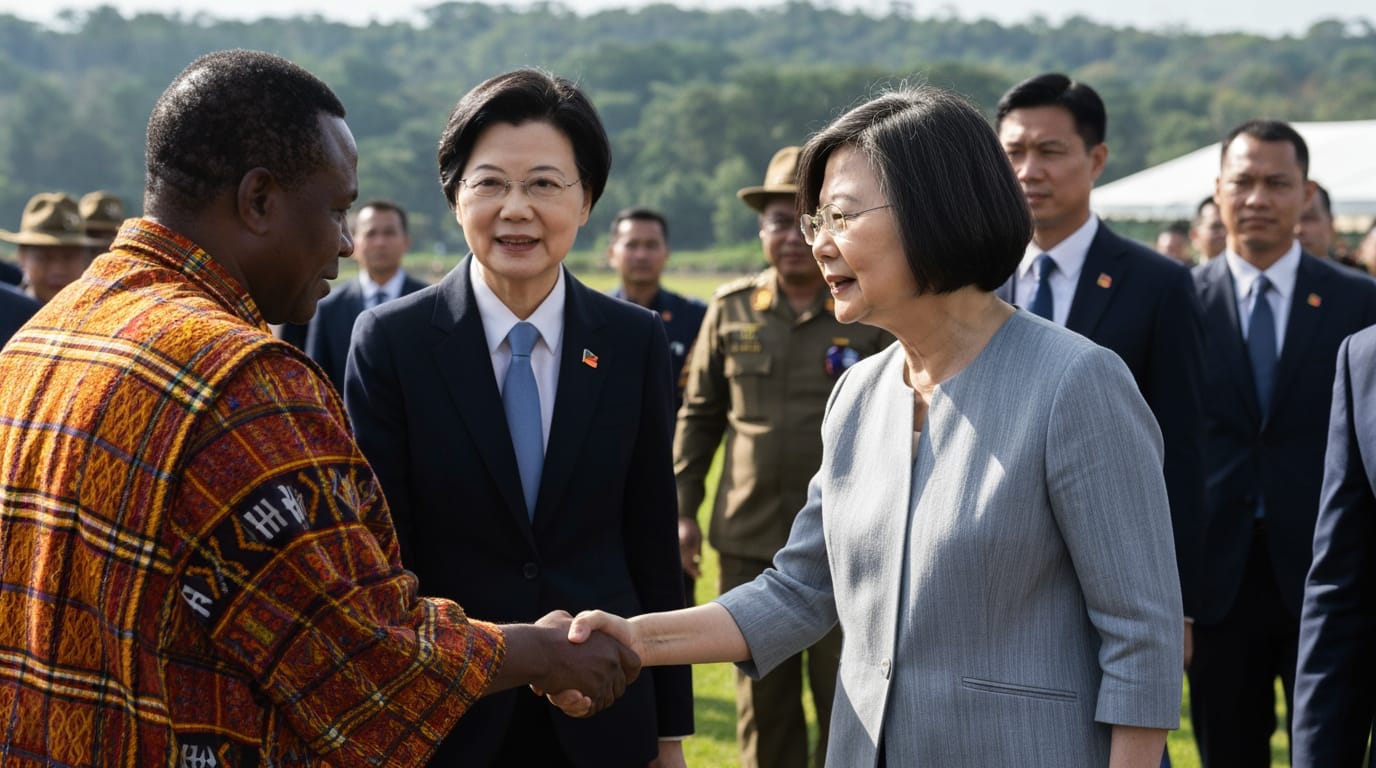
Mbabane, Eswatini – In a significant diplomatic maneuver, Taiwan's President Lai Ching-te successfully concluded a visit to the Kingdom of Eswatini in early May 2026, a trip that was initially delayed after several African nations allegedly succumbed to pressure from Beijing and revoked overflight permits. The visit underscored Taiwan's determination to maintain its dwindling diplomatic ties and Eswatini's steadfast commitment to its long-standing ally, despite vehement objections from the People's Republic of China, which claims Taiwan as its own territory.
A Journey Against the Odds
President Lai Ching-te's journey to Eswatini, Taiwan's sole remaining diplomatic ally in Africa, was fraught with challenges. The trip, originally scheduled for April 22-26, faced an unexpected hurdle when Seychelles, Mauritius, and Madagascar reportedly withdrew permission for President Lai's aircraft to traverse their airspace. Taiwanese officials explicitly attributed these cancellations to "strong pressure from the Chinese authorities, including economic coercion." Despite this initial setback, which marked the first time a Taiwanese president had cancelled an entire foreign trip due to denial of airspace access, a testament to China's escalated tactics, President Lai successfully arrived in Eswatini on May 2, 2026.
Upon his arrival, President Lai reaffirmed the enduring friendship between the two nations, declaring that Taiwan "will never be deterred by external pressures" and that its resolve and commitment are "underpinned by the understanding that Taiwan will continue to engage with the world – no matter the challenges faced." The visit, which was not publicly announced in advance by Taiwan, aimed to deepen economic, agricultural, cultural, and educational ties. Beijing's Ministry of Foreign Affairs swiftly condemned the visit, labeling it a "laughable stunt" and referring to Lai being "smuggled" out of Taiwan, reiterating its stance that Taiwan is an "inalienable part of China."
Eswatini: A Steadfast Ally in a Shifting Landscape
Eswatini's unwavering support for Taiwan stands in stark contrast to the trend of many nations switching recognition to Beijing. Eswatini has maintained formal diplomatic relations with the Republic of China (Taiwan) since September 16, 1968, shortly after gaining independence. This enduring partnership has been cultivated through decades of significant economic cooperation and aid from Taiwan, spanning sectors such as healthcare, education, infrastructure, and rural electrification.
A prior high-profile visit by then-President Tsai Ing-wen in September 2023 further solidified these ties, coinciding with Eswatini's 55th anniversary of independence and 55 years of bilateral relations. During that visit, Taiwan pledged to collaborate on an oil reserve facility and signed memorandums of understanding on women's entrepreneurship and other cooperative projects. These initiatives build on a history of aid, including Taiwan providing antiviral medication to King Mswati III to aid his recovery from COVID-19 in 2021.
Eswatini's reasons for resisting Beijing's overtures are multi-faceted. Officials from Eswatini have emphasized that their relationship with Taiwan is an "ideological choice over an economic one," viewing Taiwan as "a democratic beacon of hope that should be given a chance to participate in the global space." Additionally, some analysts suggest that Eswatini's diplomatic alignment with Taiwan allows it to avoid the "Chinese debt trap" that has impacted other African nations heavily reliant on Beijing's economic support. Despite its relatively low debt level, Eswatini continues to grapple with high poverty rates, making Taiwan's development assistance crucial. The kingdom also benefits from duty-free market access for over 100 product lines under the Eswatini–Republic of China (Taiwan)–Economic Cooperation Agreement.
Beijing's Shadow: The 'One China' Principle
China's "One China" principle dictates that there is only one sovereign state under the name China, with the People's Republic of China (PRC) as its sole legitimate government, and that Taiwan is an inalienable part of China. This principle forms the cornerstone of Beijing's foreign policy, compelling any nation seeking diplomatic relations with the PRC to sever official ties with Taipei. China has relentlessly pursued a campaign to isolate Taiwan internationally, particularly since Tsai Ing-wen, from the Democratic Progressive Party (DPP), was first elected president in 2016.
This campaign has led to a significant reduction in Taiwan's diplomatic allies. In 2016, Taiwan had formal ties with 22 states; by 2026, that number had shrunk to just 12, mostly smaller nations in Latin America, the Caribbean, and the Pacific. Recent defections include Honduras in 2023, Nicaragua in 2021, and Nauru in January 2024, all of which switched recognition to Beijing. China frequently leverages economic incentives and diplomatic pressure to achieve these switches, often offering substantial infrastructure investments to countries that abandon Taipei. Eswatini, by contrast, has been the subject of Chinese pressure, including increased visa restrictions on its citizens, but has thus far resisted, drawing sharp criticism from Beijing.
The Diplomatic Chessboard and Future Implications
President Lai's successful visit to Eswatini is more than a routine diplomatic exchange; it is a powerful symbolic act on a complex global chessboard. For Taiwan, maintaining diplomatic allies like Eswatini is paramount to countering Beijing's narrative of its complete international isolation. These relationships provide Taiwan with valuable platforms in international forums and underscore its right to engage with other countries as a sovereign entity.
For Eswatini, standing by Taiwan entails navigating the geopolitical tensions between two global powers. While it benefits from Taiwanese aid and investment, it simultaneously foregoes potential economic opportunities and diplomatic engagement with the much larger Chinese market. However, Eswatini's leaders have consistently emphasized national interest and principled choice as the foundation of their relationship with Taiwan.
The incident with the revoked overflight permits highlights a new dimension of China's assertive diplomatic pressure, directly impeding travel for a head of state. This tactic not only aims to isolate Taiwan but also to send a clear message to other nations considering engagement with Taipei. Despite these challenges, Taiwan's leadership has signaled its unwavering commitment to forging and sustaining international partnerships, regardless of Beijing's objections. The resilience demonstrated by both Taiwan and Eswatini in the face of such pressure serves as a potent reminder of the ongoing struggle for Taiwan's international space and the complex dynamics of global diplomacy.


