Okinawa Redeployment Faces Geopolitical Headwinds as China's Influence Rises
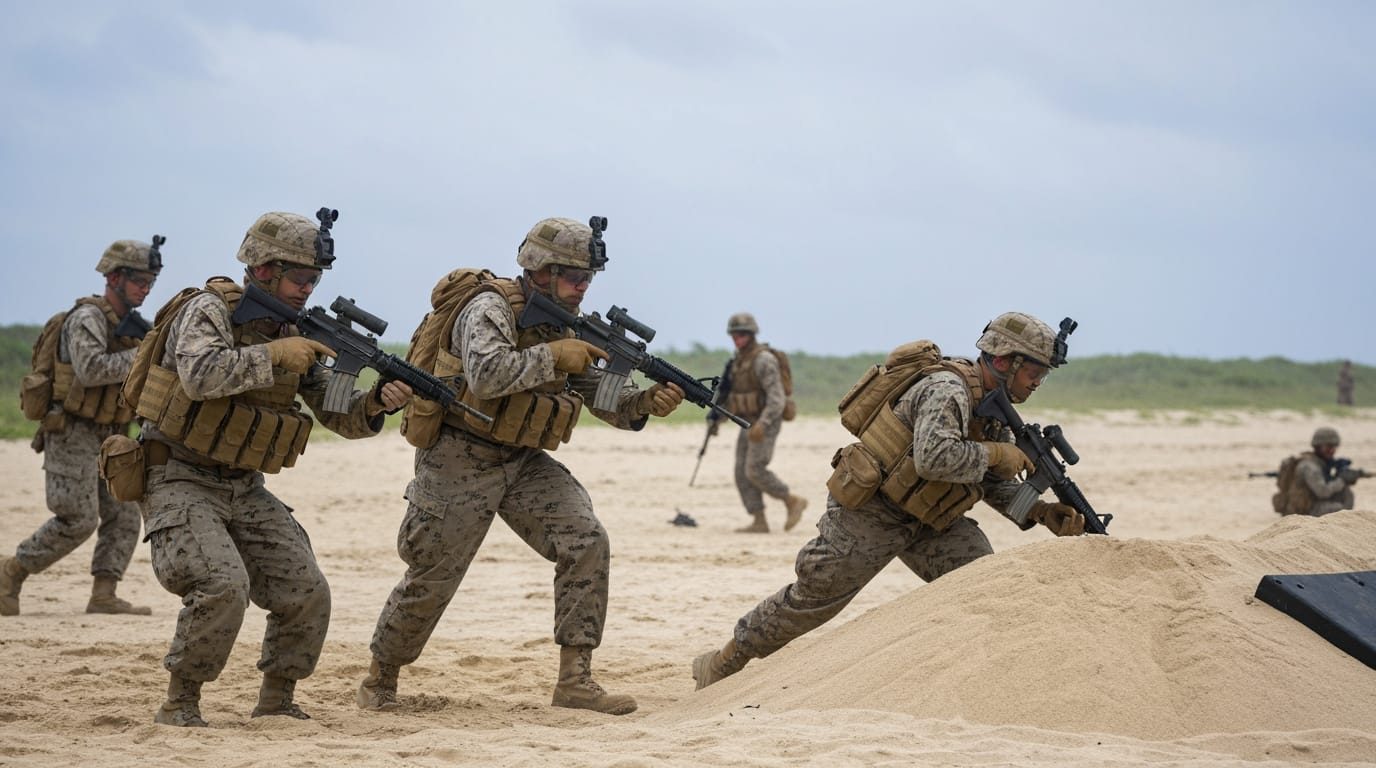
TOKYO, Japan – A decades-long plan to significantly reduce the U.S. military footprint on the Japanese island of Okinawa is now confronting the complex and urgent realities of an increasingly assertive China, prompting a critical re-evaluation of regional defense strategies. The long-anticipated relocation of thousands of U.S. Marines from Okinawa to other Pacific locations, intended to alleviate local burdens and modernize the alliance, is now challenged by heightened geopolitical tensions, particularly concerning Taiwan and the broader Indo-Pacific security landscape. The first tangible step in this complex process, involving approximately 100 logistics support Marines, commenced in December 2024 with a transfer to Guam, signaling movement in a plan that has seen extensive delays and evolving strategic considerations.
The Genesis of Realignment: Local Grievances and Strategic Shifts
The push to reduce the U.S. military presence in Okinawa stems from a history of deep-seated grievances among local residents. Since the end of World War II, Okinawa, despite comprising only 0.6% of Japan's total land area, has hosted over 70% of U.S. military facilities in the country. This disproportionate burden has led to widespread complaints regarding noise pollution, environmental damage, aircraft accidents, and incidents involving U.S. military personnel. A particularly egregious incident, the 1995 gang rape of a 12-year-old girl by U.S. soldiers, ignited intense public backlash and renewed calls for a rethinking of the 1960 security pact allowing U.S. forces in Japan.
In response to these mounting pressures and as part of broader defense posture reviews, the United States and Japan agreed in 2006 and further formalized in 2012, to a comprehensive realignment plan. This initiative, known as the Defense Policy Review Initiative (DPRI), aimed to redeploy approximately 9,000 of the 19,000 Marines stationed in Okinawa. The plan included transferring roughly 4,000 Marines to Guam, with others moving to Hawaii, Australia, and the continental U.S. A crucial component of this plan involved the relocation of Marine Corps Air Station Futenma, currently situated in a densely populated area of Ginowan, to a new facility at Camp Schwab in the less populated Henoko coastal district within Okinawa.
However, the Futenma relocation within Okinawa has faced persistent opposition and delays. Okinawans have consistently advocated for the base to be moved entirely off the island, not merely to another location within the prefecture. Environmental groups have raised concerns about the impact on Oura Bay's marine ecosystem, including coral reefs and endangered dugongs. A 2019 prefectural referendum saw over 70% of voters oppose the land reclamation work for the new Henoko base, demonstrating strong local sentiment against the plan.
China's Ascendancy and the First Island Chain Dilemma
The strategic calculus underpinning the Okinawa realignment has been profoundly complicated by the rapid military rise of the People's Republic of China. Beijing's accelerated modernization of its armed forces, including the development of long-range precision-guided missiles, advanced naval vessels, and air capabilities, has significantly altered the security environment in the Western Pacific. China's increasing assertiveness in the East and South China Seas, coupled with its stated ambition to reunify Taiwan, presents what many experts describe as an "unprecedented strategic challenge" to regional stability.
Okinawa's geographic position along the "First Island Chain"—an arc stretching from the Japanese archipelago through Taiwan to the Malay Peninsula—makes it a critical strategic bulwark. This chain is considered vital for constraining China's military reach into the broader Pacific. Consequently, the previously agreed-upon plan to reduce forces in Okinawa is now being critically reviewed by defense analysts and some U.S. military officials. Experts argue that moving forces away from Okinawa could "dangerously weaken deterrence against Beijing" and provide Chinese military planners with a strategic advantage by removing essential rapid-response forces from a potential First Island Chain conflict.
Strategic Adjustments Amidst Rising Tensions
The evolving threat landscape has prompted discussions within the U.S. and Japan regarding necessary adjustments to their defense posture. While the initial relocation of a small contingent of Marines to Guam has begun, senior U.S. Marine Corps officials have voiced concerns about the strategic implications. Marine Corps Commandant Gen. Eric Smith cautioned in January 2025 that moving forces to Guam could place them "a long way from the crisis theater," potentially hindering rapid response capabilities in the Western Pacific.
This perspective aligns with a broader shift in military thinking towards more distributed, agile, and resilient force postures. Analysts suggest that reliance on large, fixed bases, like those traditionally found in Okinawa, makes them vulnerable targets for China's advanced missile capabilities. Instead, there is a growing emphasis on smaller, more dispersed units capable of operating from various locations, including austere environments, to complicate enemy targeting and enhance survivability. This strategic pivot calls into question the original rationale for large-scale fixed base realignments, particularly if they position forces further from potential flashpoints.
Further complicating the Futenma relocation specifically, reports in February 2026 indicated that the U.S. Department of Defense is hesitant to return the existing Futenma Air Station to Japanese control until its operational requirements are fully met, citing disagreements over the proposed shorter runway length at the Henoko replacement facility. This dispute risks further delays and could reignite local opposition, creating a delicate balancing act between strategic military needs and political commitments to Okinawa.
The Enduring Strength of the US-Japan Alliance
Despite these challenges, the U.S.-Japan alliance remains an indispensable cornerstone of security and stability in the Indo-Pacific. Both nations share a fundamental interest in maintaining a "free and open Indo-Pacific" and effectively deterring potential aggression from China and North Korea. Japan has demonstrated its commitment by undertaking a significant military modernization program, increasing its defense spending, and expanding its role in regional security initiatives, including cooperation with groups like the Quad. The alliance is deepening beyond traditional defense, encompassing areas like artificial intelligence, space, and supply chain resilience, reflecting shared strategic priorities in a rapidly changing world.
The ongoing adjustments to the U.S. force posture in Okinawa, while driven by original agreements to reduce local burdens, are now inextricably linked to the evolving geopolitical landscape dominated by China's rise. The challenge for Washington and Tokyo is to balance their long-standing commitment to the Okinawan people with the imperative of maintaining a robust and strategically effective deterrent in the face of growing regional threats. The future of the U.S. presence in Okinawa will likely continue to be shaped by this delicate interplay of local concerns, alliance obligations, and the urgent demands of a dynamic Indo-Pacific security environment.


