Mexico Plunges into Uncertainty Following Death of Cartel Kingpin "El Mencho"
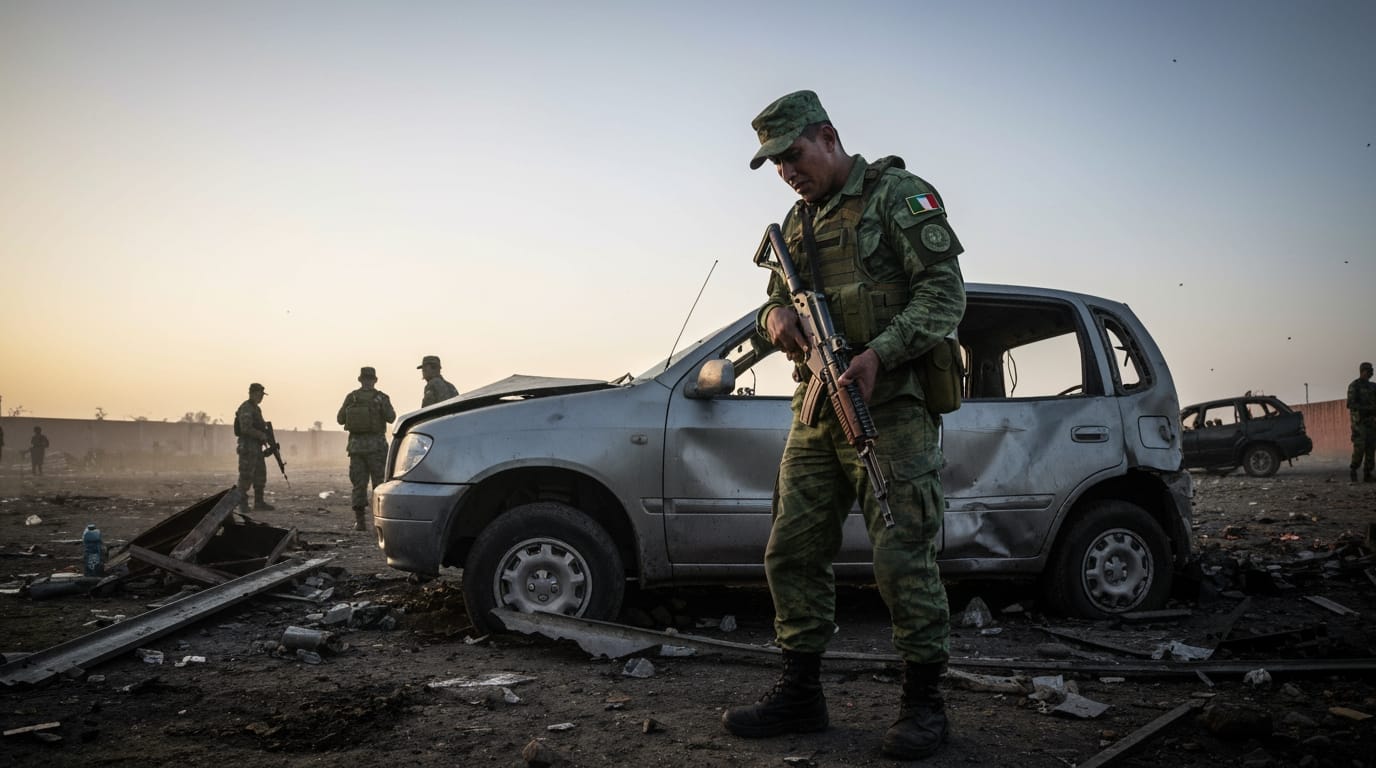
MEXICO CITY – Nemesio Rubén Oseguera Cervantes, the notorious leader of the Jalisco New Generation Cartel (CJNG) and one of the world's most wanted drug traffickers, was killed Sunday, February 22, 2026, during a high-stakes military operation in Tapalpa, Jalisco. The dramatic demise of "El Mencho," a figure synonymous with extreme violence and illicit power, has ignited a wave of retaliatory attacks across Mexico and left the nation grappling with profound questions about the future of its volatile drug war. The immediate aftermath saw widespread chaos, with CJNG operatives erecting fiery blockades and engaging in deadly clashes with security forces, signaling a turbulent period ahead for Mexico's security landscape.
The Takedown of a Drug Lord
The operation that led to El Mencho's death was a meticulously planned effort by Mexican federal forces, significantly aided by intelligence provided by U.S. authorities. Reports indicate that the 59-year-old cartel boss was gravely wounded during a fierce firefight in the town of Tapalpa and subsequently died while being airlifted to Mexico City for medical treatment. The Mexican Ministry of Defense confirmed the operation, noting that federal forces came under fire during an attempt to arrest Oseguera Cervantes, forcing them to defend themselves.
El Mencho had long been a ghost-like figure, evading capture for years despite a $15 million bounty on his head from the U.S. government. His killing represents the most significant blow against organized crime in Mexico since the recapture of Joaquín "El Chapo" Guzmán nearly a decade ago. However, unlike previous takedowns, the immediate response from the CJNG was swift and brutal, encompassing road blockades, the burning of vehicles and businesses, and direct confrontations with Mexican National Guard members in at least six states, including Jalisco, Michoacán, Colima, Tamaulipas, Guanajuato, and Aguascalientes. Tragically, at least 25 National Guard officers were among those killed in these retaliatory acts, underscoring the cartel's capacity for widespread violence.
The Rise of the CJNG
Nemesio Oseguera Cervantes founded the Jalisco New Generation Cartel around 2009, emerging from the fragmentation of the Milenio Cartel. What began as an armed faction, initially aligned with the powerful Sinaloa Cartel, rapidly evolved into Mexico's most formidable and brutal criminal organization. The CJNG distinguished itself through an aggressive expansion strategy and an almost unprecedented embrace of extreme violence, including public executions, displays of mutilated bodies, and a willingness to confront state forces directly with military-grade weaponry.
Under El Mencho's leadership, the CJNG diversified its criminal portfolio beyond drug trafficking to include extortion, fuel theft, human smuggling, kidnapping, illegal mining, and financial crimes, generating billions of dollars annually. The cartel became a dominant player in the global drug trade, particularly in the trafficking of cocaine, fentanyl, and methamphetamine to the United States, maintaining a presence in over 40 countries and nearly all U.S. states. Its hierarchical command structure, combined with a "franchise model" allowing regional leaders significant autonomy, enabled rapid expansion and entrenched influence across Mexico. The CJNG's de facto control over strategic points like the Port of Manzanillo in Colima facilitated the import of precursor chemicals crucial for illicit drug production.
A Power Vacuum and the Specter of Internal Conflict
El Mencho's death inevitably creates a significant power vacuum at the helm of the CJNG, prompting urgent questions about succession and the potential for internal strife. While the cartel has demonstrated a sophisticated organizational structure, the absence of its undisputed leader could trigger a battle for control among various factions and commanders. Analysts point out that several key relatives and potential heirs, including his son Rubén Oseguera González ("El Menchito"), are either imprisoned in the U.S. or Mexico, or lack the broad influence needed to command such a vast and violent organization.
Juan Carlos Valencia González, El Mencho's stepson, and other high-ranking figures like Ricardo Ruiz Velasco ("El Doble R") and Gonzalo Mendoza Gaytán ("El Sapo"), are among those being considered as potential successors. However, without a clear and universally accepted successor, the CJNG could fracture into rival groups, intensifying internecine conflict. This internal instability is compounded by the cartel's "franchise model," which could see autonomous cells vying for power and territory, leading to more localized and chaotic violence across the country. Security consultant Eduardo Guerrero warned that the cartel's fragmentation could turn it into a "wounded beast," potentially leading to even more unpredictable and widespread violence.
Broader Implications for Mexico and International Relations
The death of El Mencho carries substantial implications for Mexico's ongoing battle against organized crime and its relationship with international partners, particularly the United States. President Claudia Sheinbaum's administration has adopted a more aggressive stance against cartels, a notable shift from her predecessor's "Hugs Not Bullets" policy. The successful operation against El Mencho, executed with U.S. intelligence, marks a significant victory for the Mexican government and may alleviate some of the pressure from the Trump administration, which has consistently urged Mexico to intensify its efforts against drug traffickers and even threatened military action.
However, experts caution that while the removal of a high-value target can be a tactical win, it often leads to short-term spikes in violence as cartels reorganize and rival groups exploit perceived weaknesses. The ensuing power struggles could trigger a new wave of turf wars, potentially increasing homicide rates and driving further internal displacement and migration towards the U.S. border. The scale of the CJNG's retaliation following El Mencho's death—including hundreds of roadblocks and attacks in multiple states—demonstrates its enduring capacity for disruption and its willingness to challenge state authority.
The Path Ahead
The coming weeks and months will be critical in determining the long-term impact of El Mencho's death. Mexican authorities are maintaining active operations to contain potential reactions and reinforce security across affected regions. The focus will be on preventing the CJNG from solidifying new leadership or fracturing into even more volatile, unpredictable groups. While the death of Nemesio Oseguera Cervantes marks a significant turning point, the history of Mexico's drug war suggests that such events rarely lead to a definitive end to cartel violence. Instead, they often usher in new phases of conflict, reconfigurations of power, and continued challenges for both national and international security. The true measure of this operation's success will be in the Mexican government's ability to capitalize on the disruption within the CJNG and implement sustained strategies that address the underlying factors fueling organized crime.