Pacific Nations Condemn 'Shadow Fleet' Flag Misuse, Citing Grave Global Risks
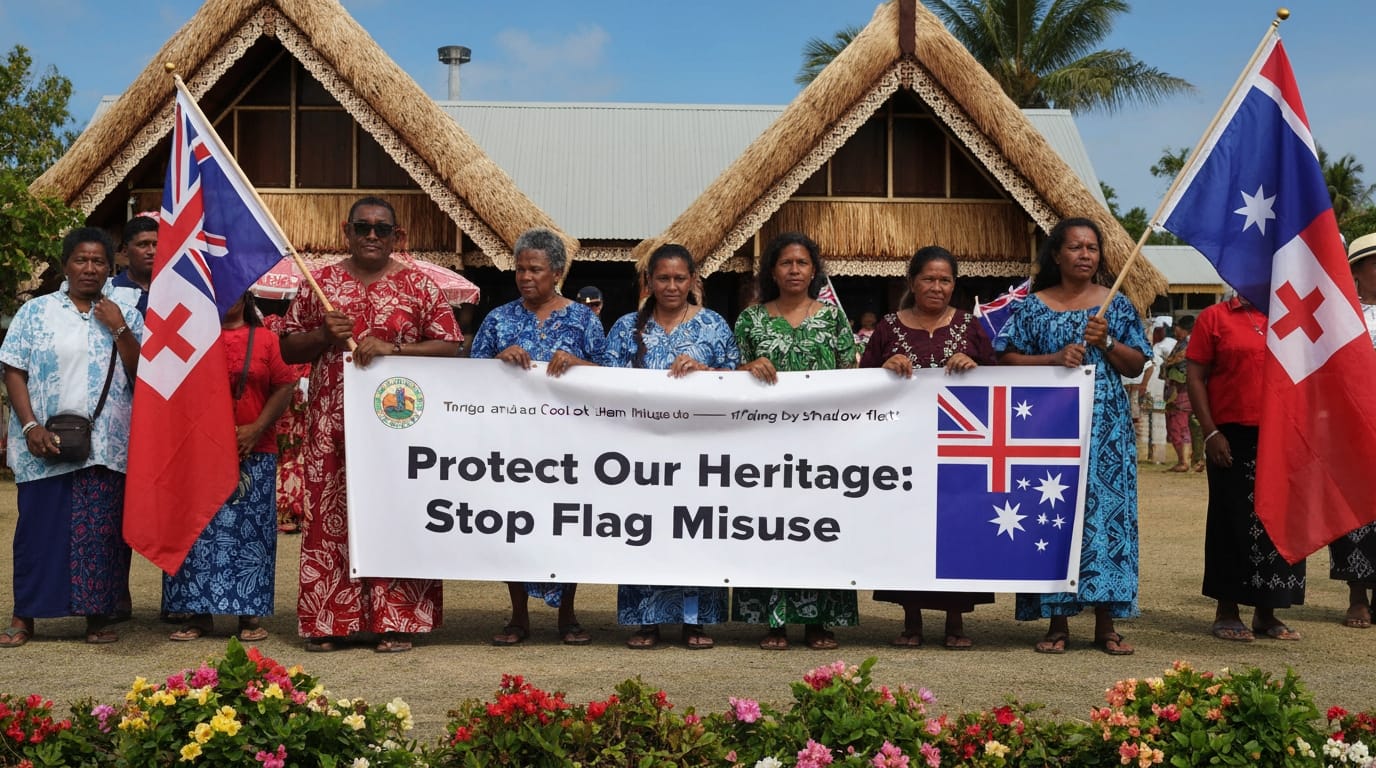
RAROTONGA, COOK ISLANDS & NUKU'ALOFA, TONGA – Small island nations, Tonga and the Cook Islands, are vociferously condemning the fraudulent misuse of their national flags by a shadowy fleet of vessels operating globally, often to evade international sanctions and regulatory oversight. This illicit practice, primarily involving aging oil tankers, poses significant threats to maritime safety, environmental integrity, and the international rule of law, while simultaneously tarnishing the reputations of these Pacific states. Both governments have issued stern warnings, disavowing responsibility for the actions of these illicit vessels and vowing to work with international bodies to combat the deceptive practices.
The "shadow fleet" refers to a growing armada of ships, largely oil tankers, that operate outside conventional maritime regulations, frequently engaging in the clandestine transport of sanctioned goods, particularly Russian and Iranian crude oil. These vessels employ sophisticated deceptive practices, including manipulating their Automatic Identification System (AIS) transponders to broadcast false identities or to appear as if they are flying the flags of unsuspecting nations. This exploitation of "flags of convenience" or, in many cases, outright fraudulent flag display, allows these operators to skirt international sanctions, avoid proper inspections, and operate with opaque ownership structures, thereby undermining global efforts to maintain maritime security and enforce economic restrictions.
The Mechanics of Deception: How Flags Are Exploited
At the heart of the "shadow fleet's" operations is the manipulation of maritime identity. Every vessel registered under international maritime law must fly the flag of a specific state, known as its flag state, which bears responsibility for ensuring the ship's compliance with international standards. However, the absence of binding and enforceable international rules governing flag registration has created a fragmented system ripe for abuse. Illicit operators exploit this by either registering in jurisdictions with minimal oversight – known as flags of convenience – or, more nefariously, by falsely claiming affiliation with countries like Tonga and the Cook Islands without any authorization.
Maritime intelligence analysts have detailed how these vessels easily transmit false identity signals through the global AIS. The first three digits of a vessel's Maritime Mobile Service Identity (MMSI) number identify its flag state. By altering these digits in their AIS transponders, rogue operators can instantaneously adopt the apparent nationality of another country. This deceptive signaling is crucial for these vessels, enabling them to operate under the radar, especially in sensitive areas like the East and South China Seas, where many sanctioned vessels falsely displaying Tonga's flag have been tracked. Such practices not only obscure their true origins and activities but also create a significant challenge for global enforcement agencies attempting to track and interdict them.
Tonga's Firm Stance Against Fraudulent Use
The Kingdom of Tonga has issued an unequivocal denouncement of any foreign vessel attempting to operate under its flag. The Tongan government's Maritime Administration Office (MAO) emphasized that its international registry for ships was officially closed in 2002, and it does not register foreign vessels engaged in international voyages. Therefore, any ship currently transmitting under the Tongan flag is doing so fraudulently and without any authorization from the Kingdom. This makes Tonga's situation particularly stark, as there is no legitimate basis for these vessels to claim Tongan nationality.
Tongan authorities have stressed that they bear no responsibility for the actions of ships fraudulently flying their flag. However, they acknowledge the severe reputational risks and potential legal entanglements that could arise from such misidentification. Mark Douglas, an analyst with Starboard Maritime Intelligence, pointed out the highly unusual nature of oil tankers claiming Tongan flags, given the registry's closure decades ago. He highlighted the immense liability an actual flag state would incur if such poorly maintained and uninsured vessels were involved in an accident. In response, Tonga's MAO is actively monitoring the issue and coordinating with the International Maritime Organization (IMO) to safeguard the nation's maritime identity from further misuse.
The Cook Islands: Battling a Proliferating Problem
The Cook Islands have faced a similar and perhaps more extensive challenge with their flag being exploited by the "shadow fleet." Unlike Tonga, the Cook Islands maintain an active international shipping registry, which, according to reports, has seen rapid growth, with a significant proportion – as much as 90% – comprising tankers. Many of these vessels have been linked to the illicit Russian and Iranian oil trade, particularly since the imposition of Western sanctions following the invasion of Ukraine. Analyst Matt Nippett's investigation revealed over 100 oil tankers accused of covertly transporting Russian and Iranian oil under the Cook Islands flag, operating with murky ownership structures and linked to sanctions breaches.
The issue gained international attention with cases like "The Bertha," which reportedly continued to use Cook Islands identifiers for months in 2024, even after its legitimate registration was questioned. Another vessel, the "Min Hang," was spotted transmitting a false Cook Islands flag off the coast of Venezuela. The Cook Islands Maritime Authority has stated that vessels within the "shadow fleet" often engage in deceptive signaling, including location spoofing and broadcasting false identities.
In response to mounting pressure and concerns, particularly from New Zealand, the Cook Islands have begun to take action. New Zealand's Foreign Minister, Winston Peters, expressed "alarming and infuriating" concerns that the Cook Islands' shipping registry was undermining international efforts to curb funding for Russia's war machine. This diplomatic strain led to a pause in New Zealand's foreign aid and a de facto suspension of high-level diplomatic contacts. Maritime Cook Islands (MCI), the private company operating the registry, was also reportedly removed from the Registry Information Sharing Compact (RISC), an international database designed to identify sanctions-busting ships. The Cook Islands government and MCI have since affirmed their commitment to international sanctions, stating that any vessel or owner on international sanctions lists would be removed from their register immediately. Indeed, by October 2025, the Cook Islands-flagged tanker fleet reportedly reduced to a third of its peak size in 2024.
Broader Implications and the Call for Global Action
The proliferation of the "shadow fleet" and its deceptive practices poses a multidimensional threat that extends far beyond the immediate concerns of flag states. These aging, poorly maintained, and often uninsured vessels represent significant environmental and safety hazards. Experts warn that it is only a matter of time before one of these ships, often operating without valid documentation or proper safety management systems, causes a major accident, potentially leading to catastrophic oil spills or other disasters.
Furthermore, the "shadow fleet" directly undermines the integrity of international maritime law and governance. A joint letter from 14 countries bordering the Baltic and North Seas recently highlighted that vessels sailing under flags of convenience to evade sanctions may be treated as "ships without nationality" under the United Nations Convention on the Law of the Sea (UNCLOS). This designation could allow warships of any nation to board, search, and seize such vessels. The international community, including the IMO, is increasingly focused on the structural weaknesses in global maritime governance that enable these fleets to operate with impunity.
The experiences of Tonga and the Cook Islands underscore the vulnerability of small island developing states to such sophisticated illicit operations. While they may be geographically distant from the geopolitical tensions driving the "shadow fleet," their maritime identities become unwitting tools in a complex global game of cat and mouse. The concerted efforts of these Pacific nations, coupled with growing international awareness and coordinated action, are critical to reasserting control over global shipping lanes and safeguarding the principles of responsible maritime conduct. The continued fight against the "shadow fleet" demands robust international cooperation, improved oversight of flag registries, and stronger enforcement mechanisms to protect both national reputations and the global marine environment.


