Pakistan Grapples with Escalating Militant Threat Following Deadly Mosque Attack
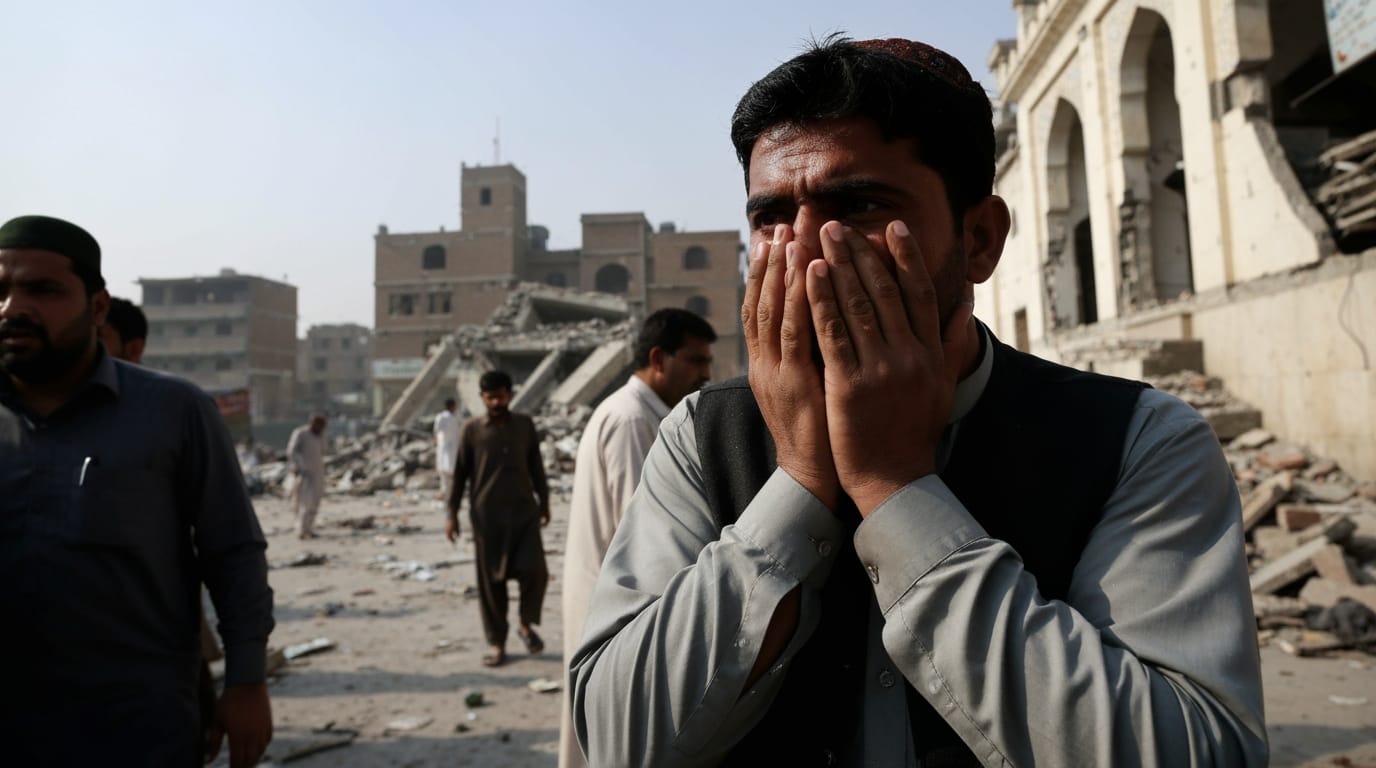
Peshawar, Pakistan – A devastating suicide bombing at a mosque in Peshawar in January 2023 served as a stark and tragic reminder of Pakistan's intensifying battle against a resurgent militant threat, a crisis that has profoundly destabilized the nation and claimed countless lives. The attack, which targeted a high-security police compound, highlighted critical vulnerabilities and underscored the escalating violence perpetrated primarily by the Tehrik-i-Taliban Pakistan (TTP) and its affiliates. With a significant surge in terrorist incidents and casualties reported across the country, particularly since the Taliban's return to power in Afghanistan, Pakistan finds itself confronting a complex and deeply entrenched insurgency with profound human and geopolitical implications.
The morning of January 30, 2023, turned to horror when a suicide bomber detonated explosives inside a mosque within Peshawar's heavily fortified Police Lines area. The compound, home to the Khyber Pakhtunkhwa Police headquarters and counter-terrorism offices, was breached by an assailant disguised as a police officer who infiltrated the premises during congregational Zuhr prayers. The blast, fueled by an estimated 12 kilograms of trinitrotoluene, ripped through the main prayer hall, causing its roof and a wall to collapse and burying hundreds of worshippers in rubble. The sheer scale of the tragedy quickly became apparent, with the death toll steadily climbing to 100, and over 225 individuals sustaining injuries. The vast majority of the victims were police officers, leaving their families and the law enforcement community in profound grief and shock. The brazen nature of the attack within such a secure zone immediately raised serious questions about security lapses and the persistent ability of militants to strike at the heart of state authority. While a TTP faction, Jamaat-ul-Ahrar, initially claimed responsibility, citing revenge for the death of a former leader, the main TTP group later disavowed the attack, stating it was against their policy to target places of worship. Nevertheless, Pakistani officials and observers largely believe the TTP was either directly involved or sanctioned the operation.
A Troubling Resurgence of the TTP
The Peshawar mosque bombing is not an isolated incident but rather a grim symptom of a broader and deeply alarming resurgence of militant activity across Pakistan. At the forefront of this renewed threat is the Tehrik-i-Taliban Pakistan (TTP), often referred to as the Pakistani Taliban. After a period of decline, the TTP began to regroup and intensify its operations following the Afghan Taliban's takeover of Afghanistan in August 2021. This dramatic shift in Afghanistan's geopolitical landscape provided the TTP with a crucial "strategic depth" and safe haven across the border, allowing its leaders and fighters to regroup, reorganize, and launch attacks into Pakistan. The Afghan Taliban's release of TTP militants from prisons further bolstered the group's ranks and operational capabilities.
The TTP's objectives are clear: to challenge the Pakistani government and establish Sharia law, particularly in the Khyber Pakhtunkhwa province. While the group previously aimed for the overthrow of the central government, its current focus appears to be on achieving greater autonomy for tribal areas and implementing Sharia-based regimes in these regions. This evolving strategy, coupled with enhanced operational freedom, has translated into a significant escalation of violence. Reports indicate a sharp increase in the number of terrorist incidents, with attacks concentrating primarily in the provinces bordering Afghanistan, namely Khyber Pakhtunkhwa and Balochistan, targeting both security forces and civilian populations.
Pakistan's Widening Terrorism Crisis
The statistics paint a stark picture of Pakistan's worsening security landscape. The number of terrorist attacks and casualties has risen dramatically in recent years. In 2022, incidents increased to 365 from 267 in 2021. This upward trend continued unabated into 2023, with the number of attacks and casualties more than 50 percent higher than the previous year. By the end of 2023, the country recorded 689 incidents and 490 deaths, leading to Pakistan's ranking rising to fourth globally in terms of terrorism impact.
The situation further deteriorated in 2024, when Pakistan witnessed an alarming 1,099 incidents of terrorism and 1,081 deaths. The TTP alone was responsible for 482 attacks in 2024, resulting in 558 fatalities, accounting for over half of all terrorism-related deaths in the country. This surge in violence led to Pakistan being ranked as the world's second most affected country by terrorism in 2024. The first nine months of 2025 recorded 699 attacks, claiming 1,034 lives and injuring 1,366 people.
Beyond the TTP, other formidable militant groups contribute to Pakistan's security challenges. These include the Balochistan Liberation Army (BLA), an ethnonationalist separatist group, and various local branches of ISIS, such as ISIS-Khorasan (ISIS-K). The BLA has specifically targeted Chinese-funded projects and personnel associated with the China-Pakistan Economic Corridor (CPEC) in Balochistan, alongside its primary goal of achieving independence for the province. The tactics employed by these groups are varied and increasingly sophisticated, ranging from suicide bombings and small-arms assaults to improvised explosive devices (IEDs), vehicle-borne IEDs (VBIEDs), and targeted assassinations. Disturbingly, a shift in recruitment patterns has also been observed, with incidents involving female suicide bombers. The ability of these groups to carry out coordinated, high-impact attacks in urban and sensitive locations, rather than just isolated incidents in rural areas, signifies a dangerous evolution in their capabilities.
Counter-Terrorism Efforts and Geopolitical Tensions
In response to this persistent and evolving threat, Pakistan has implemented a multi-pronged counter-terrorism strategy. The government has undertaken military operations, including past campaigns like "Rah-e-Rast," "Zarb-e-Azb," and "Rad-ul-Fasaad," and launched a new counter-insurgency operation named "Azm-e-Istehkam" (Resolve for Stability) in 2024. On the legislative front, Pakistan has enacted significant reforms to its Anti-Terrorism Act and enhanced efforts to counter terrorism financing. The country also actively participates in international and regional forums to foster cooperation against terrorism.
However, the effectiveness of these measures in achieving lasting peace has been limited. While military operations have led to tactical successes, they have often failed to dismantle the underlying networks and ideologies that fuel extremism. Critics argue that past efforts have been reactive rather than part of a sustained, holistic strategy addressing the root causes of extremism, such as socio-economic development and effective community engagement.
A major complicating factor is Pakistan's strained relationship with the Afghan Taliban government. Islamabad consistently accuses the Afghan Taliban of providing sanctuary and support to TTP militants, allowing them to orchestrate cross-border attacks. This claim is vehemently denied by the Afghan Taliban, who assert that no group is permitted to threaten neighboring countries from Afghan soil. The United Nations has also reported the presence of TTP fighters in Afghanistan, suggesting ongoing cross-border operational capabilities. This geopolitical dynamic creates significant challenges for regional stability and effective counter-terrorism cooperation. International concern is palpable, with the United States issuing warnings to its citizens regarding potential terror threats in Pakistan, including threats against mosques in the capital, Islamabad.
Conclusion: An Enduring and Complex Challenge
The Peshawar mosque attack underscored the grim reality of Pakistan's enduring struggle against militant extremism. The tragic loss of lives, predominantly within the law enforcement community, sent shockwaves across the nation, highlighting the personal sacrifices made daily in the fight against terrorism. While Pakistan has demonstrated resilience and commitment in its counter-terrorism efforts, the persistent resurgence of groups like the TTP, fueled by regional dynamics and complex internal factors, presents an formidable challenge. The escalating violence, particularly in Khyber Pakhtunkhwa and Balochistan, not only threatens Pakistan's internal stability but also carries significant geopolitical implications. Moving forward, a comprehensive strategy that integrates robust security operations with sustained efforts to address the socio-economic and ideological root causes of extremism, coupled with enhanced regional and international cooperation, remains paramount to securing lasting peace and stability for the nation.


