Palestinians Navigate Fragmented Local Elections Amidst Deep Political Divide
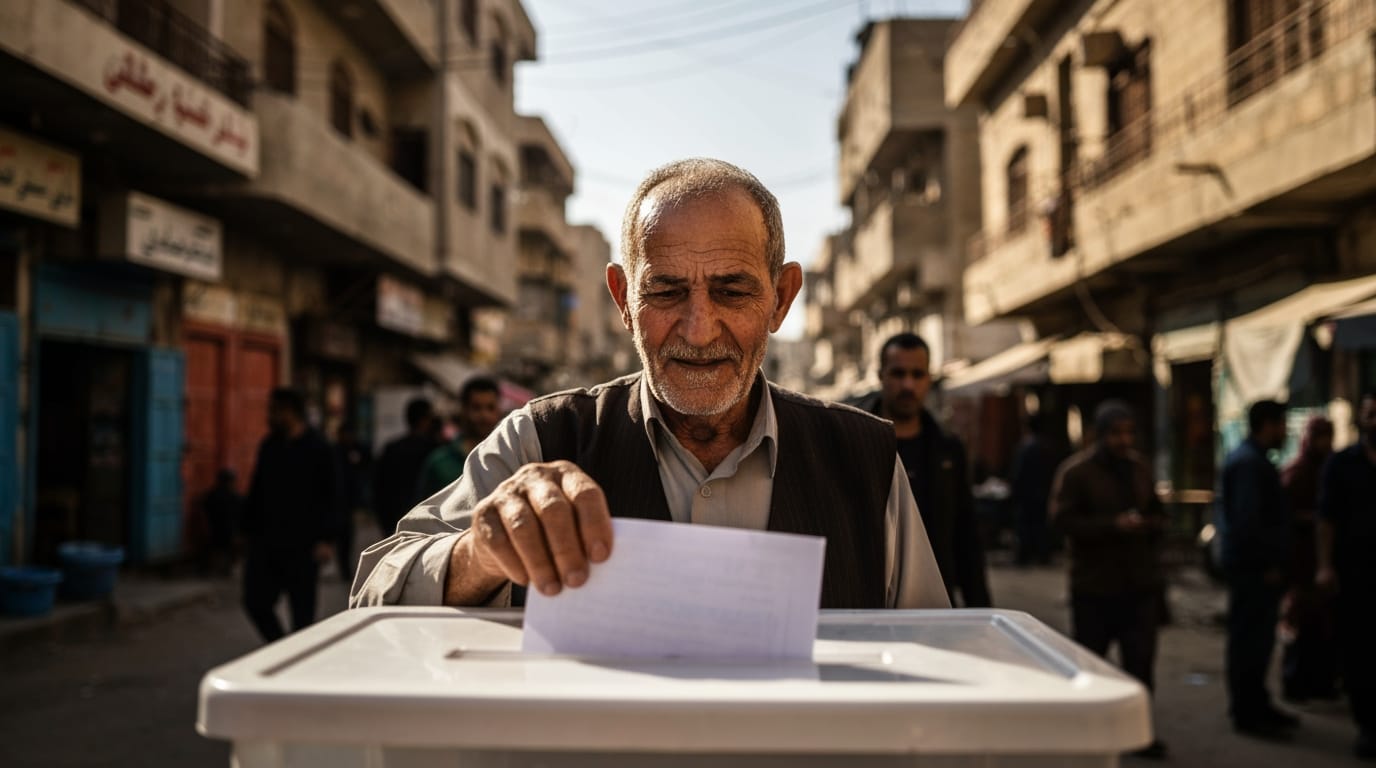
RAMALLAH, West Bank – Palestinians headed to the polls today, April 25, 2026, for municipal elections across the West Bank and, for the first time in two decades, in the war-torn Gaza Strip, albeit in a single, symbolically chosen city. These local contests unfold against a backdrop of severe economic hardship, escalating settler violence, and profound political uncertainty following years of conflict and the protracted absence of national elections. The elections serve as a crucial, albeit limited, barometer of public sentiment and highlight the enduring schism between the Palestinian territories.
Today's vote, primarily in the West Bank and the Gaza Strip's Deir al-Balah municipality, represents a complex effort by the Palestinian Authority (PA) to reinforce its claims of unified governance and test the political landscape. While West Bank communities elect councils responsible for essential services such as water, roads, and electricity, the election in Deir al-Balah carries significant symbolic weight for the PA, signaling an aspiration for political reintegration with Gaza after its near two-decade isolation from electoral processes.
A Glimmer of Local Democracy Amidst Turmoil
The Central Elections Commission (CEC), operating under challenging circumstances, has facilitated polling for approximately one million eligible voters in the West Bank and 70,000 in Deir al-Balah. The decision to hold elections, particularly in Gaza, reflects a determined attempt to project a semblance of normalcy and democratic participation despite the extensive destruction and ongoing humanitarian crisis in the Strip. Fareed Taamallah, a spokesperson for the CEC, emphasized that voting reflects the Palestinian people's will to remain on their land and develop their communities.
The elections are occurring amidst "inauspicious conditions," including economic hardship, settler violence, and the "unprecedented destruction" in Gaza. This backdrop underscores the resilience of communities seeking to establish functioning local governance. The PA hopes this limited re-engagement with elections in Gaza could pave the way for broader national democratic processes, though many analysts remain skeptical given the deep political divides and administrative hurdles.
Two Decades Apart: Gaza's Electoral Re-entry
The inclusion of Deir al-Balah marks the first municipal election in any part of the Gaza Strip since 2005. Following Hamas's takeover of Gaza in 2007, the Strip largely ceased to participate in Palestinian electoral processes, a stark contrast to the West Bank, which held municipal elections in 2012, 2017, and in two phases in 2021-2022. This prolonged electoral void in Gaza has deprived its population of local democratic representation and accountability.
The choice of Deir al-Balah for this symbolic vote is strategic; the city, located between Gaza City and Khan Younis, suffered less widespread destruction from recent conflicts compared to other areas, making a limited electoral exercise feasible. However, the logistical challenges remain immense. The CEC had to improvise voter registration and has faced difficulties sending essential election materials, such as ballot papers and ballot boxes, into Gaza. Voting is even taking place in temporary tents, and polling hours are reduced due to electricity constraints.
Hamas, while not officially fielding candidates, has stated it will respect the election results and has deployed its civil police to secure polling stations in Deir al-Balah. Nevertheless, some candidate lists in Deir al-Balah are widely perceived by residents and analysts as being aligned with Hamas. This unofficial participation could offer insights into the group's current popularity and public sentiment in Gaza, even as it formally boycotts the vote due to broader political disagreements with the PA.
West Bank's Contested and Uncontested Races
In the West Bank, the municipal elections involve a larger number of localities, encompassing 157 municipalities and 328 village councils across the Palestinian territories. However, the electoral landscape in the West Bank is not uniformly competitive. In many municipalities and village councils, only a single list of candidates was submitted, leading to elections by acclamation and obviating the need for a vote. For instance, major cities like Nablus and Ramallah will not see competitive races due to unopposed lists.
This situation is viewed by some as a reflection of the Palestinian leadership's desire to avoid highly contested elections that could reveal its own weaknesses or unpopularity amidst current political uncertainties. Most candidates are running as independents or under the banner of Fatah, the dominant faction of the Palestinian Authority. The voter turnout for previous West Bank municipal elections has typically ranged between 50% and 60%, reflecting relatively high participation by regional standards. The elections utilize a new open-list proportional representation system for municipal councils, allowing voters to choose individual candidates from lists, a departure from previous systems.
These local councils play a critical role in delivering essential services and managing local affairs in the West Bank, often stepping in where central authority faces limitations. The outcomes will shape local governance structures responsible for vital daily functions for millions of Palestinians.
The Broader Political Barometer
The current municipal elections, while focused on local governance, inevitably carry broader political implications for the fragmented Palestinian landscape. The persistent failure to hold national presidential or legislative elections since 2006 underscores the deep-seated Fatah-Hamas divide and the broader stagnation of Palestinian democratic institutions. President Mahmoud Abbas has postponed national elections multiple times, citing various reasons, including disagreements over voting in East Jerusalem.
These local elections are being held under a revised electoral law published in November 2025. While some international observers, such as The Carter Center, are conducting remote assessments, the ongoing conflict and political environment limit full observation. Critics argue that the current electoral framework, particularly the condition requiring candidates to support PA agreements (including recognition of Israel), has led to boycotts by some Palestinian factions and limits the inclusivity of the process.
The PA's push for elections in Deir al-Balah is a strategic move to assert its legitimate authority over Gaza and to unify the two territories under a single political system, a goal Palestinians view as integral to future statehood. However, the constrained nature of the elections, particularly in Gaza, and the lack of robust competition in parts of the West Bank, mean that the results will offer only a partial and imperfect reflection of the overall political mood.
Conclusion
Today's municipal elections represent a poignant moment for Palestinians, showcasing both a desire for local self-governance and the enduring challenges posed by internal political divisions and external pressures. While the West Bank proceeds with its local polls, the symbolic re-entry of Gaza, through the singular vote in Deir al-Balah, underscores a complex narrative of resilience, political maneuvering, and fragmented aspirations.
The outcomes of these elections will determine the leadership of local councils responsible for the daily lives of millions, from managing utilities to local development. However, their broader significance lies in their capacity, however limited, to serve as a bellwether for public trust and to keep alive the principles of democratic participation amidst a protracted struggle for national unity and self-determination. The path to a fully unified and democratically elected Palestinian leadership across all territories remains arduous, marked by the deep-seated rifts that continue to shape their political destiny.


