Partial Solar Eclipse Graces Skies Across Europe, North America, and Africa
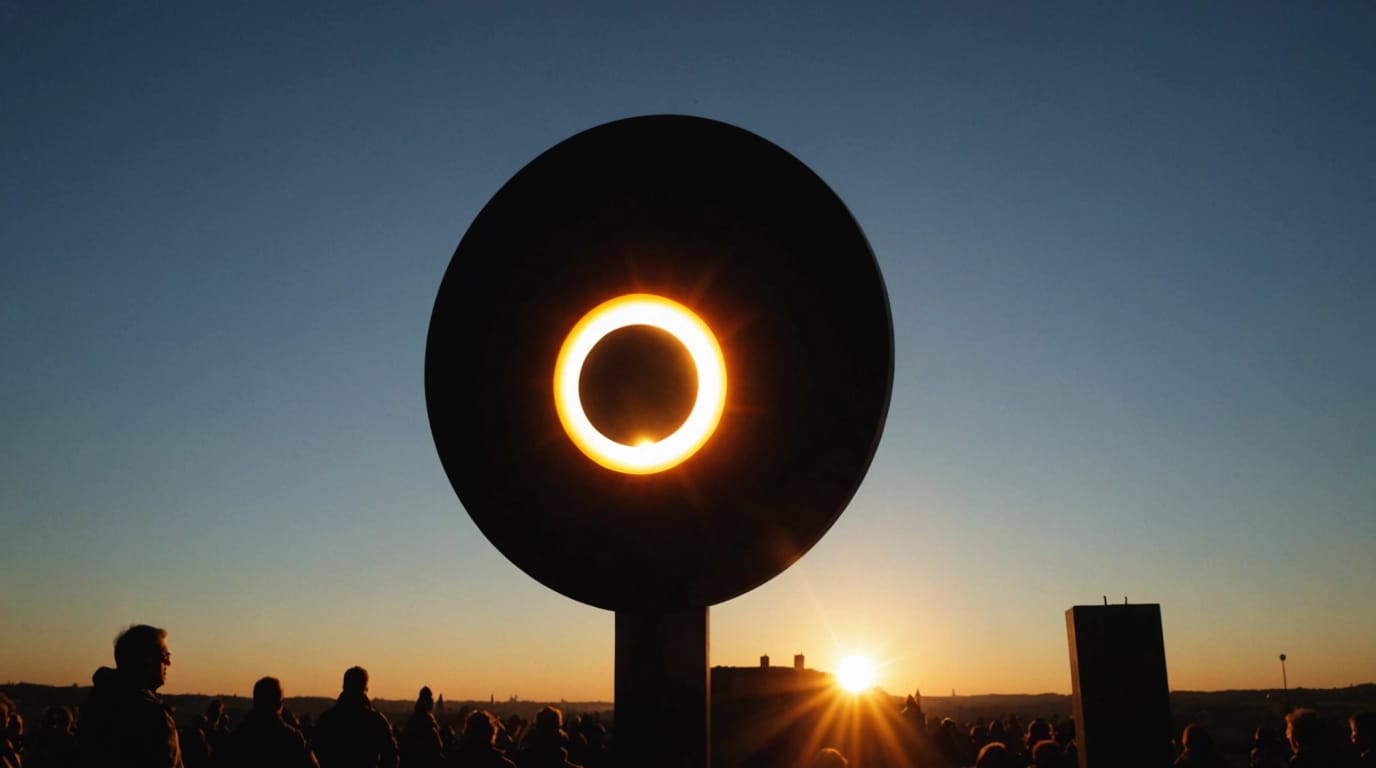
Skywatchers across Europe, parts of North America, and Africa were treated to a partial solar eclipse Saturday, as the moon passed between the sun and Earth, casting a shadow and creating a celestial spectacle. The event, visible in varying degrees depending on location, drew the attention of astronomy enthusiasts and casual observers alike, offering a captivating display of light and shadow.
The partial solar eclipse occurs when the moon only partially obscures the sun, creating a crescent-shaped appearance. Unlike a total solar eclipse, where the sun is completely blocked, a partial eclipse allows viewers to witness the sun gradually transforming into a crescent as the moon moves across its path.
Viewing the Eclipse
The eclipse was visible across a wide geographical area, including Europe, western Africa, eastern North America, and northern Asia. The extent of the eclipse varied by location, with the northeastern United States, Greenland, and eastern Canada experiencing the greatest obscuration of the sun.
In Europe, the eclipse was visible in the late morning, while in eastern North America, it coincided with sunrise. Skywatchers in western Africa observed the eclipse in the late morning as well, and those in northern Asia saw it in the afternoon or early evening.
Clear skies were essential for optimal viewing, and experts recommended seeking locations away from tall buildings and city lights. For viewers in the Americas, where the sun was rising during the eclipse, an unobstructed eastern horizon was ideal.
Safety First: Eye Protection is Crucial
Authorities and experts emphasized the importance of using proper eye protection when viewing a solar eclipse. Looking directly at the sun, even during a partial eclipse, can cause serious and permanent eye damage.
Safe viewing methods include using eclipse glasses with certified solar filters or employing indirect viewing techniques such as pinhole projection. Eclipse glasses can be obtained from local science museums or reputable online vendors verified by the American Astronomical Society.
Pinhole projection involves creating a small hole in a piece of cardboard or paper and projecting an image of the sun onto a surface. This allows viewers to observe the eclipse indirectly without risking eye damage. Holding up a colander can produce a similar effect, casting crescent-shaped shadows on the ground as sunlight filters through the holes. Looking at the ground under a shady tree can also reveal crescent shadows formed by sunlight filtering through the leaves.
A Play of Light and Shadow
Auriane Egal with the Planetarium in Montréal described eclipses as a "game of light and shadow" played by the sun, moon, and Earth. Solar and lunar eclipses occur several times a year, typically in pairs due to the moon's tilted orbit around Earth.
Juan Carlos Muñoz-Mateos with the European Southern Observatory noted that during the eclipse, the sun gradually slimmed to a crescent as the moon appeared to cover it, potentially causing the day to grow dimmer, similar to a cloudy day.
The Next Celestial Events
For those who missed this partial solar eclipse, another total lunar eclipse and partial solar eclipse are expected in September, with the best solar eclipse views in Antarctica and New Zealand. The next major eclipse will be a total solar eclipse on August 12, 2026, visible in parts of the Arctic and Europe.
This weekend's partial solar eclipse served as a reminder of the dynamic and ever-changing relationship between the Earth, moon, and sun, offering a moment of awe and wonder for observers across the globe.


