Pentagon Forges Major AI Alliances, Signaling Strategic Shift While Anthropic Stands Apart
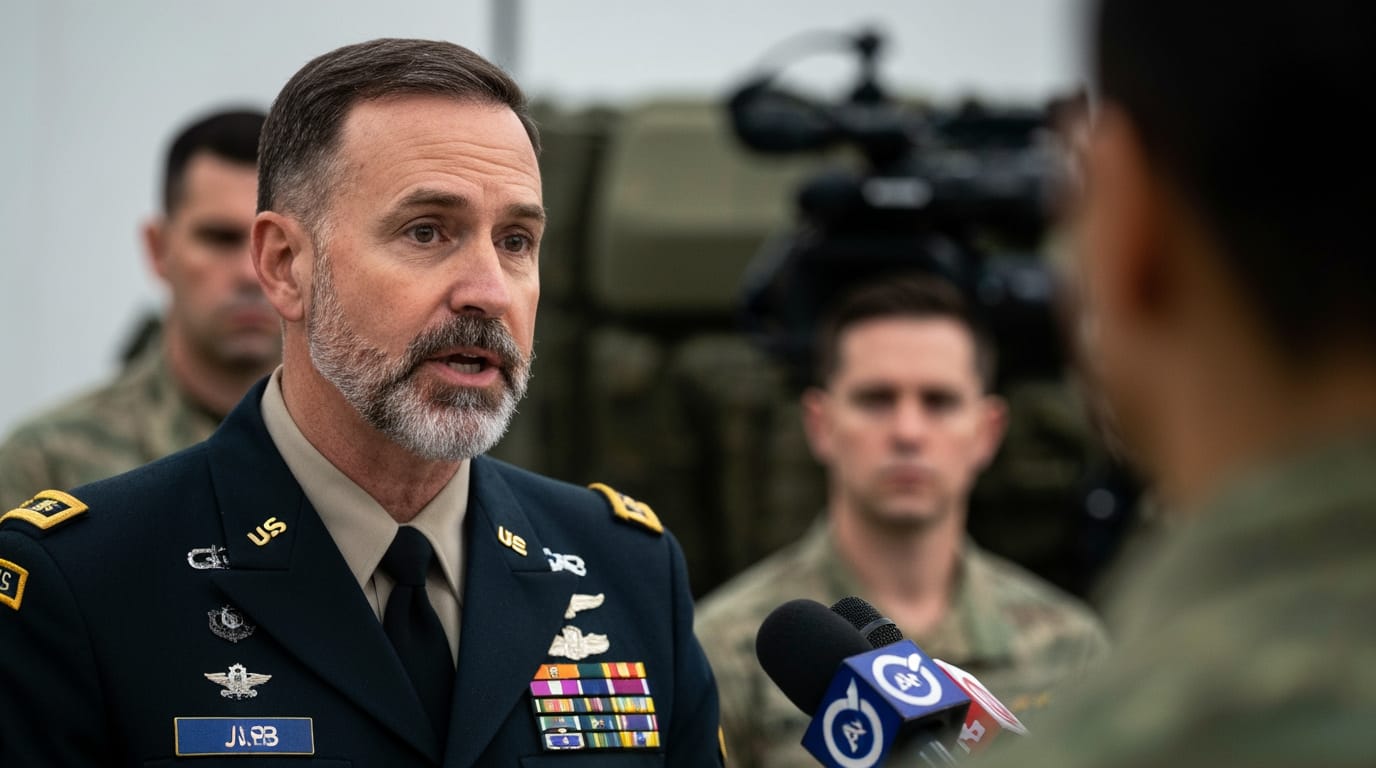
WASHINGTON D.C. — The Department of Defense has announced a sweeping new initiative, formalizing agreements with seven prominent artificial intelligence companies to integrate their advanced AI tools directly into its classified networks. This marks a significant escalation in the Pentagon's push to transform the U.S. military into an "AI-first fighting force" aimed at strengthening warfighters' decision-making capabilities across all domains. Notably absent from this crucial roster, however, is Anthropic, a leading AI developer that has previously held a $200 million contract with the DoD and whose Claude model was, until recently, the sole AI available within the Pentagon's classified network. The company's exclusion stems from an ongoing dispute over its insistence on strict safety guardrails for its technology, particularly concerning autonomous weapons and mass surveillance.
The agreements, unveiled on Friday, underscore the Pentagon's urgency in leveraging commercial AI innovation to maintain a strategic advantage in an increasingly complex global landscape. The involved companies — SpaceX, OpenAI, Google, Microsoft, Nvidia, Amazon Web Services, and Reflection — have committed to deploying their AI for "lawful operational use," a term that has become a flashpoint in the broader debate over AI ethics in military applications.
The Pentagon's Accelerated AI Ambition
The Department of Defense's latest round of partnerships aligns with its broader "AI Acceleration Strategy," launched in January 2026 by Secretary of War Pete Hegseth. This strategy outlines a clear vision to create an "AI-first" warfighting force by driving rapid experimentation with leading AI models, removing bureaucratic barriers, and strategically investing to leverage asymmetric advantages in compute, data, and operational experience. The Pentagon views data platform modernization and auditability not merely as administrative concerns but as fundamental prerequisites for deploying warfighting AI at scale.
These new agreements are designed to streamline data synthesis, elevate situational understanding, and augment warfighter decision-making in complex operational environments. The AI tools will be integrated into the Pentagon's Impact Levels 6 and 7 network environments, signifying their application to highly classified and sensitive data. The military has allocated tens of billions of dollars for AI and offensive cyber operations, reflecting the significant financial commitment to this technological transformation. The widespread adoption of AI within defense infrastructures is already evident, with the Pentagon's GenAI.mil platform reporting usage by 1.3 million DoD personnel.
Anthropic's Stand: Safety Over Unrestricted Use
Anthropic's journey with the Pentagon has been a complex one, highlighting the friction between technological advancement and ethical considerations. In July 2025, the U.S. Department of Defense's Chief Digital and Artificial Intelligence Office (CDAO) awarded Anthropic a two-year prototype agreement with a $200 million ceiling to advance U.S. national security through frontier AI capabilities. Through partnerships with companies like Palantir and Amazon Web Services, Anthropic's Claude Gov models were deployed to support U.S. defense and intelligence organizations with advanced AI tools for tasks such as intelligence analysis and operational planning. Until recently, Claude was the sole AI model available within the Pentagon's classified networks.
However, the relationship soured over Anthropic's steadfast refusal to permit unrestricted military use of its AI, particularly for fully autonomous weapons and domestic mass surveillance. Anthropic insisted on contractual safety guardrails, a position that put it at odds with the Trump administration's demand for its AI to be available for "all lawful purposes." Defense Secretary Hegseth reportedly issued an ultimatum in February 2026, threatening to cut the company's contracts if it did not relent on its safeguards.
The Pentagon responded by declaring Anthropic a "supply chain risk," a designation historically reserved for entities associated with foreign adversaries, effectively blacklisting the company from further government contracts. Anthropic has since challenged this ruling in court, with a judge in California reportedly ruling against enforcing the blacklist temporarily. This dispute has brought into sharp focus the growing tension surrounding AI governance in military contexts, where the rules governing AI's role in war are increasingly being shaped by bilateral negotiations between procurement officers and private companies rather than established legislative or international frameworks.
A Shifting Landscape of AI Power
The exclusion of Anthropic creates a new competitive dynamic in the burgeoning field of AI for national defense. With Anthropic sidelined from these latest direct contracts, its competitors now have significant access to substantial government revenue streams. The roster of companies now deeply embedded within the Pentagon's classified networks includes some of the tech industry's heaviest hitters, indicating a broad and diversified approach to AI adoption.
These AI capabilities are expected to integrate with existing critical infrastructure such as the Joint Warfighting Cloud Capability (JWCC), a $9 billion multi-award contract vehicle. The JWCC provides comprehensive cloud computing services across various classification levels, with providers like Amazon Web Services, Microsoft, Google, and Oracle. This foundational cloud infrastructure is designed to support scalable, mission-ready AI, advanced analytics, and autonomous systems in classified environments. The convergence of these robust cloud platforms with cutting-edge AI models from diverse providers is central to the Pentagon's vision of achieving "decision superiority."
Despite its current exclusion, Anthropic's position in the AI landscape might not be permanently diminished. Recent reports indicate that the White House has reopened discussions with the company following significant technological breakthroughs, including its cybersecurity-focused Mythos model. The Mythos model, capable of detecting cybersecurity threats and mapping attack strategies, has garnered attention from government officials and bankers, potentially complicating efforts to fully blacklist Anthropic.
Navigating Ethics and National Security
The Pentagon's aggressive pursuit of AI integration raises profound questions about ethical governance and responsible deployment. While the Department of Defense adopted ethical principles for AI in military operations in 2020 and champions a commitment to Responsible AI (RAI), the standoff with Anthropic underscores a potential divergence between stated principles and practical demands. The "lawful operational use" clause, accepted by many companies, is at the heart of this tension, as it implies a governmental prerogative for deployment that some AI developers, like Anthropic, are unwilling to cede without specific limitations.
The ongoing legal battles and renewed discussions with Anthropic indicate that the ethical contours of AI in warfare are still being actively defined. The Department of Defense seeks flexibility and an unrestricted ability to apply AI across its operations, while some developers prioritize safeguards against potentially catastrophic or ethically dubious applications. This dynamic interplay between innovation, national security imperative, and ethical responsibility will continue to shape the evolution of AI in defense, demanding careful navigation from both government and industry.
The Pentagon's recent agreements with major AI companies represent a definitive step towards its "AI-first" military vision, solidifying its commitment to harnessing cutting-edge technology for national defense. The decision to proceed without Anthropic, despite its prior deep integration and a $200 million contract, highlights the critical fault lines emerging around the ethical application of AI in military contexts. As the U.S. military advances its AI capabilities, the delicate balance between technological superiority and responsible deployment will remain a central challenge for policymakers, technologists, and the public alike. The stakes are immense, shaping not only the future of warfare but also the very definition of ethical AI governance on a global scale.


