Perilous Sea Escape Lands Chinese Dissident in South Korean Custody, Sparks Diplomatic Scrutiny
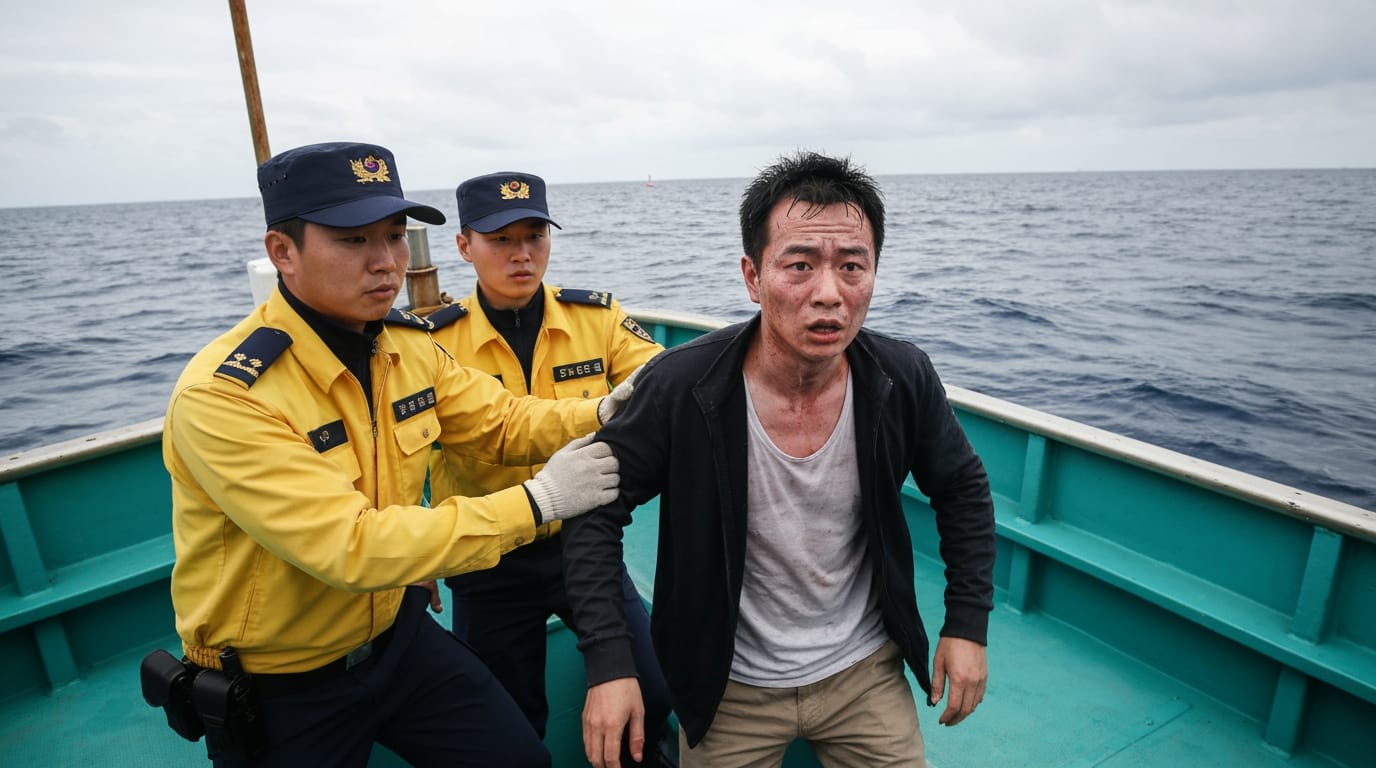
SEOUL, South Korea – A 68-year-old Chinese human rights activist, Dong Guangping, is currently detained in South Korea after undertaking a perilous 30-hour journey across the Yellow Sea in a small rubber boat, marking his fourth desperate attempt to flee China and seek asylum. The dramatic arrival of the former police officer on South Korean shores on Monday evening has thrust Seoul into a delicate diplomatic position, balancing international human rights obligations against its complex relationship with Beijing. Dong, a vocal critic of the Chinese Communist Party (CCP) for decades, was discovered by the South Korean coastguard, setting in motion a legal and diplomatic challenge that highlights the ongoing struggle for dissidents seeking freedom.
A Desperate Voyage for Freedom
The audacious escape unfolded over more than a day as Dong navigated the open waters in a 3.3-meter (11-ft) rubber boat powered by a 10-horsepower engine. He reportedly set off from Weihai in China's Shandong province, a journey spanning over 300 kilometers (186 miles) to reach the South Korean coast. His perilous voyage concluded when he was spotted approximately 38 nautical miles off South Korea's western coast, near Taean, by a fishing vessel whose crew promptly alerted authorities. South Korean authorities confirmed his detention on suspicion of violating immigration laws, initiating questioning by the Taean coastguard. Sources close to Dong, including his lawyer Kim Joo-kwang and fellow activist Sheng Xue, confirmed his identity, with Sheng Xue revealing Dong described his engine breaking down as he neared the coast, having gone without sleep for two days. Dong's determination to reach South Korea was reportedly fueled by his desire to reunite with his wife and daughter, who have already been granted asylum in Canada.
The Enduring Spirit of an Activist
Dong Guangping's journey is not merely a tale of escape but a testament to decades of unwavering commitment to human rights and democracy in China. His activism began long ago, leading to his dismissal from the police force in 1999 after he signed a petition commemorating the 10th anniversary of the 1989 Tiananmen Square crackdown. His outspoken criticism of the CCP led to his first imprisonment from 2001 to 2004 for "inciting subversion of state power." Despite the severe repercussions, Dong remained steadfast in his advocacy. In 2014, he was again detained for more than eight months for participating in another event commemorating the victims of the Tiananmen Square crackdown. These repeated incarcerations and harassment underscore the high personal cost of dissent within China, highlighting his consistent opposition to authoritarian rule.
A Cycle of Escape and Repatriation
Dong's recent sea crossing is not an isolated incident but the latest chapter in a long history of attempts to secure freedom, each fraught with danger and disappointment. In 2015, he, along with his wife and daughter, fled to Thailand, where they were granted refugee status by the United Nations refugee agency. However, Thai authorities controversially detained and forcibly repatriated him to China, an act that drew international criticism for violating the principle of non-refoulement, which prohibits returning individuals to a country where they face a risk of persecution. Following this deportation, Dong was jailed in China for over three years, serving a sentence for "inciting subversion of state power" and "illegally crossing national borders."
After his release in 2019, his resolve remained unbroken. He attempted to swim to Kinmen, a Taiwanese island just miles from the Chinese coast, but was intercepted by fishermen and returned to China. In 2020, he tried again, fleeing to Vietnam, only to be arrested by Vietnamese authorities in August 2022 and once more sent back to China. This led to another 11-month prison sentence for "illegal border crossing," from which he was released in October 2023. Each failed attempt and subsequent forced return carried the grave risk of further punishment, underscoring the immense courage and desperation driving his repeated efforts to escape.
South Korea's Diplomatic Tightrope
Dong Guangping's arrival places South Korea in a complex and sensitive position. While authorities have detained him for immigration law violations, his case is "highly likely to be a political asylum case," according to his lawyer. Human rights organizations, including Human Rights in China (HRIC), have swiftly urged the South Korean government to uphold humanitarian principles and international human rights obligations by ensuring Dong is not returned to China, where he faces a significant risk of persecution, torture, or even death. The principle of non-refoulement, a fundamental tenet of international refugee law, dictates that no one should be returned to a country where their life or freedom would be threatened on account of political opinion.
South Korea's asylum process has historically been stringent, with a low recognition rate despite numerous applications. This strict screening process and lengthy procedures present a challenge for asylum seekers. Moreover, the South Korean government, under President Lee Jae Myung, has been attempting to improve its often-tense relations with Beijing. Granting asylum to a high-profile Chinese dissident could strain these diplomatic ties, presenting a delicate balancing act for Seoul between international human rights norms and geopolitical realities. The precedent of another Chinese activist, Kwon Pyong, who also sought asylum in South Korea via jet ski in 2023 and eventually resettled in the United States, further complicates the situation.
The international community will closely monitor South Korea's handling of Dong Guangping's case. The decision will not only determine the fate of a resilient dissident but also send a significant message about South Korea's commitment to human rights and its role on the global stage. The opposition People Power Party in South Korea has called for "full protection" for Dong, urging swift humanitarian measures to facilitate his safe passage to Canada, where his family awaits.
An Uncertain Future
Dong Guangping's current detention marks a critical juncture in his decades-long quest for freedom. His desperate sea escape underscores the extreme measures individuals are driven to when seeking refuge from political persecution. As South Korean authorities deliberate on his asylum claim, the international community watches, mindful of his history of forced repatriations and the severe risks he faces if returned to China. The outcome of his case will not only decide his personal future but also test the boundaries of human rights protection and diplomatic maneuvering in East Asia. The moral and ethical pressures on South Korea are substantial, as the decision carries implications far beyond its borders.


