Philippine Senator Faces Arrest as Supreme Court Clears Path for ICC 'War on Drugs' Charges
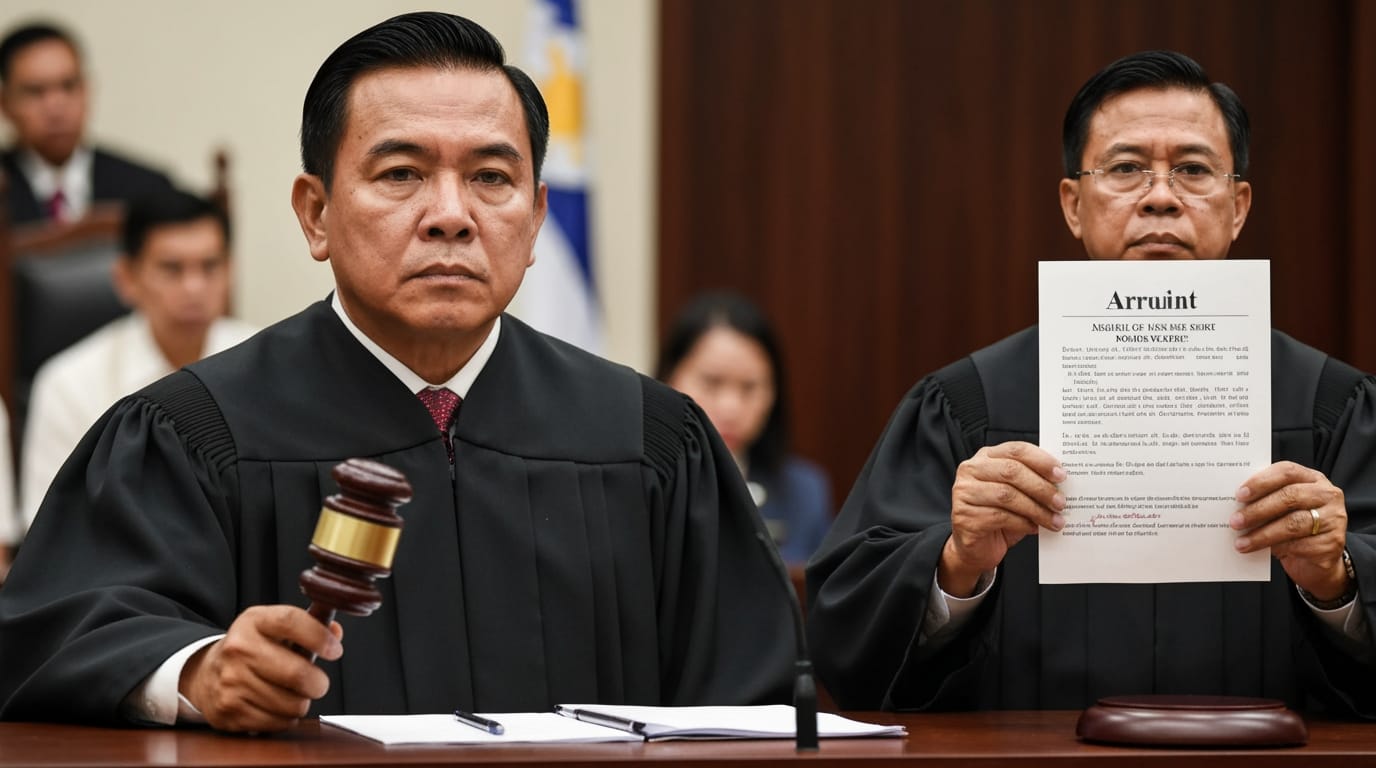
MANILA, Philippines – In a significant development that underscores the International Criminal Court's (ICC) persistent pursuit of accountability, the Philippine Supreme Court has denied Senator Ronald "Bato" Dela Rosa's petition to block an international arrest warrant related to his role in the nation's deadly "war on drugs." The ruling, issued on Wednesday, May 20, effectively removes a domestic legal barrier to the former national police chief's potential apprehension and transfer to The Hague to face charges of crimes against humanity.
The decision marks a critical juncture in the Philippines' complex relationship with the ICC and intensifies pressure on the government to cooperate with the international tribunal. Senator Dela Rosa, a staunch ally of former President Rodrigo Duterte and the chief enforcer of his controversial anti-drug campaign, is accused of murder as an "indirect co-perpetrator" in connection with the deaths of at least 32 individuals between July 2016 and April 2018. His case follows the precedent set by the arrest of former President Duterte himself in March 2025, signaling a broadening scope of accountability for those involved in the "war on drugs" campaign.
The Unfolding Legal Battle and the High Court's Stance
The ICC's arrest warrant against Senator Dela Rosa was unsealed on May 11, 2026, having been confidentially issued in November. Upon learning of the warrant, Dela Rosa reportedly sought refuge within the Philippine Senate building, with government agents attempting to serve the warrant as he entered. The Senate, under a motion, subsequently placed him under protective custody, citing parliamentary tradition and the need for a domestic court order for arrest. However, Dela Rosa later departed the Senate for an undisclosed location following an incident involving a shooting between government agents and Senate security personnel.
In his petition to the Supreme Court, Dela Rosa argued that Philippine law enforcement lacked the authority to execute an arrest warrant issued by a foreign court without prior domestic judicial authorization. The high court, however, rejected his request for a temporary restraining order and/or status quo ante order by a 9-5-1 vote, effectively validating the ICC warrant within the Philippine legal framework. A spokeswoman for President Ferdinand Marcos Jr., Claire Castro, confirmed that the warrant is now considered valid against Senator Dela Rosa, although it remains unclear if Manila will immediately enforce the arrest. The Justice Secretary is expected to interpret and evaluate the Supreme Court's ruling.
Human rights organizations have been vocal in their calls for Dela Rosa's surrender. Amnesty International, for instance, stressed the Marcos administration's responsibility to ensure his arrest, with its Philippine executive director, Ritz Lee Santos III, highlighting Dela Rosa as a "clear flight risk" who appears intent on avoiding accountability. Former Senator Leila de Lima, herself a past critic of the "war on drugs" who faced years of detention on what she described as politically motivated charges, urged Dela Rosa to face the charges, noting that he would have access to due process, unlike many victims of the drug war.
The Shadow of the "War on Drugs"
The charges against Senator Dela Rosa are intrinsically linked to the "war on drugs" campaign initiated by former President Rodrigo Duterte, which commenced shortly after he took office in June 2016. During his presidency, from 2016 to 2022, the campaign resulted in thousands of deaths. Official police figures indicate over 6,000 fatalities, while human rights groups estimate the death toll to be as high as 30,000 individuals, many of whom were impoverished citizens in urban areas.
The conduct of the "war on drugs" has drawn widespread international condemnation due to allegations of extrajudicial killings, planting of evidence, and a deliberate disregard for due process. Human rights advocates have consistently pointed to the systematic nature of the violence, arguing that it constituted crimes against humanity. Dela Rosa, as the then-Philippine National Police chief from July 2016 to April 2018, was at the forefront of implementing these operations.
The ICC's investigation into the situation in the Philippines covers alleged crimes committed between November 1, 2011, and March 16, 2019. This period encompasses a significant portion of Duterte's presidency and the height of the "war on drugs."
Philippines and the ICC: A Tumultuous Relationship
The Philippines' engagement with the ICC has been a journey marked by initial cooperation, subsequent withdrawal, and ongoing legal contention. The country ratified the Rome Statute, the founding treaty of the ICC, on August 30, 2011, with the treaty officially entering into force on November 1, 2011. This commitment signaled the Philippines' adherence to international justice mechanisms for grave crimes.
However, in 2018, after the ICC initiated a preliminary examination into the "war on drugs," then-President Duterte announced the Philippines' withdrawal from the Rome Statute, which became effective on March 17, 2019. Despite this withdrawal, the ICC maintains jurisdiction over alleged crimes committed while the Philippines was still a State Party to the Statute, as stipulated by Article 127 of the Rome Statute.
The current Marcos administration initially challenged the ICC's jurisdiction, arguing that the Philippines possessed a functioning justice system capable of addressing such crimes. However, a shift in stance occurred, particularly following a political disagreement between the Marcos and Duterte camps in 2024. President Marcos Jr.'s government has since demonstrated a willingness to cooperate with Interpol on ICC warrants, as evidenced by the arrest of former President Duterte in March 2025. The ICC Appeals Chamber has consistently affirmed the court's jurisdiction over the Philippine situation, dismissing challenges from Duterte's legal team in October 2025 and April 2026.
A Watershed Moment for Justice
The Supreme Court's refusal to shield Senator Dela Rosa from the ICC warrant represents a significant victory for victims of the "war on drugs" and human rights advocates worldwide. It reinforces the principle that national borders do not necessarily provide impunity for alleged perpetrators of crimes against humanity. This development, coupled with the ongoing trial of former President Duterte, suggests a growing momentum for accountability in the Philippines.
The path ahead remains complex, with potential legal challenges and political maneuvers. However, the international community, alongside local human rights groups, will be closely watching how Manila proceeds. The unfolding events will test the Philippines' commitment to upholding international justice and may redefine the landscape of accountability for state actors in the years to come.


