Philippines' Anti-Terrorism Law: A Tightrope Walk Between National Security and Civil Liberties
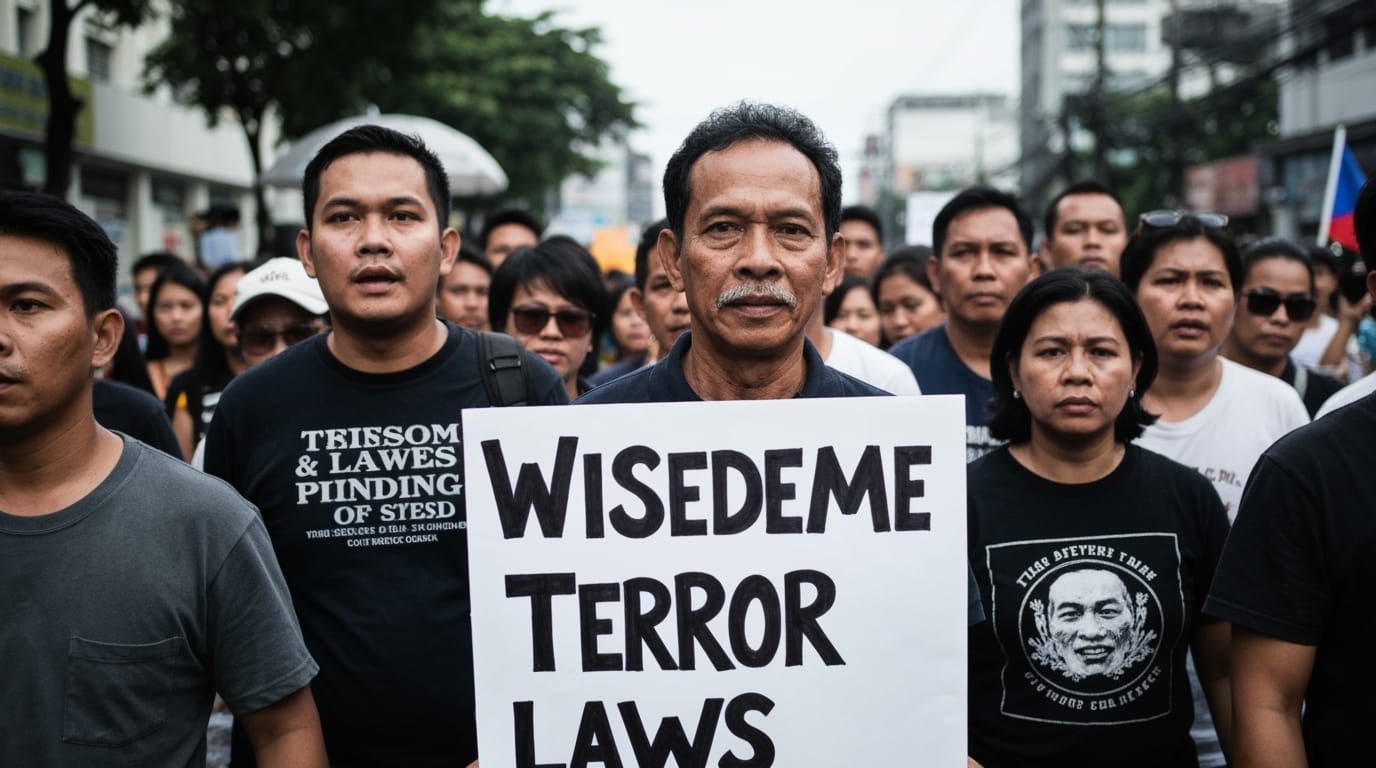
MANILA, Philippines – In the name of national security, the Philippines enacted a sweeping Anti-Terrorism Act in 2020, a law proponents assert is vital for combating persistent extremist threats. However, critics, including human rights organizations and legal experts, contend that the legislation's broad provisions and the government's implementation tactics are increasingly used to silence dissent and suppress civil liberties, raising profound questions about the democratic space in the archipelago nation.
The Anti-Terrorism Act of 2020: A Broad Mandate
Republic Act No. 11479, commonly known as the Anti-Terrorism Act (ATA) of 2020, officially replaced the Human Security Act of 2007 on July 18, 2020, after being signed into law by then-President Rodrigo Duterte on July 3, 2020. The government's justification for the law centers on the need to address serious terror threats posed by groups such as the Islamic State-linked Abu Sayyaf, the New People's Army (NPA), and other emerging security challenges, with the 2017 Marawi siege often cited as a key motivation. Another stated reason for its passage was to remove the Philippines from the 'grey list' of the intergovernmental Financial Action Task Force. The Act declares a state policy to protect life, liberty, and property from terrorism and to condemn it as dangerous to national security, while also asserting the state shall uphold basic rights.
Despite these stated intentions, the ATA quickly became a lightning rod for controversy due to several key provisions. One of the most contentious aspects is its expansive and arguably vague definition of terrorism. Critics argue that the law blurs the lines between legitimate activism and terrorist acts, citing provisions that define terrorism to include acts "intended to cause extensive damage or destruction to a government or public facility, public place, or private property" or those designed "to create an atmosphere or spread a message of fear." While the law explicitly states that "advocacy, protest, dissent, stoppage of work, industrial or mass action" are not considered terrorism, this safeguard is undermined by the Anti-Terrorism Council's (ATC) power to determine what constitutes a "serious risk" to public safety.
Further amplifying concerns is the creation of the Anti-Terrorism Council (ATC), a body composed primarily of presidentially-appointed executive officials. The ATC is empowered to designate individuals or groups as terrorists without requiring a judicial warrant, granting it significant authority over who falls under the law's purview. The ATA also extends the period for detaining suspects without a judicial warrant from the previous three days under the Human Security Act to a maximum of 24 days, with an initial 14-day period extendable by 10 more days. This provision has been widely criticized for potentially violating due process and the presumption of innocence. Additionally, the law criminalizes "inciting to terrorism" through speeches, writings, or other representations, a clause seen as posing a direct threat to freedom of expression and media.
The Shadow of "Red-Tagging"
A significant concern articulated by human rights advocates is the interplay between the ATA and the entrenched practice of "red-tagging" in the Philippines. Red-tagging involves the arbitrary labeling of individuals, organizations, journalists, activists, labor leaders, and political opposition as communists or terrorists by state authorities, often without substantial evidence.
Critics argue that the ATA provides a legal framework that legitimizes and intensifies this practice, effectively weaponizing it against government critics. The National Task Force to End Local Communist Armed Conflict (NTF-ELCAC), established to counter insurgency, has been particularly active in red-tagging, further institutionalizing the practice. This often leads to severe consequences for those targeted, including harassment, threats, arbitrary arrests, and in some documented cases, even death. Human rights lawyer Maria Sol Taule stated the law is used "to censor, intimidate, and silence critics by burdening them with the cost of legal defense until they abandoned their criticism or opposition." As of 2023, at least 13 human rights activists in the Southern Tagalog region had been charged under the ATA.
Chilling Effect on Dissent and Civil Society
The broad scope of the Anti-Terrorism Act and its alleged misuse have generated a pervasive chilling effect across various sectors of Philippine society. Journalists, academics, teachers, students, grassroots organizers, and human rights defenders report an increased climate of fear and self-censorship. The fear of being red-tagged and subsequently charged under the ATA can deter individuals and organizations from freely expressing criticism or engaging in advocacy, even when their activities are entirely peaceful and legitimate.
Human rights and civil liberties experts globally have condemned the Act, asserting that it grants excessive and unchecked powers to the executive, thereby infringing on fundamental freedoms like speech, privacy, and peaceful assembly. They warn that such legislation risks undermining the very foundations of democratic debate, dissent, and deliberation.
Government's Stance and International Scrutiny
The Philippine government has consistently maintained that the Anti-Terrorism Act is a necessary and lawful measure designed solely to combat terrorism and protect the nation's security, not to stifle dissent. Official statements emphasize that the law is implemented with respect for human rights and constitutional liberties.
Despite these assurances, the ATA has drawn significant international criticism. Organizations such as Amnesty International and Human Rights Watch have voiced strong concerns, labeling the law "deeply flawed" and a "human rights disaster in the making." The UN human rights chief also urged President Duterte to refrain from signing the bill, highlighting its dangerous provisions. International bodies have continuously raised concerns about the law's incompatibility with international human rights law and standards.
In December 2021, the Supreme Court of the Philippines upheld the constitutionality of most of the Act, striking down only two provisions. More recently, in February 2024, the Supreme Court issued new rules on Anti-Terrorism Act cases and related laws. These rules outline procedures for handling petitions regarding detentions without warrants, surveillance orders, freeze orders, and designations by the ATC, among others. They also stipulate that arrested individuals must be informed of their constitutional rights and prohibit torture or inhumane treatment during investigation or interrogation. While these judicial rules aim to provide safeguards, their effectiveness in practice remains a key point of observation for rights advocates.
Conclusion
The Anti-Terrorism Act of 2020 represents a complex and ongoing dilemma for the Philippines. While the government frames it as an indispensable tool for national security in a region facing genuine extremist threats, a substantial segment of civil society, legal experts, and international observers view it as a perilous instrument that can be wielded to suppress legitimate criticism and shrink the space for democratic expression. The continued practice of red-tagging, coupled with the broad powers vested in the Anti-Terrorism Council, suggests that the balance between security and civil liberties remains precarious. As the nation navigates its security challenges, the effective implementation and potential reform of this contentious law will significantly shape the future of human rights and democratic freedoms in the Philippines.


