Philippines' Purple Gold: Farmers Race to Meet Soaring Global Ube Demand
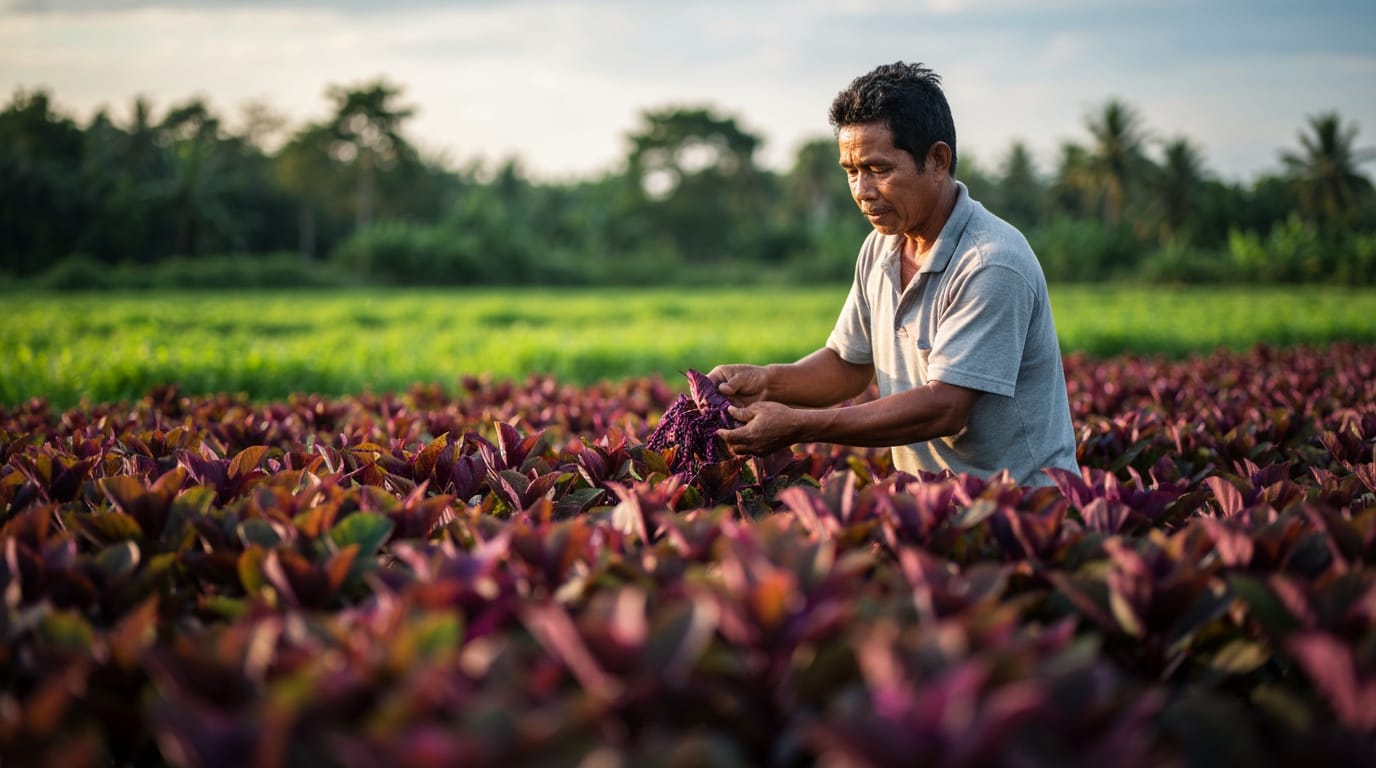
The vibrant purple yam, known as ube, has transcended its traditional Filipino roots to become a global culinary sensation, coloring everything from lattes and ice creams to pastries across continents. This surging international demand presents an unprecedented economic opportunity for the Philippines, its native home. However, amidst this "purple craze," Filipino farmers find themselves in a challenging paradox: struggling to keep pace with global appetite while facing declining local production and a complex web of agricultural hurdles.
Ube (Dioscorea alata) has been a staple in Filipino cuisine for thousands of years, deeply embedded in the nation's cultural identity and celebrated in traditional desserts like ube halaya, halo-halo, and various cakes. Its distinctive nutty, vanilla-like flavor and striking natural purple hue, derived from powerful antioxidants called anthocyanins, have captivated palates worldwide. The global ube market was valued at approximately US$455 million in 2024 and is projected to nearly double to US$943 million by 2035, driven by social media trends, health consciousness, and a demand for visually appealing ingredients. In the United States alone, ube offerings on menus have surged by an astonishing 230 percent over the past four years. Yet, despite this burgeoning international interest, the very source of this purple gold, the Philippines, is grappling with a significant shortfall in its own ube production.
The Paradox of Plenty: Demand Outstrips Domestic Supply
The remarkable global ascent of ube has cast a spotlight on a concerning trend within the Philippines: a steady decline in domestic ube production. National output plummeted from approximately 30,074 metric tons in 2006 to about 14,000 metric tons in 2020, and further to 12,483 metric tons in 2025, down from over 15,000 metric tons in 2021. This decrease has occurred even as Philippine exports of ube and ube-based products quadrupled, reaching $3.06 million in 2025, with almost 1.7 million kilograms shipped abroad, primarily to the United States.
This creates a "paradox," as described by agricultural experts, where the Philippines is exporting more ube while simultaneously producing less at home. The strain on local supply has become so severe that the Philippines has been forced to import ube from countries like Vietnam to meet domestic demand, undermining its historical position as a leading producer of dessert-grade ube. This situation underscores deep-seated structural issues within the country's agricultural sector that prevent Filipino farmers from fully capitalizing on the global ube phenomenon.
Deep-Rooted Challenges for Filipino Ube Farmers
Several interconnected factors contribute to the Philippine ube industry's struggle to meet both local and international demand:
Lengthy Growth Cycle and Limited Planting Materials: Ube is a long-term crop, requiring 8 to 11 months to mature before harvest. This extended waiting period discourages many smallholder farmers who rely on crops with shorter cycles for more immediate income. Furthermore, the propagation of ube typically relies on portions of harvested tubers. When market prices are high, farmers often sell nearly all their harvest, leaving insufficient planting stock for the next season, leading to persistent shortages of quality planting materials.
Climate Vulnerability and Traditional Practices: Ube is a sensitive crop, highly vulnerable to the Philippines' unpredictable weather patterns, including erratic rainfall, prolonged droughts, and increasingly stronger typhoons. These climate-related disruptions can devastate yields and increase crop losses. Many farmers also continue to use traditional, labor-intensive methods on small plots, lacking access to modern farming techniques, improved seed varieties, and mechanization, making it difficult to scale up production efficiently.
Fragmented Value Chain and Middlemen: A significant challenge lies in the fragmented ube value chain. Intermediaries, or middlemen, often purchase ube at depressed farmgate prices, then resell it at much higher margins to processors, retailers, or exporters. This dynamic leaves farmers with little financial incentive to expand production, as the bulk of the value created in the ube market does not accrue to them. The average farmgate price received by ube farmers fell to P40.7 per kilo in 2025, while the average retail price reached a record high of P80 per kilo, illustrating this disconnect.
Limited Government Support: Historically, government support for ube farmers has been insufficient compared to that for staple crops like rice and corn. This has resulted in limited investment in research, infrastructure, and farmer assistance programs, further exacerbating production challenges.
Cultivating a Sustainable Future: Initiatives and Opportunities
Despite the hurdles, there is a concerted effort from various sectors to empower Filipino ube farmers and ensure the sustainable growth of the industry.
Scientific Advancements and Farmer Training: Research institutions like the Philippine Root Crop Research and Training Center (PhilRootcrops) are at the forefront of developing and promoting improved farming technologies. Initiatives include identifying ube varieties that can be planted outside the traditional season, utilizing advanced propagation techniques like "minisett" (which can triple planting material production), and exploring tissue culture methods to enhance yields and year-round supply. Training programs are also being conducted to educate farmers on these science-based techniques and sustainable cultivation practices.
Government Support and Policy Initiatives: The Department of Agriculture (DA) is proposing a significant increase in its budget for ube research and development, seeking P93 million for 2027 to boost propagation of planting materials and secure the geographic indication (GI) of Philippine ube, protecting its authenticity. The Department of Trade and Industry (DTI) is actively positioning ube as an export "rising star," focusing on promoting processed forms such as ube powder, puree, jam, and flavor extracts, which generate higher returns and showcase Filipino innovation. Legislative efforts are also underway, with a bill filed by Representatives Paolo and Omar Duterte aiming to establish a national ube development program that includes regional seed banks, brand protection frameworks, and direct links between farmer cooperatives and major food processors.
Empowering Farmers Through Cooperatives and Value Addition: A key strategy involves empowering farmers through cooperatives to bypass middlemen and gain better market access and fairer prices. These cooperatives facilitate collective bargaining, improve access to resources, and enable farmers to engage in value-adding activities like initial processing, which significantly increases their income potential. For instance, selling to processors can generate higher added value compared to selling raw produce. By growing the overall supply base and focusing on value addition, export opportunities can complement, rather than compete with, local availability and affordability.
The Path Forward: Balancing Growth with Authenticity
The global ube craze presents a unique moment for the Philippines to elevate one of its most culturally significant crops onto the world stage. However, realizing this potential requires a delicate balance. The focus must be not only on increasing production to meet demand but also on ensuring that the benefits genuinely reach the farmers who cultivate this "purple gold."
Sustained collaboration among government agencies, research institutions, private sector partners, and most importantly, the farming communities themselves, will be critical. Investing in climate-resilient farming, modernizing agricultural practices, strengthening supply chains, and empowering farmers to own more of the value chain are essential steps. By doing so, the Philippines can ensure that the ube phenomenon continues to celebrate its rich culinary heritage while providing sustainable prosperity for its farmers, cementing the country's leadership in the global "violet revolution."


