Police Raid European Commission Offices Amid Property Sale Probe
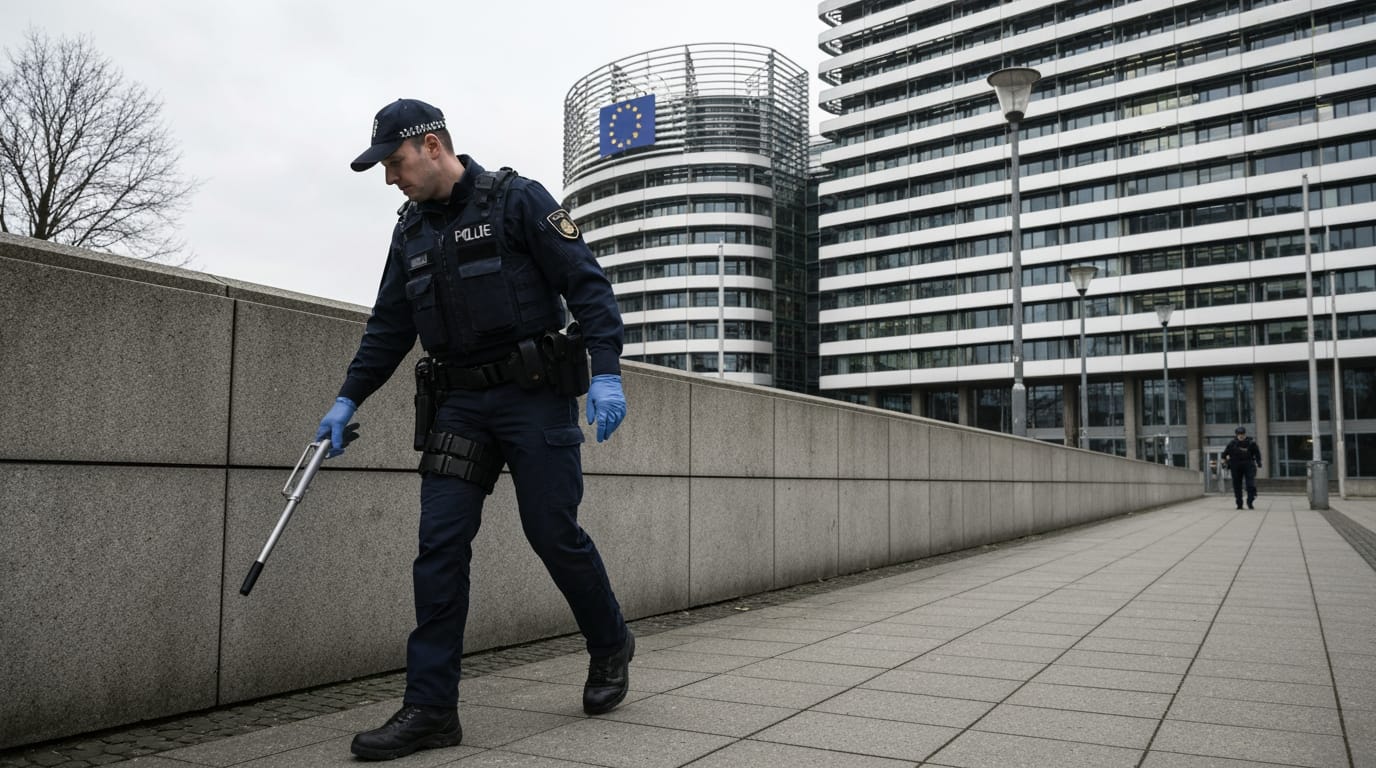
BRUSSELS — Belgian police conducted extensive searches at several European Commission offices in Brussels Thursday as part of an investigation into a significant €900 million property sale that took place in 2024. The coordinated operation, led by the European Public Prosecutor’s Office (EPPO), casts a shadow over the European Union’s real estate transactions and highlights ongoing scrutiny into the financial conduct of its institutions.
The raids, which targeted various Commission departments including its budget unit, are centered on the sale of 23 EU-owned buildings to Belgium's state investment fund, SFPIM. While the Commission maintains confidence that the process adhered to all regulations, the investigation marks a serious inquiry into the management and disposal of high-value EU assets. The incident follows a recent string of probes into EU institutions, signaling increased vigilance over potential irregularities within the bloc’s administration.
Investigation Into €900 Million Property Deal
The focal point of Thursday’s police action is a €900 million transaction from 2024, involving the sale of 23 properties owned by the European Union to the Belgian state investment fund, SFPIM. The European Public Prosecutor's Office confirmed it is "gathering evidence as part of an ongoing investigation," though specific details remain confidential to avoid jeopardizing the proceedings.
During the period of the property sale, Johannes Hahn served as the EU's budget commissioner, overseeing the bloc's finances until the end of the previous Commission's mandate in 2024. Although authorities have not implicated Hahn in any wrongdoing, his tenure coincides with the controversial deal now under scrutiny. The European Commission has acknowledged the investigation and stated its full cooperation with the authorities, expressing confidence that the sale was conducted "in a compliant manner." This probe underscores the sensitivity surrounding large-scale financial operations within the EU and the imperative for transparency and accountability in public spending.
Broader Scrutiny of EU Institutions
This latest raid on the European Commission is not an isolated incident but rather part of a pattern of increased investigative activity targeting EU bodies. Just a few months prior, in December 2025, Belgian police conducted similar operations, including searches at the offices of the European External Action Service (EEAS) in Brussels and the College of Europe in Bruges. That investigation, also spearheaded by the European Public Prosecutor's Office, focused on alleged fraud concerning an EU-funded training program for junior diplomats, known as the European Union Diplomatic Academy.
Reports from that time indicated the detention and questioning of three individuals, including Federica Mogherini, former EU top diplomat and current rector of the College of Europe, and Stefano Sannino, a senior Commission official. The allegations in that case included procurement fraud, corruption, conflict of interest, and violations of professional secrecy. Investigators sought to determine whether the College of Europe received privileged information regarding the tender process, potentially giving it an unfair advantage. The request for the lifting of immunity for several suspects in that case further illustrated the gravity of the accusations. These overlapping investigations by the EPPO highlight a concerted effort to root out potential financial malfeasance and reinforce ethical standards across various European Union institutions.
Implications for Transparency and Governance
The recurring police interventions in EU institutions raise significant questions regarding the bloc's internal oversight mechanisms and its commitment to transparency. While the European Commission has consistently voiced its dedication to combating corruption, the frequency of such probes suggests that vulnerabilities may still exist within its complex administrative structures.
The European Public Prosecutor's Office, an independent EU body established in 2021, plays a crucial role in investigating and prosecuting crimes affecting the financial interests of the Union, including fraud, corruption, and money laundering. Its active involvement in both the property sale and diplomatic academy investigations signals a robust approach to upholding legal standards. The actions of the EPPO, often working in conjunction with national law enforcement and the EU's anti-fraud office (OLAF), underscore the EU's stated efforts to strengthen its anti-corruption framework. The Commission itself adopted an anti-corruption package in 2023, aiming to harmonize EU rules on corruption offenses and improve prevention. However, public perception and trust in EU institutions can be significantly impacted by such high-profile investigations, irrespective of their eventual outcomes. The ongoing scrutiny serves as a critical test of the EU's capacity to maintain integrity and accountability.
Conclusion: A Continued Push for Accountability
The latest police raids on European Commission offices over a substantial property sale, following closely on the heels of another major fraud investigation involving EU diplomatic services, underscore a period of intense scrutiny for the European Union's institutional integrity. These events highlight the proactive role of the European Public Prosecutor's Office in safeguarding the EU's financial interests and ensuring adherence to ethical standards. As investigations proceed, the focus will remain on the detailed findings and any subsequent legal actions. The European Commission faces the challenge of demonstrating robust internal controls and unwavering commitment to transparency, thereby reinforcing public trust in its governance and operational procedures. The unfolding developments are a testament to the ongoing push for greater accountability within the heart of European policymaking.


