Portugal Grinds to Halt: Nationwide General Strike Paralyses Services Over Contentious Labor Reforms
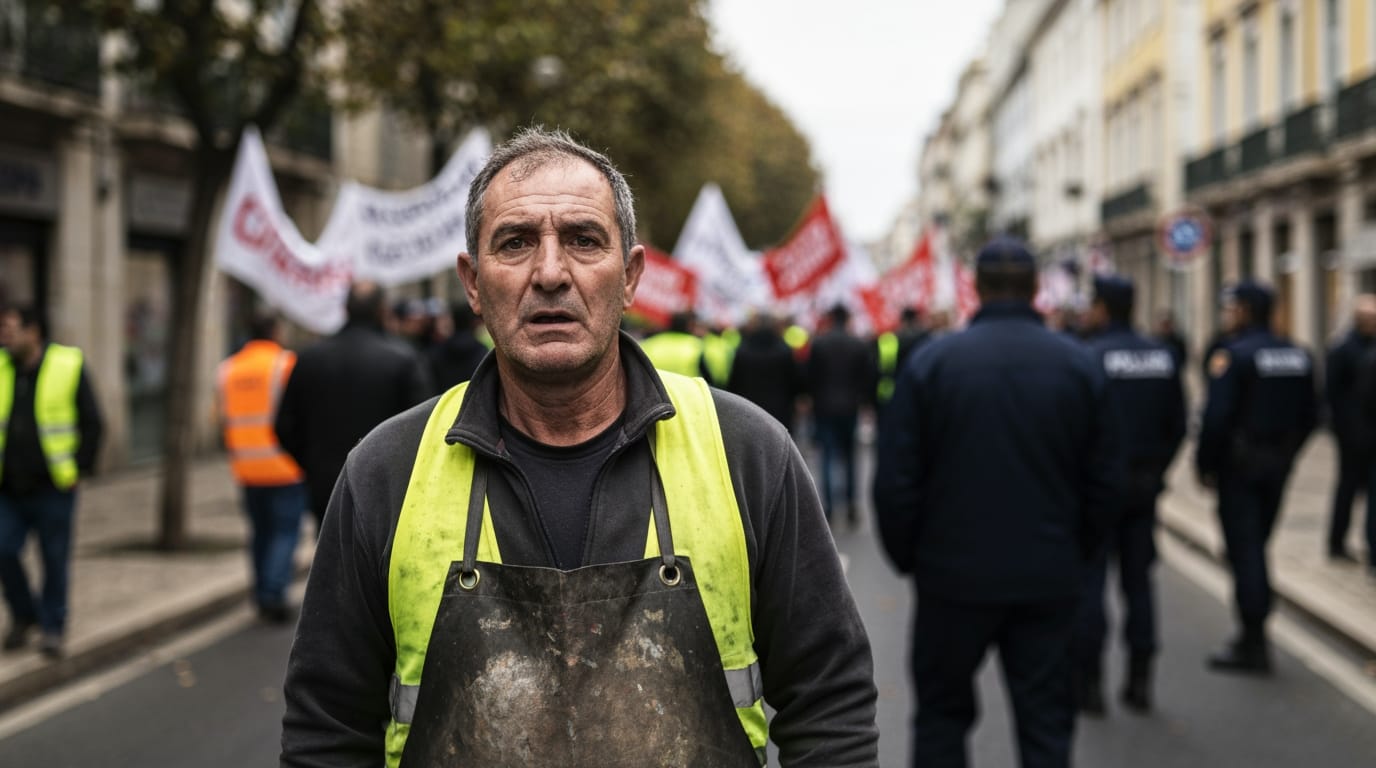
LISBON, Portugal – A nationwide general strike has brought Portugal to a significant standstill today, June 3, 2026, as workers across multiple sectors protest a controversial government labor reform package. The widespread industrial action, spearheaded by the General Confederation of Portuguese Workers (CGTP-IN), is causing severe disruptions to transportation, public services, healthcare, and education, compounded by its timing just before a national holiday. Organized as a 24-hour walkout, the strike aims to send a strong message to Prime Minister Luís Montenegro's government regarding its proposed "Labor Package," which unions contend undermines worker rights and living standards.
This is the second such nationwide protest in six months, following a similar strike in December 2025, highlighting persistent tensions between labor organizations and the government's legislative agenda. The current strike is designed to maximize impact, coinciding with a Thursday national holiday, allowing many public sector employees to "build a bridge" for an extended five-day weekend, effectively prolonging the disruption to public administration.
Deep Roots of Discontent: The Labor Package Controversy
At the core of the widespread industrial action lies the government's proposed "Labor Package," also referred to as "Work XXI" or "Trabalho XXI," which seeks to introduce more than 100 amendments to the country's Labor Code. Portugal's largest trade union confederation, the CGTP-IN, has vehemently opposed these reforms, characterizing them as an "outright assault on workers' rights." Unions argue that the proposed changes would exacerbate job insecurity, deregulate working hours, encourage unpaid work, and simplify dismissals without just cause. Furthermore, they claim the package weakens collective bargaining rights and restricts union freedoms, potentially rolling back over two decades of labor progress.
Union leaders and workers also cite broader economic grievances, including low wages—among the lowest in the European Union—rising housing costs, and persistent inflation, as contributing factors to the unrest. The CGTP-IN advocates for increased worker salaries, enhanced rights, and improved public services as an alternative to the government's reforms. While the General Union of Workers (UGT), another central trade union, is not officially endorsing the strike as a body, many of its affiliated unions and members are participating, underscoring the widespread dissatisfaction.
Widespread Disruption Across Critical Sectors
The general strike has triggered significant disruptions across nearly all facets of Portuguese life, with transportation, education, healthcare, and public administration bearing the brunt of the impact. Travelers, both domestic and international, faced immediate and severe consequences, particularly in the aviation sector. Over 500 flights were either canceled or severely delayed across Portugal's major airports, including Lisbon, Porto, Faro, and those in Madeira and the Azores. National carrier TAP Air Portugal alone reportedly canceled up to 300 flights, while other airlines like easyJet and Ryanair also experienced knock-on effects. Foreign ministries, including Germany's, issued travel advisories warning of severe shortages and advising passengers to confirm flight statuses.
Ground transportation networks also experienced substantial paralysis. Metro systems in Lisbon and Porto suspended or severely limited operations, while city bus services in Lisbon ran on reduced schedules. Rail services, including the state-owned Comboios de Portugal (CP), operated at a significantly reduced capacity, with only a 25 percent minimum service level maintained. The Federation of Transport and Communications Unions (FECTRANS) and the National Union of Civil Aviation Flight Personnel (SNPVAC) were among the key unions whose participation led to these widespread transport issues.
Beyond transportation, the strike's impact resonated deeply within the public sector. Schools across the country were heavily affected, with many classes canceled due to the participation of teacher unions like the National Federation of Teachers (FENPROF). Healthcare services, while maintaining legally mandated minimum services for emergencies, saw significant disruption to non-urgent care. The National Federation of Doctors (FNAM) and the Portuguese Nurses Union (SEP) joined the strike, leading to reports of 100% participation in overnight shifts at some hospitals, such as Porto's São João Hospital, and the first-ever strike action at the SNS24 health hotline. Public administration offices, municipal services, and administrative procedures, including licensing and business registrations, faced substantial delays and potential closures for the duration of the strike and the extended holiday period. Even migration services, with workers at the Agency for Integration, Migration and Asylum (AIMA) striking throughout the week, contributed to the broader administrative gridlock.
A Nation's Appeal for Workers' Rights
The widespread participation in the June 3 strike underscores the deep-seated concerns among Portuguese workers regarding their economic future and labor protections. Portugal's constitution is recognized for its progressive guarantees regarding workers' rights to unionize and strike, and unions view the government's current reform package as an attempt to erode these fundamental protections. The CGTP-IN organized approximately 30 mass mobilizations and marches in cities across the country, including Lisbon, Porto, Coimbra, and Faro, providing workers a visible platform to express their dissent.
Government officials, including Prime Minister Luís Montenegro, had expressed hope that a majority of Portuguese citizens would not participate, but the scale of the disruption suggests significant backing for the industrial action. The World Federation of Trade Unions (WFTU) expressed full solidarity with the Portuguese workers, noting that the proposed policies reflect a broader strategy of capital against labor in many countries.
Looking Ahead: Economic and Social Ripples
The cumulative effect of such widespread industrial action carries significant economic and social implications for Portugal. Beyond immediate inconvenience, prolonged disruption to public services can create bottlenecks that hinder private sector activity and investment decisions, particularly affecting small businesses reliant on government services. For a nation focused on attracting foreign investment and maintaining competitiveness within the European market, such prolonged stoppages present a considerable challenge.
As the country navigates these labor disputes, the government faces increasing pressure to address the grievances of its workforce while pursuing its reform agenda. The success or failure of the "Labor Package" and the ongoing dialogue between unions and the government will undoubtedly shape the future of labor relations and economic policy in Portugal. The one-day strike, amplified by the holiday "bridge," effectively created an unexpected period of reduced activity across the nation, forcing a national conversation on the balance between economic reform and worker protection.


