Powerful 7.0-Magnitude Earthquake Jolts Taiwan, Initial Reports Indicate Limited Major Damage
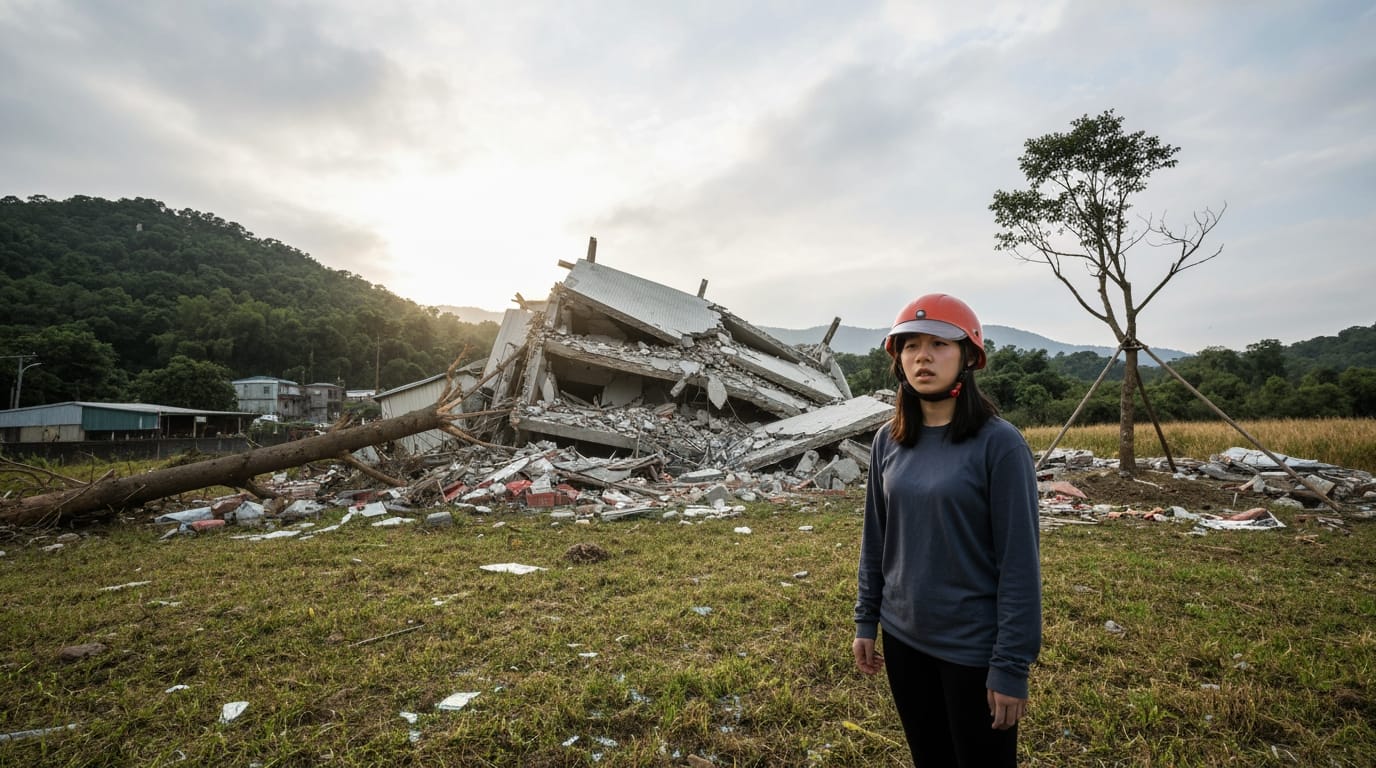
TAIPEI, Taiwan – A potent 7.0-magnitude earthquake struck off Taiwan's northeastern coast late Saturday, December 27, 2025, sending strong tremors through the capital city of Taipei and across much of the island. The seismic event, occurring at a depth of approximately 73 kilometers, prompted immediate assessments by emergency services, though initial reports indicated no widespread major damage or significant casualties. This recent tremor follows closely on the heels of a 6.1-magnitude quake that hit Taiwan's southeastern region just three days prior, underscoring the island's constant geological vulnerability.
The Night's Tremors and Immediate Response
The powerful earthquake struck at 11:05 PM local time, with its epicenter located about 32.3 kilometers east of Yilan County Hall, in the waters off Taiwan's northeastern shores. Residents from multiple regions, including New Taipei, Taichung, Taoyuan, Tainan, Hualien, and Hsinchu, reported feeling considerable shaking, with the intensity registered at four on Taiwan's seven-tier intensity scale in several areas. The reverberations of the quake were even felt as far away as Hong Kong, where the Hong Kong Observatory received over 100 reports of tremors lasting several seconds.
In the immediate aftermath, Taiwan's Central Weather Administration (CWA) confirmed the magnitude and location of the quake. The National Fire Agency and local authorities swiftly initiated damage assessments across the island. As a precautionary measure, high-speed rail services and metro systems in major cities were temporarily suspended to allow for thorough inspections of tracks and power lines. Despite the earthquake's significant magnitude, early reports from the Taipei city government and other agencies were reassuring, indicating no immediate reports of major structural damage or casualties. Officials urged the public to remain vigilant for potential aftershocks, which commonly follow seismic events of this scale.
Taiwan's Proactive Preparedness and Seismic Reality
Taiwan's relative resilience in the face of such a powerful tremor is largely attributed to decades of rigorous earthquake preparedness and stringent building codes. Situated at the complex junction of the Philippine Sea plate and the Eurasian plate, Taiwan is one of the world's most seismically active regions, experiencing frequent earthquakes. This geological reality has shaped the island's infrastructure and disaster response strategies.
Past devastating earthquakes, such as the 1999 Jiji earthquake (magnitude 7.3) which claimed over 2,400 lives, and the more recent 2024 Hualien earthquake (magnitude 7.4), served as critical turning points. These events spurred the government to significantly revise building codes, enforce higher engineering standards for new constructions, and retroactively strengthen older buildings. Buildings are now designed to remain intact during minor quakes, be repairable after moderate ones, and withstand major earthquakes without collapsing. Modern structures like Taipei 101, for instance, incorporate advanced dampening systems to absorb seismic shocks.
A Continual Cycle of Learning and Adaptation
The 2024 Hualien earthquake, which struck on April 3, 2024, resulted in 19 fatalities, over 1,100 injuries, and an estimated US$2.5 billion in damages, primarily concentrated near Hualien City. However, even with that significant event, experts noted that the casualties and damage were considerably lower than might have been expected for an earthquake of that magnitude, largely due to Taiwan's enhanced preparedness. This included rapid activation of emergency shelters, efficient coordination among government departments and non-governmental organizations, and the deployment of 24-hour rescue teams. Communication networks, a critical component in disaster response, also demonstrated remarkable resilience during the 2024 event, with internet services largely unaffected.
Taiwan's commitment to disaster readiness extends to its citizens. The Ministry of the Interior (MOI) has been actively training a large corps of certified disaster prevention specialists, including ward chiefs, community leaders, and even foreign caregivers, with a goal of enhancing grassroots preparedness and overall social resilience. By the end of 2025, the MOI anticipates exceeding its target of 100,000 trained individuals, showcasing a comprehensive, society-wide approach to disaster mitigation.
Looking Ahead: Vigilance and Global Implications
As Taiwan enters the early hours of Sunday following the latest tremor, the focus remains on detailed inspections of infrastructure, including bridges, dams, and older buildings, to ensure there are no hidden structural stresses. The absence of immediate catastrophic reports for the 2025 earthquake offers a measure of relief, underscoring the effectiveness of the island's robust preparedness measures.
While there are no immediate reports regarding the impact of the 2025 earthquake on Taiwan's vital semiconductor industry, past events have highlighted the potential for global supply chain disruptions. Taiwan Semiconductor Manufacturing Company (TSMC), a global leader in advanced chip production, has in previous quakes temporarily paused operations for safety inspections, emphasizing the delicate nature of chip manufacturing environments. However, due to built-in resilience and automatic shutdown systems, disruptions from past quakes were typically swiftly managed, with long-term impacts expected to be minimal.
This most recent 7.0-magnitude earthquake serves as a poignant reminder of Taiwan's continuous battle with the forces of nature. Yet, it also stands as a testament to a nation that has proactively transformed itself into a model of disaster preparedness, demonstrating that strategic investment in infrastructure, public education, and emergency response can significantly mitigate the human and economic toll of natural calamities. The island's collective sigh of relief, while cautious, reflects a deep-seated understanding and respect for the seismic world it inhabits.


