Powerful 7.8 Magnitude Earthquake Rocks Southern Philippines, Displacing Over 20,000
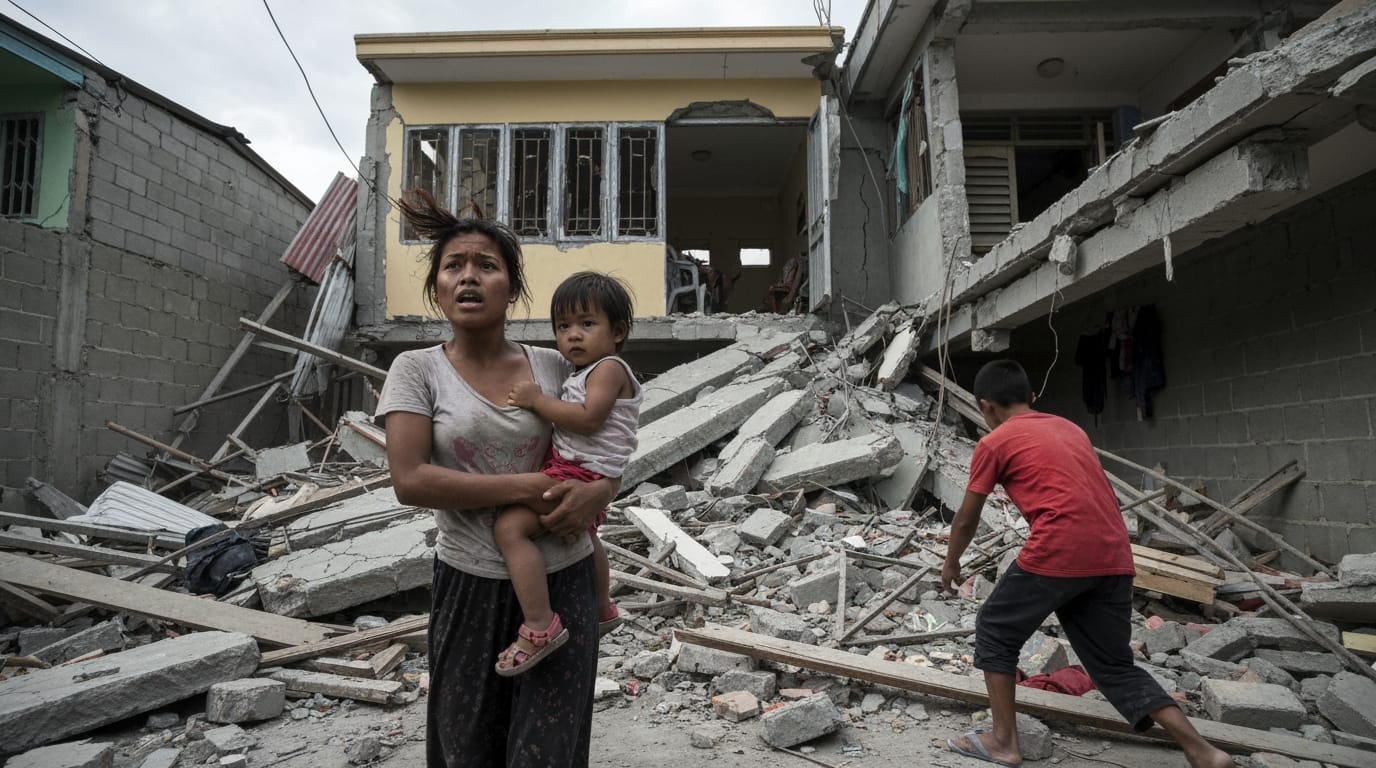
GENERAL SANTOS CITY, Philippines – A colossal magnitude 7.8 earthquake struck off the coast of Mindanao on Monday, June 8, 2026, unleashing widespread destruction and forcing more than 20,000 residents to evacuate their homes. The powerful tremor, described as one of the strongest to hit the Philippines in half a century, claimed at least 37 lives and left nearly 500 injured, as emergency responders grappled with crumbled infrastructure and the urgent needs of displaced communities across the southern regions.
The catastrophic event, with its epicenter located approximately 32 kilometers southwest of Maasim town in Sarangani province at a depth of 33 kilometers, triggered initial fears of a tsunami. While waves reportedly reached up to 1.4 meters above tide level, widespread inundation was averted, though six shanties on stilts in a coastal village sustained damage. The quake's shallow focal depth intensified surface shaking, particularly in densely populated coastal areas, exacerbating the impact on buildings and human life.
Immediate Aftermath and Human Toll
The early morning quake, striking at 7:37 a.m. local time, caused significant and immediate devastation. In General Santos City, a bustling hub known as the country's tuna capital, at least 13 individuals perished due to collapsed buildings and falling debris. Sarangani province reported 18 fatalities, primarily from a landslide that engulfed houses in the mountainous town of Glan. Additional deaths were recorded in the southern provinces of South Cotabato and Davao Occidental, and on Balut Island. As search and rescue operations intensified, authorities confirmed four individuals remained officially missing, with ongoing efforts to scour heavily damaged structures for potential survivors or further casualties. The medical response has been critical, with reports of crush injuries and respiratory issues from dust inhalation among the hundreds admitted to hospitals.
Mass Displacement and Dire Conditions
The earthquake's most significant humanitarian consequence has been the mass displacement of an estimated 19,229 families, totaling 86,245 individuals, across 56 barangays in Regions IX, XI, and XII. More than 20,000 people were forced to abandon their residences, with nearly 18,000 seeking refuge in 33 established evacuation centers by Monday evening. Another 1,085 individuals found temporary shelter with relatives or friends.
These makeshift shelters, often in public parks and school grounds, are now struggling to accommodate the influx of people who fled their homes, fearing aftershocks and structural instability. The immediate needs of the displaced include food, safe drinking water, and sanitation facilities, which are being prioritized by aid agencies and government bodies. The Department of Social Welfare and Development (DSWD) reported substantial standby funds and relief resources exceeding P5.29 billion, including a Quick Response Fund of P839.89 million, to support the ongoing relief efforts.
Widespread Damage and Infrastructure Challenges
The tremor left a trail of physical destruction across Mindanao. Initial government assessments indicated approximately 2,000 houses and 117 government buildings and facilities sustained damage in various provinces. While a more precise count of fully destroyed homes is still emerging, at least eight houses were completely razed, and nine suffered partial damage in the initial impact. Critical infrastructure in General Santos City, including several multi-story commercial buildings, experienced significant structural failures, posing an ongoing risk and complicating rescue efforts. The General Santos international airport was temporarily shut down, leading to the cancellation of 63 domestic flights, with only humanitarian missions permitted.
The region's complex network of fault lines, including the Cotabato Trench, is known for its seismic activity, and experts from the Philippine Institute of Volcanology and Seismology (PHIVOLCS) are investigating whether this strong earthquake is linked to movements in this major undersea depression. The region remains under high tectonic stress, prompting warnings of potential aftershocks exceeding magnitude 5.5 in the coming days. As of Tuesday morning, June 9, PHIVOLCS had already recorded 1,100 aftershocks, 23 of which were felt in affected areas.
Coordinated Response and Future Resilience
The Philippine government, in coordination with national and international humanitarian partners, has swiftly initiated a comprehensive response. Local authorities have declared a state of calamity, enabling the immediate release of emergency relief funds to expedite assistance. The Bangsamoro Government's Rapid Emergency Action on Disaster Incidence (READi) deployed a Rapid Damage Assessment and Needs Analysis (RDANA) team to Region XII to bolster damage assessment, coordination, and information management. Medical teams and supplies, including crucial blood units and orthopedic equipment, have been airlifted from Manila and Cebu to support the strained local healthcare system.
Beyond immediate relief, the earthquake has underscored the urgent need for enhanced disaster preparedness and resilient infrastructure. Urban planners are advocating for stricter enforcement of the National Building Code, particularly for older commercial structures that may not have undergone recent seismic retrofitting. Calls are mounting for a comprehensive safety audit of all high-rise buildings across Mindanao, coupled with increased investment in early warning systems and public education on earthquake safety.
The path to full recovery will be protracted, extending far beyond the initial emergency phase. The focus is now beginning to shift towards rebuilding stronger, more resilient urban environments capable of withstanding the inevitable seismic activity that characterizes the region. As communities grapple with both the physical destruction and economic uncertainty, the resilience of the Mindanaoan people faces a profound test, supported by a coordinated network of government agencies and aid organizations.


