Powerful Earthquake Devastates Myanmar and Thailand, Death Toll Climbs
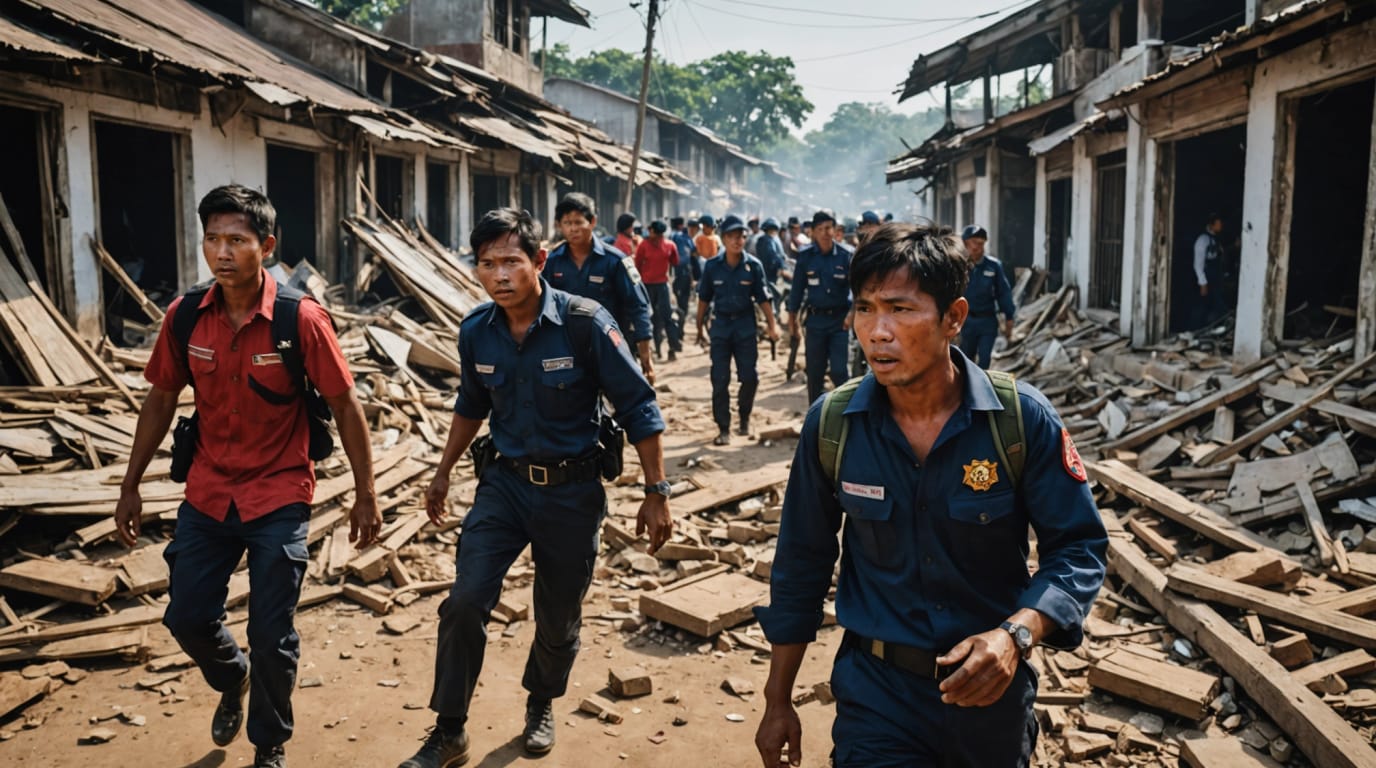
A powerful 7.7 magnitude earthquake struck Myanmar on Friday, leaving a trail of destruction across the country and neighboring Thailand. As rescue efforts continue, the confirmed death toll has surpassed 1,600, with thousands injured and many more still missing. The quake has triggered a massive humanitarian crisis, with widespread damage to buildings, infrastructure, and communication networks, leaving communities struggling to cope.
Widespread Devastation in Myanmar
The epicenter of the earthquake was located near Mandalay, Myanmar's second-largest city, in the Sagaing region. The quake, the strongest to hit Myanmar since 1912, caused widespread damage in the region, toppling buildings, collapsing bridges, and buckling roads. The historic Ava Bridge in Mandalay crumbled into the Irrawaddy River, and significant damage was reported to the Mandalay Royal Palace and other historical sites.
The destruction is particularly severe in Mandalay, where "every street has collapsed buildings," according to reports. Rescue workers are struggling to reach those trapped beneath the rubble, hampered by a lack of equipment and resources. Many survivors are still waiting for help from the military government, and the full extent of the devastation remains unclear due to patchy communications in remote areas.
Bangkok Rocked, Building Collapses
The earthquake's impact extended far beyond Myanmar, with tremors felt as far away as Bangkok, Thailand, approximately 620 miles from the epicenter. In the Thai capital, a 30-story building under construction collapsed, trapping dozens of construction workers. As of Sunday, the death toll in Bangkok had risen to 17, with 83 people still unaccounted for, most from the collapsed building site.
The collapse has raised concerns about building standards and construction practices in Bangkok, particularly in areas with deep, soft soils that can amplify ground motion during earthquakes. Experts have called for thorough assessments of other tall buildings in the city to ensure their structural integrity.
International Aid and Rescue Efforts
In the wake of the disaster, international aid has begun to pour into Myanmar and Thailand. Neighboring countries, including India, China, and Thailand, have sent relief materials, rescue teams, and medical personnel. India has launched "Operation Brahma," deploying military aircraft and naval ships carrying supplies and a field hospital to Myanmar. The Indian Army is setting up a 60-bed medical treatment center in Mandalay to provide emergency care.
Other countries, including Malaysia, Singapore, Russia, the United Kingdom, and South Korea, have also pledged assistance. The United Nations has allocated $5 million from its Central Emergency Response Fund for life-saving assistance. However, aid efforts are being hampered by damaged infrastructure, unstable communication networks, and the ongoing civil war in Myanmar.
Geological Context and Seismic Activity
Myanmar is located in a seismically active region, situated between the India and Eurasia tectonic plates. The boundary between these plates, known as the Sagaing Fault, runs approximately 745 miles from north to south through Myanmar, placing millions of people at risk. The Sagaing Fault is a strike-slip fault, where the India and Eurasia plates are rubbing sideways against each other.
The March 28 earthquake is believed to have occurred due to a rupture along a 124-mile section of the Sagaing Fault, with the rupture propagating from north to south. The shallow depth of the earthquake, at just 6.2 miles, contributed to the intensity of the ground shaking and the extent of the damage.
Humanitarian Crisis and Challenges Ahead
The earthquake has exacerbated the existing humanitarian crisis in Myanmar, which has been grappling with civil war and political instability since the 2021 military coup. The ongoing conflict is hindering rescue and relief efforts, particularly in areas controlled by resistance groups.
Myanmar's shadow National Unity Government has announced a partial ceasefire to facilitate earthquake relief efforts, but the overall security situation remains precarious. The disaster has left millions in desperate need of help, with limited access to food, water, shelter, and medical care. The lack of equipment and resources is stalling rescue efforts, and many survivors are still waiting for assistance.
As the search for survivors continues, the focus is also shifting to providing humanitarian aid and long-term recovery support to the affected communities. The challenges ahead are immense, but the international community is mobilizing to help Myanmar and Thailand rebuild and recover from this devastating earthquake.


