Prominent Pakistani Rights Lawyer and Husband Arrested on 'Cyber Terrorism' Charges, Sparking Outcry
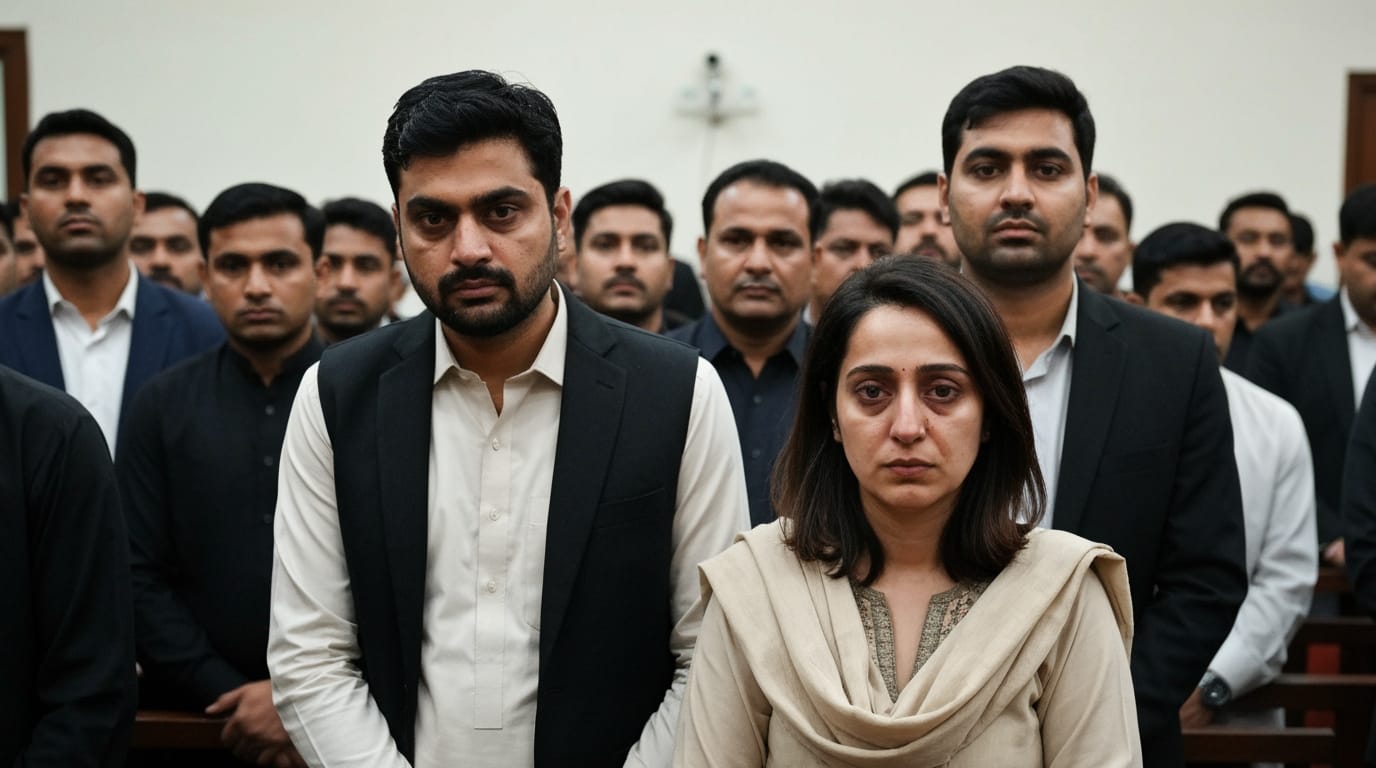
ISLAMABAD, Pakistan – A prominent Pakistani human rights lawyer, Imaan Zainab Mazari-Hazir, and her husband, Advocate Hadi Ali Chattha, were arrested on Friday in Islamabad on charges related to "cyber terrorism" and inciting linguistic divisions through social media posts, according to family members and police reports. The arrests, which took place as the couple was reportedly en route to district courts, have ignited a fierce debate about freedom of expression and the escalating challenges faced by human rights defenders in the country.
The couple's detention follows the dismissal of their pre-arrest bail applications by an Anti-Terrorism Court (ATC) in Islamabad, leaving them vulnerable to immediate arrest. Their family alleges the arrests were made without presentation of official warrants or a First Information Report (FIR), a claim that has further fueled condemnations from civil society and international human rights organizations.
The Arrest and Allegations of State Overreach
The arrests unfolded on Friday, January 23, 2026, near the Serena Hotel underpass in Islamabad. According to sources, Mazari-Hazir and Chattha were intercepted by police and taken into custody, then transported in separate vehicles to undisclosed locations. The couple had reportedly been seeking refuge at the Islamabad High Court Bar office for two days prior, anticipating their arrest after an ATC judge dismissed their bail pleas citing non-appearance in court for a separate case.
Imaan's mother, Shireen Mazari, a former federal minister, vehemently condemned the arrests, describing the incident as "fascism at its peak" and a clear instance of "political victimization." She expressed outrage that police allegedly did not present an FIR at the time of the arrest, a procedural requirement that, if true, raises significant concerns about due process. This claim underscores a broader narrative among critics who argue that legal processes are being weaponized against dissenters in Pakistan.
The core of the charges against Mazari-Hazir and Chattha stems from their alleged "controversial social media posts." The National Cybercrime Investigation Agency (NCCIA) registered a case under Pakistan's Prevention of Electronic Crimes Act (PECA), accusing the couple of attempting to incite linguistic divisions and creating the impression that the armed forces were engaged in terrorism within the country. Specific sections of the PECA Act cited in the case include those related to "cyber terrorism," "hate speech," and disseminating "false and fake information" through content posted on the social media platform X (formerly Twitter) between 2021 and April 2025. If convicted under the relevant provisions of PECA, they could face a prison term of up to 14 years. Both Mazari-Hazir and Chattha have denied these charges.
Beyond the social media allegations, the couple faces charges in at least one other case involving a scuffle with police during a protest outside the Islamabad High Court. Their repeated non-appearance in court for various hearings ultimately led to the issuance and reissuance of non-bailable arrest warrants, culminating in the recent dismissals of their bail applications.
A History of Advocacy and Confrontation
Imaan Zainab Mazari-Hazir is a well-known figure in Pakistan's human rights landscape, recognized for her unwavering advocacy and outspoken criticism of the country's military establishment. The daughter of Shireen Mazari, a former human rights minister under the government of ex-Prime Minister Imran Khan, Imaan has carved out her own path as a civil liberties lawyer dedicated to securing justice for victims of state violence and advocating for the rights of religious and ethnic minorities. She is a graduate of the University of Edinburgh Law School, bringing a robust legal background to her activism.
Her current legal troubles are not an isolated incident but rather the latest in a series of confrontations with state authorities. In August 2023, Mazari-Hazir was arrested on charges of sedition and terrorism following a speech she delivered at a rally organized by the Pashtun Tahafuz Movement (PTM). During that address, she reportedly criticized the military, accusing certain elements within the establishment of enabling violence and exercising undue power over civilian institutions, going so far as to describe some members as "the real terrorists." Although she was subsequently granted post-arrest bail in that case, it highlighted the risks associated with her vocal activism. This pattern of arrests and legal challenges underscores a perceived narrowing of space for dissent and critical voices in Pakistan.
International Concern and Implications for Civil Liberties
The arrests of Imaan Mazari-Hazir and Hadi Ali Chattha have drawn sharp criticism from human rights organizations both domestically and internationally, raising significant concerns about the state of civil liberties and freedom of expression in Pakistan. Amnesty International, a global human rights watchdog, has unequivocally condemned the legal proceedings against the couple.
Amnesty International's Deputy Regional Director for South Asia, Babu Ram Pant, described the trial as a "blatant abuse of the justice system" and a "baseless case." The organization has urged Pakistani authorities to cease the "judicial harassment" and "coercive tactics" allegedly used to silence dissent and intimidate human rights defenders. According to Amnesty, the "cyber terrorism" and other charges brought under the Prevention of Electronic Crimes Act are "politically motivated" and represent an attempt to criminalize the fundamental right to freedom of expression. They further asserted that the process has been marred by "glaring violations of the right to fair trial," including denying the accused the right to attend proceedings and challenge evidence.
Lawyers' associations and various rights groups within Pakistan have echoed these concerns, arguing that the ongoing prosecution of Mazari-Hazir and Chattha, among other activists, reflects a broader trend of suppressing critical voices. The frequent use of stringent laws like PECA, originally intended to combat genuine cybercrime, against individuals for their online speech raises questions about the balance between national security and fundamental rights. Critics contend that such legal frameworks are being broadly applied to stifle legitimate criticism of state institutions, thereby eroding democratic space and the rule of law.
An Ongoing Legal Battle and Uncertain Future
The arrests of Imaan Mazari-Hazir and Hadi Ali Chattha represent a critical juncture in the ongoing struggle for human rights and freedom of expression in Pakistan. As the couple prepares to navigate further legal proceedings, their case serves as a stark reminder of the perils faced by those who challenge established narratives or criticize powerful state institutions. The outcome of their legal battle will not only determine their personal fate but could also have far-reaching implications for the future of civil liberties and the landscape for human rights activism across the nation. The international community, alongside local human rights advocates, will undoubtedly continue to monitor the proceedings closely, emphasizing the need for due process, transparency, and the upholding of fundamental human rights in Pakistan.