Public Outcry Follows Life Sentence for Teen in Brutal Murder Case
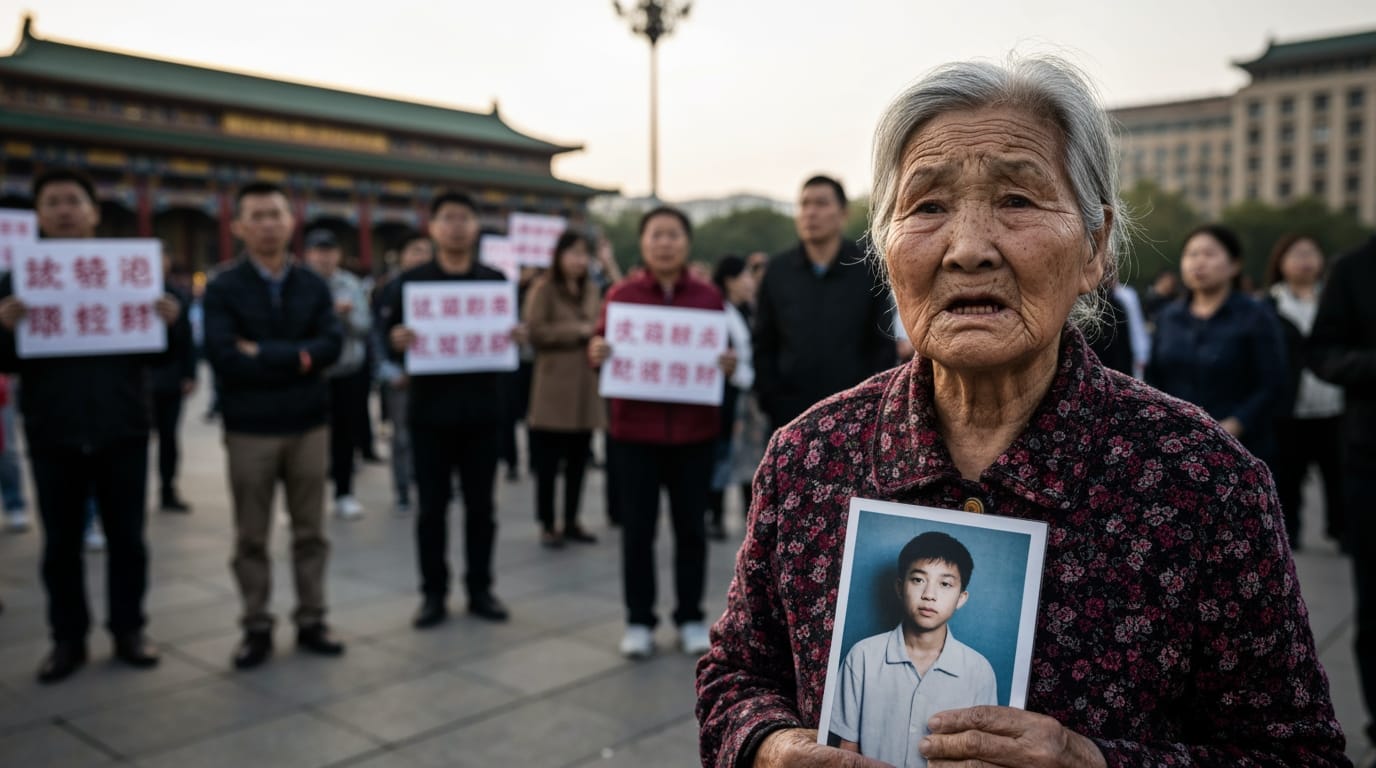
A recent court decision in China, sentencing a 14-year-old boy to life imprisonment for the rape and murder of his classmate, has ignited a fierce public debate and renewed calls for capital punishment, despite legal protections for juvenile offenders. The verdict, handed down by the Qujing Intermediate People's Court, has left the victim's family in profound distress and highlighted the complex tension between public demand for severe retribution and China's legal framework regarding minors.
The Heinous Crime and Judicial Ruling
The case revolves around a tragic incident that occurred between the night of July 6 and the early hours of July 7, 2025, in Qujing, Yunnan Province. A 14-year-old boy, identified by the surname Jiang, violently assaulted and then murdered his 15-year-old female classmate, Fang Han Han. Court findings indicated that Jiang attempted to rape the victim and subsequently strangled her to death, reportedly to conceal his actions.
The Qujing Intermediate People's Court deemed Jiang's actions to constitute both rape and intentional homicide, describing the case as "extremely serious" with "particularly severe consequences" that warranted strict punishment. Despite the gravity of the offenses, the court imposed a life sentence, along with lifelong deprivation of political rights. The judgment underscored that China's criminal law explicitly prohibits the death penalty for offenders who are under the age of 18 at the time of committing a crime.
A Nation Divided: Calls for Harsher Penalties
The court's decision, while adhering to existing statutes, has drawn significant public criticism and an emotional response from the victim's family. Fang Han Han's father publicly expressed his inability to accept the verdict, noting his profound pain and the feeling of having failed to protect his daughter. The family has indicated their intention to appeal the ruling, seeking a more severe punishment. This sentiment reflects a broader societal desire for harsher penalties, particularly in cases of extreme violence perpetrated by minors.
The case echoes the public outcry seen in the March 2024 Handan case, where three teenagers, also under 14 at the time, were accused of the brutal murder of a 13-year-old classmate. In that instance, one suspect received a life sentence and another 12 years, similarly sparking calls for capital punishment for the juvenile offenders. Social media platforms and public forums often become avenues for citizens to voice their demands for justice, frequently advocating for the death penalty when crimes are perceived as exceptionally heinous, regardless of the perpetrator's age.
China's Evolving Juvenile Justice System
China's legal framework for juvenile offenders has undergone significant revisions in recent years, attempting to balance protection for minors with the need for accountability in serious crimes. Article 49 of the Chinese Criminal Code unequivocally forbids the death penalty for individuals under 18 at the time of their crime. This aligns China with international norms that generally restrict capital punishment for minors.
However, the definition of criminal responsibility for younger offenders has been adjusted. In 2021, China lowered the minimum age of criminal responsibility from 14 to 12 for "special cases," specifically those involving intentional homicide or intentional injury resulting in death or severe disability through "extremely cruel means," subject to approval by the Supreme People's Procuratorate. This amendment was partly a response to public outrage over several high-profile murders involving very young perpetrators. While this allows for prosecution of younger children in grave cases, it stops short of applying the death penalty. The Qujing case falls under this revised framework, with the court acknowledging the severe nature of the crime while still bound by the age-based death penalty prohibition.
Judicial authorities continue to emphasize a "balanced approach" for juvenile offenders, combining punishment with education and rehabilitation. While the Supreme People's Court (SPC) has adopted a "zero tolerance" stance toward crimes against children and has imposed the death penalty in "extremely serious cases" for adult perpetrators of sexual violence against minors, this strict approach does not extend to underage offenders.
Societal Implications and the Path Forward
The ongoing debate surrounding the appropriate sentencing for violent juvenile offenders in China reflects deep societal anxieties. The rise in public awareness and reporting of crimes against minors, coupled with the detailed exposure of such cases, contributes to the demand for the harshest possible penalties. These incidents often highlight broader social issues, such as the plight of "left-behind children" – those whose parents migrate for work – who may be more vulnerable to mental health issues, bullying, and involvement in criminal activities.
The legal system faces the formidable challenge of upholding legal principles while addressing intense public emotions and the desire for justice. As China continues to strengthen judicial protections for minors, maintaining a balance between punitive measures and rehabilitative goals for young offenders remains a critical and contentious area of its criminal justice policy. The Qujing case underscores that even with a life sentence, the path to reconciling legal outcomes with public expectations for ultimate justice is often fraught with difficulty and dissent.


