U.S. Launches Retaliatory Strikes on Iran After Warship Attacks in Strait of Hormuz
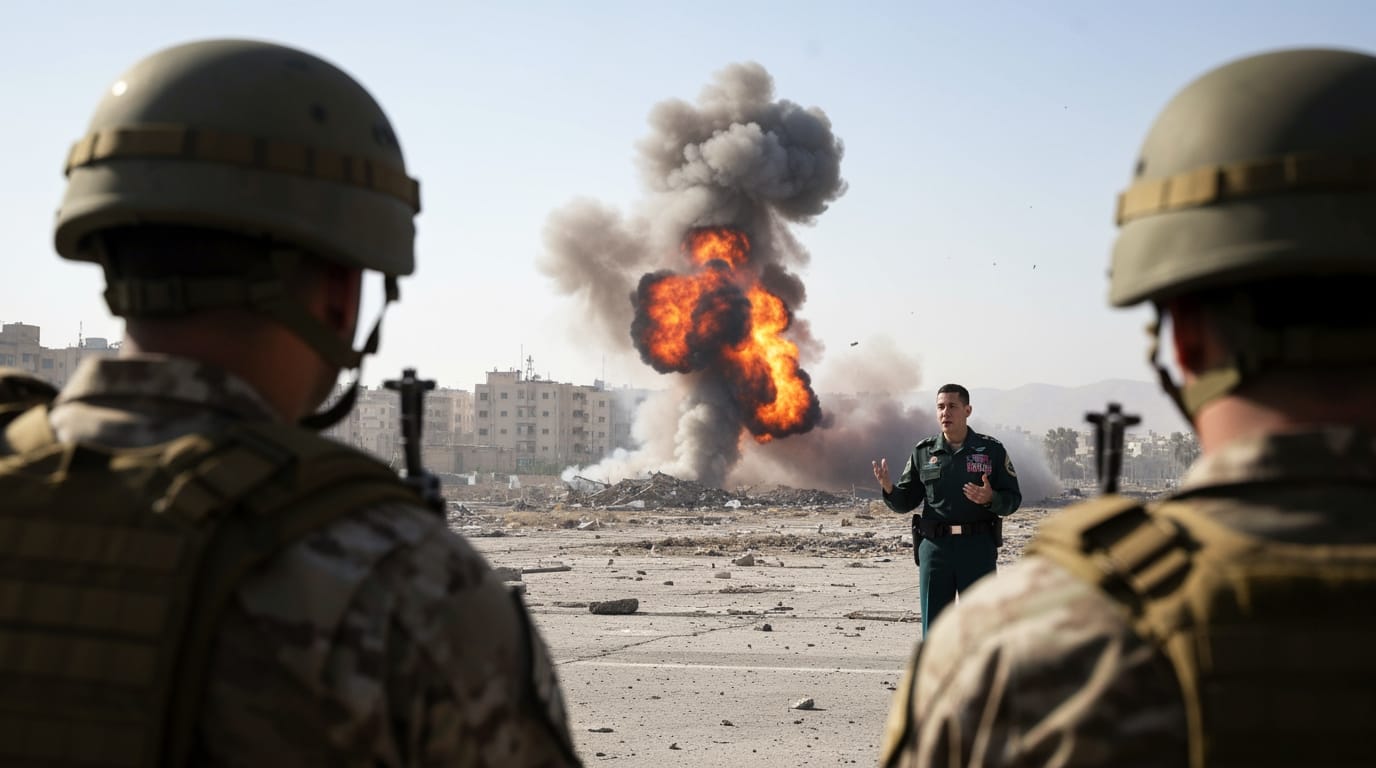
WASHINGTON D.C. – The United States military confirmed it launched retaliatory strikes against Iranian targets on Thursday, May 7, 2026, following what it described as unprovoked attacks by Iranian forces on three U.S. Navy destroyers transiting the strategically vital Strait of Hormuz. The strikes mark a significant escalation in ongoing tensions between Washington and Tehran, raising concerns about broader regional instability and its far-reaching economic consequences.
The incident unfolded as the guided-missile destroyers USS Truxtun (DDG 103), USS Rafael Peralta (DDG 115), and USS Mason (DDG 87) navigated the critical international shipping lane connecting the Persian Gulf to the Indian Ocean. According to U.S. Central Command (CENTCOM), Iranian forces deployed "multiple missiles, drones and small boats" in an assault on the American warships. While CENTCOM affirmed that no U.S. assets were struck during the engagement, the American military swiftly responded with what it termed "self-defense strikes."
Escalation in the Strait of Hormuz
The Strait of Hormuz, a choke point through which an estimated 20% to 30% of the world's oil and gas flows, has long been a flashpoint in U.S.-Iran relations. The latest confrontation began when Iranian forces initiated an attack on U.S. Navy destroyers. Despite the intensity of the Iranian assault, which involved missiles, drones, and small boats, all three U.S. destroyers successfully evaded damage.
Iranian state media, however, presented a different narrative, claiming that U.S. military naval units in the Strait of Hormuz came under Iranian missile fire following an earlier U.S. attack on an Iranian oil tanker. Iranian reports asserted that U.S. vessels were forced to retreat after sustaining damage from their missile strikes. These claims remain unconfirmed by U.S. officials. Prior to this, on Wednesday, the U.S. military had acknowledged disabling an Iranian-flagged oil tanker attempting to sail towards an Iranian port, using an F-18 fighter jet to hit its rudder. This action may have been the catalyst for Iran's reported retaliation. Furthermore, Iranian military officials had previously claimed a drone attack on a U.S. warship on April 20, citing it as retaliation for a U.S. seizure of an Iranian cargo ship.
The American Response and Stated Objectives
In response to the perceived "unprovoked Iranian attacks," U.S. Central Command confirmed it "eliminated inbound threats and targeted Iranian military facilities responsible for attacking U.S. forces." The targets included missile and drone launch sites, command and control locations, and intelligence, surveillance, and reconnaissance (ISR) nodes. Reports from Fox News, citing a senior U.S. official, specified that strikes were carried out on Iran's Qeshm port and Bandar Abbas, both strategically significant locations.
CENTCOM emphasized that it "does not seek escalation but remains positioned and ready to protect American forces." This statement reiterated the U.S. military's stance that the strikes were defensive in nature, aimed at deterring further aggression and safeguarding American personnel and assets in the region. U.S. President Donald Trump later asserted that a "naval blockade" described as a "wall of steel" was in effect around Iranian ports, claiming "great damage" was inflicted upon Iranian attackers.
A Cycle of Retaliation and Regional Tensions
The latest exchange of fire is set against a backdrop of deeply entrenched hostilities and a series of escalating military actions between the U.S. and Iran. Earlier in the year, on February 28, 2026, the United States and Israel reportedly launched joint airstrikes on Iran, targeting officials, military commanders, and assets, and allegedly resulting in the assassination of Supreme Leader Ali Khamenei. Iran subsequently retaliated with its own missile and drone strikes against Israel, U.S. bases in the Middle East, and some Arab countries, also moving to close the Strait of Hormuz.
The previous year, in June 2025, the U.S. also conducted strikes on Iranian nuclear sites. These past actions underscore a volatile pattern of strikes and counter-strikes that have characterized the relationship. The U.S. had previously attempted to establish a "free lane" through the Strait of Hormuz and initiated "Project Freedom" to escort commercial vessels, though this mission was reportedly paused by President Trump amid ongoing negotiations. Despite efforts toward de-escalation, including Iran's review of a U.S. proposal to halt fighting, the recent attacks demonstrate the fragility of any attempts at a ceasefire.
Far-Reaching Economic Repercussions
The sustained military tensions and the perceived threat to maritime navigation in the Red Sea and the Strait of Hormuz have had significant and widespread economic repercussions globally. Ocean carriers have avoided the Suez Canal waterway since late 2023 due to Houthi-led attacks, rerouting services around Africa via the Cape of Good Hope. This longer route increases transit times and operational costs, a situation exacerbated by the recent conflict. The return of Red Sea services, once considered, is now "out the window," according to Lars Jensen, CEO of Vespucci Maritime.
The effective closure of the Strait of Hormuz in early March 2026, following the initial U.S.-Israeli strikes, reportedly impacted approximately 10% of the world's container fleet, backing up over 700 vessels. The ongoing disruptions are leading to higher bunker fuel costs for ocean freight, increased war risk premiums, and significant surcharges implemented by major carriers like Maersk and Hapag-Lloyd. These factors translate into higher shipping costs, which are ultimately passed on to consumers.
The impact extends beyond shipping to various industries. Energy and manufacturing sectors face delayed raw materials and price spikes, retail experiences longer lead times and potential stock shortages, and major wind projects are delayed due to component shipping issues. Air freight costs have seen dramatic increases, with reports of a 400% spike in 48 hours in early March, affecting critical exports like pharmaceuticals. Analysts predict a potential soar in the cost of consumer goods and surging inflation if the disruptions persist. Regionally, the instability has prompted countries like Saudi Arabia and Kuwait to lift restrictions on U.S. military access to their bases and airspace, signaling a unified front against Iranian actions.
A Precarious Future
The recent exchange of military actions between the U.S. and Iran in the Strait of Hormuz underscores the precarious state of regional security. While CENTCOM asserts its actions are defensive and aimed at preventing escalation, the cycle of attacks and retaliations continues to fuel concerns among international observers about the potential for a wider conflict. Many countries have called for restraint and diplomacy, highlighting the urgent need for de-escalation. The ongoing instability not only threatens human lives and regional peace but also imposes substantial economic burdens on global supply chains and consumer markets, signaling a challenging path ahead for international stability and trade.


