Putin Acknowledges U.S. Interest in Greenland, Vows to Protect Russian Arctic Interests
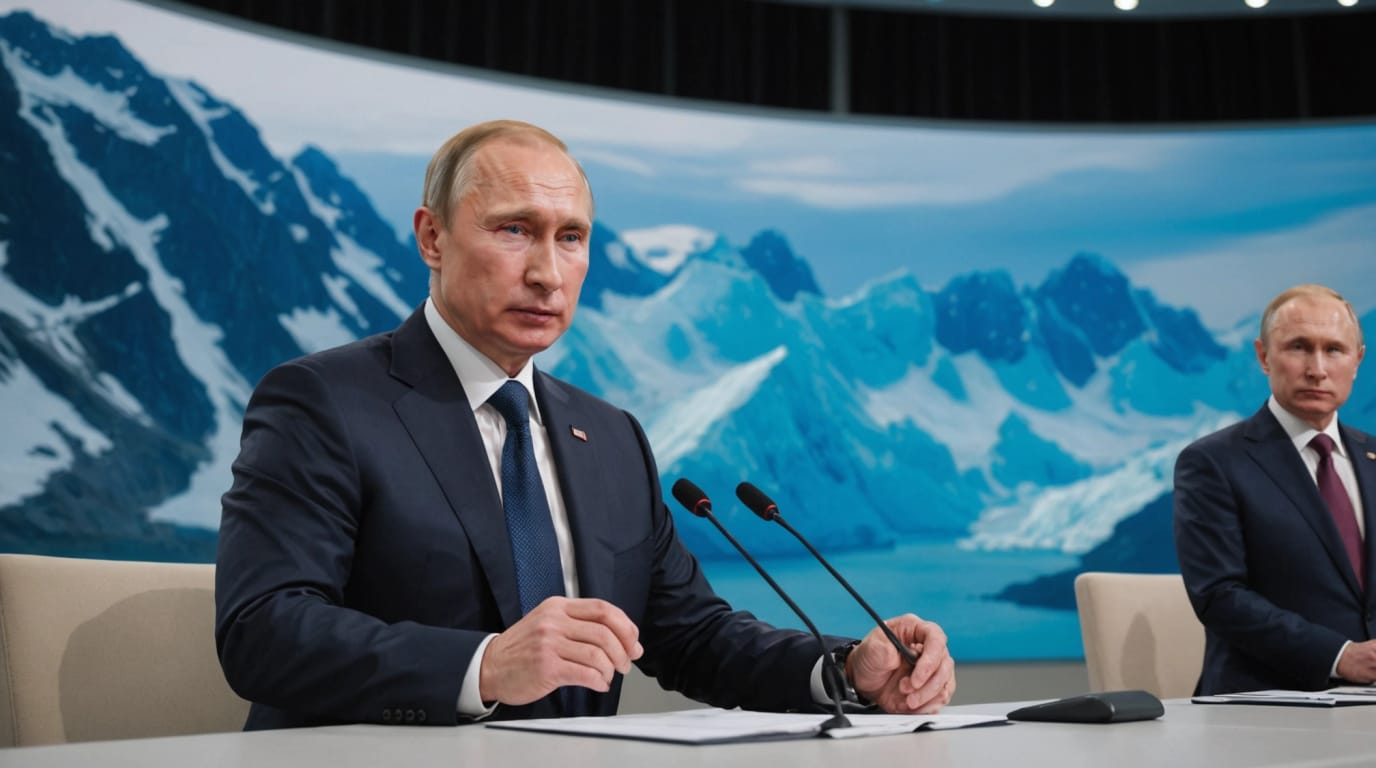
MOSCOW (AP) — Russian President Vladimir Putin stated Thursday that the United States' pursuit of influence in Greenland is not a surprise, citing historical precedent and vowing to protect Russia's interests in the Arctic region. Speaking at the International Arctic Forum in Murmansk, Putin's comments come amid increasing geopolitical competition in the Arctic, driven by the region's strategic importance and vast natural resources.
Historical Context of U.S. Interest
Putin highlighted that the U.S. interest in Greenland dates back centuries. He noted that the U.S. considered plans to gain control of the territory in the 19th century and later offered to purchase it from Denmark after World War II. "It can look surprising only at first glance, and it would be wrong to believe that this is some sort of extravagant talk by the current U.S. administration," Putin said, suggesting a continuity in U.S. policy toward the Arctic. He added, "It's obvious that the United States will continue to systematically advance its geostrategic, military-political and economic interests in the Arctic."
U.S. Activity in Greenland
The renewed focus on Greenland follows statements from Washington indicating a strong interest in the territory. Vice President JD Vance is scheduled to visit an American military base in Greenland. The visit was scaled back after objections from Greenlanders and Danes. Greenland holds strategic value as a nautical gateway to the Arctic and North Atlantic, providing access to North America. Both China and Russia seek access to its waterways and natural resources.
Russia's Arctic Strategy
Putin emphasized Russia's commitment to safeguarding its national interests in the Arctic. "We won't allow any infringement on our country's sovereignty, reliably safeguard our national interests while supporting peace and stability in the polar region," he stated. He also noted concerns about increased NATO activity in the Arctic, particularly the accession of Finland and Sweden. In response, Russia plans to strengthen its military capabilities in the region. "We are certainly concerned about NATO members describing the Far North as the region of possible conflicts," Putin said. "Russia has never threatened anyone in the Arctic, but we will closely follow the developments and mount an appropriate response by increasing our military capability and modernizing military infrastructure."
Arctic Cooperation and Competition
Despite geopolitical rivalries, Putin expressed Russia's willingness to cooperate with foreign partners, including those from the West, on economic ventures in the Arctic. He highlighted the importance of the Northern Sea Route (NSR) for Russia's trade with Asia, particularly as trade with Europe faces challenges due to Western sanctions. Putin mentioned plans to significantly increase the port capacity of Murmansk, a key Arctic port, and welcomed interest from countries like Belarus, China, and the United Arab Emirates in these projects.
Implications for the Arctic Region
The Arctic region is increasingly seen as a zone of strategic importance due to its vast reserves of fossil fuels and minerals, which are becoming more accessible due to climate change. The shrinking polar ice also opens new shipping routes, further enhancing the region's economic and military significance. Russia has been actively building up its presence in the Arctic, reopening Soviet-era bases and modernizing its navy. This has raised concerns among Western countries, who fear that Russia is seeking to dominate the region. China has also shown increasing interest in the Arctic, seeking access to its resources and shipping lanes.
Conclusion
Putin's remarks underscore the growing geopolitical importance of the Arctic region. While expressing concerns about U.S. and NATO activities, he also signaled Russia's readiness to defend its interests and cooperate on mutually beneficial projects. The future of the Arctic will likely be shaped by a complex interplay of cooperation and competition among the various nations vying for influence in this strategically vital region.