Rafah Crossing Reopens as Gaza Ceasefire Enters Critical Second Phase
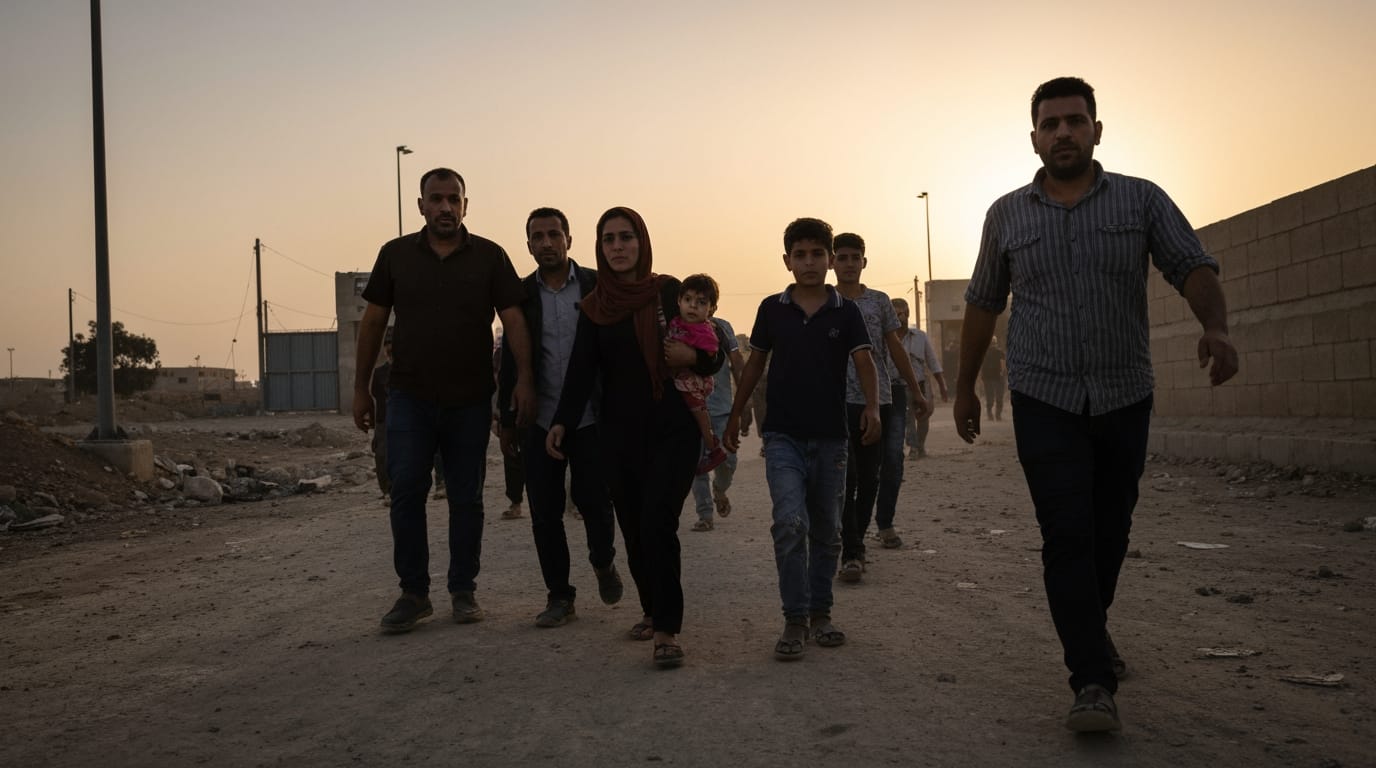
RAFAH, Gaza Strip – The Rafah border crossing, a vital artery for the Gaza Strip, has reopened its gates on Sunday, marking a significant, albeit cautious, step forward as a U.S.-brokered ceasefire agreement between Israel and Hamas transitions into its precarious second phase. The move offers a glimmer of hope for thousands of Palestinians trapped in the beleaguered enclave, desperate for medical care or to reconnect with the outside world after years of near-complete isolation.
A Lifeline Restored to a Ravaged Land
The reopening of the Rafah crossing, situated on Gaza's border with Egypt, comes after nearly a year of being largely shut down, a closure that intensified when Israel seized control of the area in May 2024. While the crossing had seen brief periods of operation, notably for medical evacuations during a ceasefire in early 2025, its current status signals a more structured, albeit limited, resumption of movement. Initially operating on a trial basis, the crossing is expected to facilitate the regular entry and exit of people as early as Monday, February 2.
Historically, Rafah has served as Gaza’s primary gateway, differentiating it from other crossings shared with Israel. Under the new arrangements, movement will be restricted to people, with no goods allowed through at this initial stage. An estimated 150 individuals are projected to exit Gaza daily, while approximately 50 will be permitted to enter. The operation is set to be supervised by an European Union monitoring mission, with all individuals undergoing vetting by both Israeli and Egyptian authorities, and requiring prior Israeli security approval. Israel’s military agency, COGAT, which coordinates aid to Gaza, confirmed preparations for fuller operation are underway, with residents set to pass once these are complete.
Egypt has consistently stressed the imperative for the crossing to be open for both entry and exit, reflecting a longstanding concern that Israel might use such control to displace Palestinians from the enclave. Meanwhile, Israel's military maintains control over the zone between the Rafah crossing and the main Palestinian residential areas, with Israeli forces conducting additional screenings in this adjacent corridor.
Ceasefire's Critical Second Chapter Unfolds
The activation of Rafah's crossing is intrinsically linked to the broader, U.S.-brokered ceasefire agreement, which originally took effect on October 10 of last year, ending more than two years of conflict between Israel and Hamas that began on October 7, 2023. The crucial push into this second phase was significantly spurred by the recovery of the remains of the last hostage, Ran Gvili, from Gaza. Israel had previously resisted a full reopening of Rafah until all hostages were accounted for, a condition now met with the recovery.
Washington formally announced the transition to this new phase, which encompasses a more complex set of challenges beyond immediate cessation of hostilities. Key objectives include the demilitarization of Gaza, the establishment of an alternative governing body for the territory, and the monumental task of rebuilding the extensively damaged enclave. Israeli Prime Minister Benjamin Netanyahu has underscored that Israel's primary focus remains on disarming Hamas and dismantling its remaining network of tunnels. He has also stated that reconstruction efforts in Gaza would not proceed without these prerequisites, positioning Israel’s control over Rafah as a significant point of leverage in future negotiations.
Humanitarian Desperation Meets Cautious Hope
The humanitarian crisis in Gaza has reached unprecedented levels, with its healthcare system largely decimated, rendering advanced medical procedures virtually unattainable within the strip. The reopening of Rafah brings a faint ray of hope for the approximately 20,000 sick and wounded Palestinians, many of whom are children, cancer patients, and trauma victims, who urgently require treatment outside Gaza, according to the territory's health ministry.
Prime Minister Netanyahu has indicated that Israel will permit 50 patients to leave daily, each allowed to travel with two relatives, acknowledging the dire medical needs. Beyond those seeking critical medical attention, thousands of other Palestinians currently outside the territory are holding onto the hope of finally returning home. While the administrative committee governing Gaza’s daily affairs anticipates travel in both directions commencing soon, medical evacuations had not yet officially begun as of Sunday.
A Precarious Peace Amidst Enduring Tensions
Despite the optimism surrounding the Rafah reopening and the ceasefire's progression, the path to a stable peace remains fraught with peril. The fragile nature of the truce was recently highlighted by renewed tensions. Israeli airstrikes killed at least 30 people in Gaza just days prior, actions Israel stated were in response to a Hamas violation where militants emerged from a tunnel in Rafah. Palestinian officials, however, claim that more than 500 Palestinians have died since the ceasefire began, while Israeli authorities report four Israeli troops have been killed by Palestinian militants in the same period.
These incidents underscore the deeply entrenched animosities and the significant obstacles that lie ahead for the second phase of the ceasefire. International bodies and mediators, including the U.S. and the European Union, along with figures like the Board of Peace's Nickolay E. Mladenov, are working to support efforts to prevent future escalations and ensure the ceasefire holds. The complex interplay of security concerns, humanitarian imperatives, and long-term political solutions continues to shape the future of Gaza. The partial reopening of the Rafah crossing, while a practical necessity, stands as a potent symbol of the region's cautious journey towards an uncertain future, where each step forward is carefully measured against the ever-present shadow of past conflicts and enduring mistrust.