Ramaphosa Resists Resignation Amid Escalating Phala Phala Cash Scandal
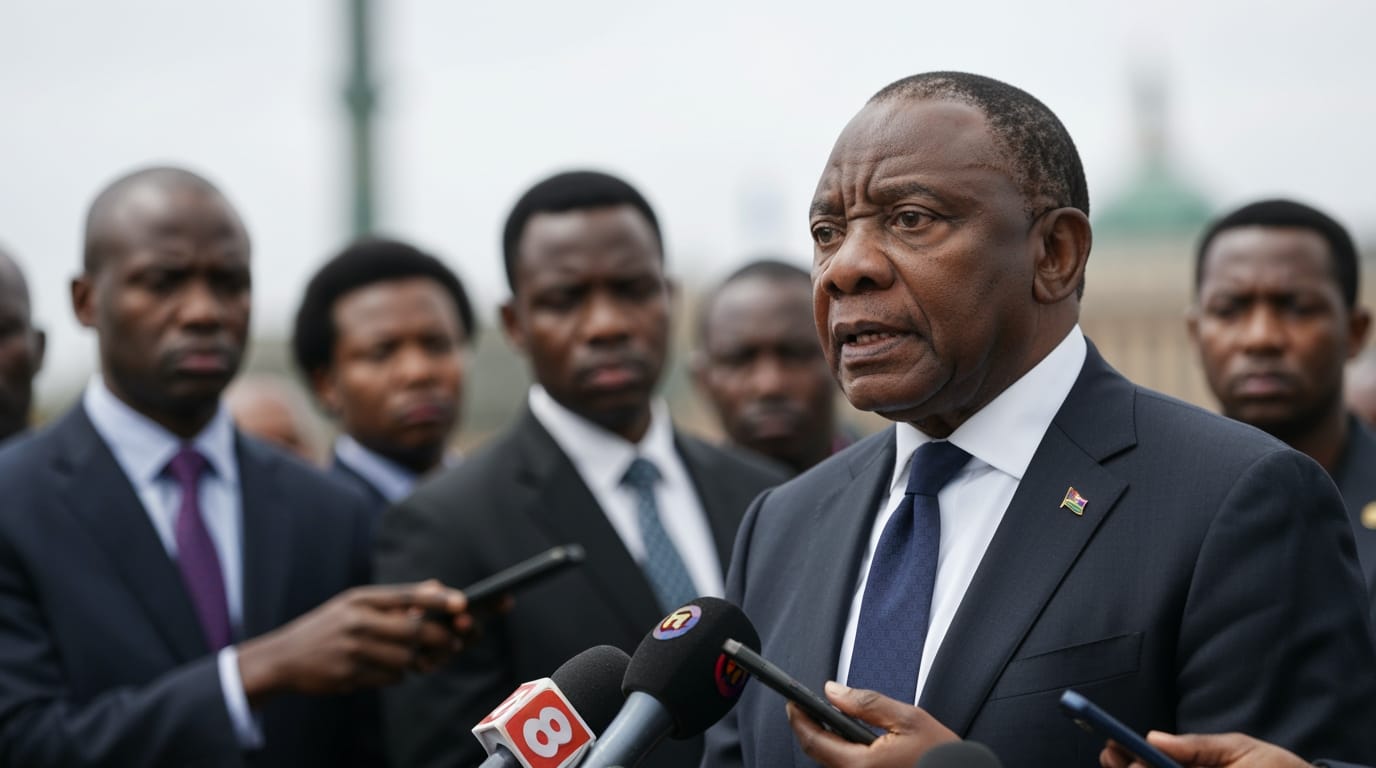
South African President Cyril Ramaphosa has unequivocally declared he will not resign from office, even as the nation's Constitutional Court has mandated the resumption of impeachment proceedings against him over the "Phala Phala" cash scandal. This defiant stance follows a critical court ruling that overturned Parliament's 2022 decision to block an independent panel's report, thrusting the nearly four-year-old controversy back into the national spotlight and setting the stage for a prolonged legal and political battle. Ramaphosa's refusal to step down underscores his determination to clear his name, maintaining his innocence against allegations that have cast a long shadow over his presidency and renewed questions about executive accountability in South Africa.
The Genesis of the 'Farmgate' Scandal
The "Phala Phala" scandal first came to public light in June 2022, originating from a burglary that occurred on February 9, 2020, at President Ramaphosa's private Phala Phala game farm in Limpopo province. At the heart of the controversy is the alleged theft of a substantial sum of foreign currency, reportedly hidden within a sofa at the ranch. While Ramaphosa has acknowledged a theft of $580,000, claiming it was proceeds from the sale of buffalo, former Director-General of the State Security Agency, Arthur Fraser, a key figure in bringing the matter to light, alleged the amount was significantly higher, around $4 million (or 60 million rand).
Fraser's criminal complaint, filed in June 2022, accused the President of money laundering, defeating the ends of justice, and kidnapping, contending that the incident was not reported through official police channels. Instead, it's alleged that Ramaphosa deployed his presidential protection unit to covertly track down the suspects, bypassing standard law enforcement procedures. This alleged deviation from protocol and the failure to declare the large sum of foreign currency to regulatory bodies fueled public and political outrage, raising serious concerns about potential constitutional violations and abuse of state resources.
Judicial Intervention Resurrects Impeachment
In response to the burgeoning scandal, Parliament established an independent panel, known as the Section 89 panel, in September 2022, chaired by former Constitutional Court judge Sandile Ngcobo. This panel was tasked with investigating the allegations and subsequently found prima facie evidence suggesting possible serious constitutional and legal violations by President Ramaphosa. The panel's report highlighted potential breaches of his oath of office, a conflict of interest, engagement in outside paid work, and contravention of anti-corruption laws. Furthermore, the panel expressed "substantial doubt" regarding the President's explanation that the cash derived from a buffalo sale.
Despite these findings, the National Assembly, then dominated by Ramaphosa's African National Congress (ANC) party, voted in December 2022 to reject the panel's report, effectively halting any impeachment proceedings against the President. The ANC leadership had publicly backed Ramaphosa, instructing its members of Parliament to vote against the report, temporarily shielding him from the process. However, this legislative blockade proved short-lived. On May 8, 2026, the Constitutional Court delivered a landmark ruling, declaring Parliament's 2022 vote unconstitutional and unlawful. The court found that Rule 129I of the National Assembly, which allowed for such a political dismissal of the report, was constitutionally defective. This pivotal judgment, triggered by a legal challenge from opposition parties like the Economic Freedom Fighters (EFF) and the African Transformation Movement (ATM), now mandates that the independent panel's report be referred to an impeachment committee.
Ramaphosa's Defiance and Legal Counter-Offensive
In a televised address to the nation on May 11, 2026, President Ramaphosa firmly announced his decision not to resign. He conveyed his intention to legally challenge the parliamentary report, describing its findings as "flawed" and based on "hearsay" rather than sufficient evidence. "To resign now would be to give in to those who would reverse our rebuilding of society," Ramaphosa stated, asserting his commitment to continue serving the people of South Africa. He maintained his consistent stance of innocence, reiterating that he has not stolen public money, committed any crime, or violated his oath of office, and has cooperated with all investigations.
Ramaphosa's legal team has advised him to relaunch the process for a judicial review of the report. While he acknowledges and respects the Constitutional Court's ruling to revive the impeachment process, he believes nothing in the judgment compels his resignation. This legal counter-offensive could potentially delay the impeachment proceedings for up to a year, though the parliamentary committee's work is expected to proceed concurrently.
The Uncharted Waters of Impeachment
The Constitutional Court's decision now sets in motion the second stage of a three-step impeachment process. Parliament is now obliged to establish an impeachment committee to thoroughly reinvestigate the allegations against President Ramaphosa. This committee, composed of representatives from all political parties, will wield significant powers, including the authority to subpoena witnesses, request documents, and conduct public hearings. President Ramaphosa himself is likely to be called to testify under oath.
Once the committee concludes its investigation, it will present a report to the National Assembly, recommending whether the President's conduct warrants removal from office. For Ramaphosa to be removed, a two-thirds majority vote, equating to 267 out of 400 Members of Parliament, is required. The political landscape has shifted since 2022; while the ANC no longer holds an outright majority in Parliament following the May 2024 elections, it still retains more than one-third of the seats. This means that should the ANC remain largely unified behind Ramaphosa, he may still be able to survive an impeachment vote, even if the committee's findings are unfavorable.
A Defining Moment for South African Democracy
The escalating Phala Phala scandal represents a profound test for South Africa's democratic institutions, particularly concerning parliamentary oversight, the independence of state bodies, and executive accountability. President Ramaphosa, who ascended to power on an anti-corruption platform, now finds himself entangled in allegations reminiscent of the very issues he pledged to eradicate. The scandal has further exposed deep divisions within the ruling ANC, with ongoing internal power struggles influencing the political narrative.
The coming months will be crucial as the impeachment committee begins its work, potentially subjecting Ramaphosa to a bruising public examination of his conduct. The outcome will not only determine the political fate of the current President but also significantly influence public trust in the rule of law and the resilience of South Africa's constitutional framework. The nation watches closely as this complex legal and political drama unfolds, poised to shape the trajectory of its young democracy.


