Regional Stability Jeopardized as Pakistan Declares "Open War" on Afghanistan Amid Escalating Border Clashes
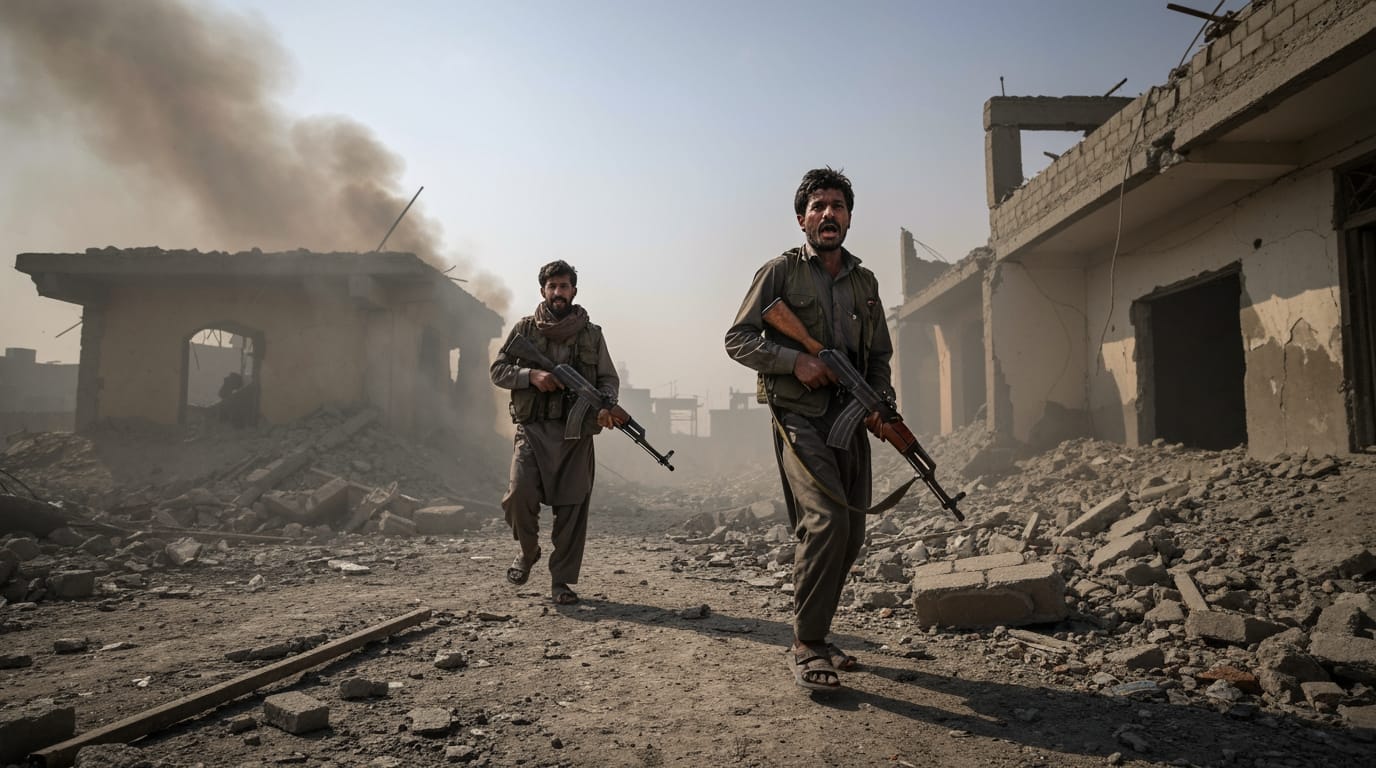
Islamabad's declaration of "open war" against the Taliban-led government in Afghanistan marks a perilous escalation in the long-fraught relations between the two neighboring nations. The pronouncement came amidst a flurry of cross-border airstrikes and ground operations, pushing a fragile regional peace to the brink and drawing urgent calls for de-escalation from the international community. The recent hostilities have resulted in conflicting reports of dozens of casualties on both sides, underscoring the severe and immediate human cost of the intensifying conflict.
The current crisis unfolded following a series of intense exchanges along the shared, and largely disputed, 2,611-kilometer border. Pakistan's Defense Minister, Khawaja Asif, stated that his nation's "patience has now run out," signaling a decisive shift in Islamabad's stance after months of tit-for-tat skirmishes. This declaration was swiftly followed by Pakistani airstrikes on key Afghan cities, including the capital Kabul, as well as Kandahar and Paktia, targeting what Islamabad described as "terrorist hideouts." Simultaneously, Pakistan launched "Operation Ghazab lil-Haq" in response to what it termed "unprovoked aggression" from Afghan forces.
The Afghan interim government, through its spokesman Zabihullah Mujahid, confirmed the Pakistani airstrikes but denied any casualties in Kabul, while reporting eight Afghan soldiers killed and eleven wounded in border clashes. In a retaliatory move, Afghanistan initiated "large-scale offensive operations" along the Durand Line, claiming to have targeted Pakistani military posts across five border provinces, including Paktika, Paktia, Khost, Nangarhar, Kunar, and Nuristan. Afghan officials alleged that these operations resulted in the deaths of 55 Pakistani soldiers, the destruction of two bases, and the capture of 19 posts. Conversely, Pakistani sources claimed a significantly higher toll on the Afghan side, with figures ranging from 58 to 133 Afghan Taliban operatives killed and over 100 to 200 wounded, alongside the destruction or capture of numerous Afghan military posts and equipment. These sharply differing casualty figures highlight the severe lack of verifiable information and the intense propaganda battle accompanying the military confrontation.
The Thorny Legacy of the Durand Line and Militant Safe Havens
At the heart of the perennial friction between Afghanistan and Pakistan lies the contentious Durand Line, a 2,611-kilometer frontier drawn during British colonial rule in the 19th century. While Pakistan recognizes this as its official international border, successive Afghan governments, including the current Taliban administration, have consistently refused to formally acknowledge it, viewing it as an imposed boundary. This unresolved territorial dispute has served as a continuous flashpoint, exacerbating cross-border militancy and making effective border management a persistent challenge.
A primary driver of Pakistan's frustration and its recent aggressive stance is the persistent accusation that the Afghan Taliban provides sanctuary and support to the Tehrik-i-Taliban Pakistan (TTP), an offshoot of the Afghan Taliban. Islamabad asserts that TTP militants use Afghan soil as a safe haven to plan and launch attacks within Pakistan. The TTP, a coalition of Islamist militant groups, has indeed seen a resurgence in its activities since the Afghan Taliban regained power in 2021, leading to a significant increase in terrorist incidents in Pakistan's western borderlands, particularly in Khyber Pakhtunkhwa province. Pakistan has repeatedly urged the Afghan interim government to take decisive action against these groups, citing the Doha Agreement's commitment against allowing Afghan territory to be used for terror against other nations.
However, the Afghan Taliban vehemently denies these allegations, maintaining that TTP is an internal Pakistani issue and that they do not permit any group to use their territory to threaten neighboring countries. Taliban spokesman Zabihullah Mujahid has questioned Pakistan's claims about cross-border infiltration, pointing to the heavily controlled border. The ongoing accusations and denials underscore a deep-seated mistrust that has consistently undermined efforts to achieve a lasting peace. Previous attempts at de-escalation, including a Qatar-mediated ceasefire in October 2025, proved fragile and ultimately failed to produce a sustainable agreement, with low-level incidents persisting and eventually erupting into the current major confrontation.
Broadening Regional Concerns and Calls for Diplomacy
The dramatic escalation between Pakistan and Afghanistan has triggered widespread alarm across the region and beyond, prompting urgent calls for restraint and diplomatic engagement. The United Nations Secretary-General, António Guterres, expressed deep concern over the surge in violence, emphasizing the critical need for both parties to uphold their obligations under international law, particularly regarding the protection of civilians. The UN has urged both nations to resolve their differences through diplomatic means, underscoring the potential for broader destabilization.
Regional powers such as Iran and China have also stepped forward, offering to mediate the conflict. Iran's Foreign Minister, Abbas Araghchi, publicly offered to "facilitate dialogue" and enhance understanding between the two countries, highlighting the significance of diplomatic solutions during the holy month of Ramadan. Similarly, Russia expressed deep concern, urging an immediate halt to cross-border attacks and offering to consider mediation if requested by both sides. China, also concerned by the escalating situation, affirmed its willingness to play a constructive role in de-escalating tensions. These international interventions reflect the gravity of the situation and the shared apprehension that a full-scale conflict could have devastating consequences for an already volatile region.
The renewed violence also casts a long shadow over the humanitarian situation in Afghanistan, which already faces one of the world's worst humanitarian crises, compounded by economic shocks and climate change. Civilian casualties have been reported, and authorities on both sides of the border have observed population movements as residents seek safer areas, highlighting the immediate human toll of the conflict.
The current trajectory of Pakistan-Afghanistan relations presents a significant challenge to regional stability. The deeply entrenched grievances, historical disputes, and accusations of cross-border terrorism create a complex environment where de-escalation is difficult but imperative. With both nations standing firm in their respective positions and rhetoric, the immediate future remains precarious. A sustained, internationally brokered diplomatic effort, coupled with a genuine commitment from both Islamabad and Kabul to address underlying issues such as border management and counter-terrorism cooperation, appears to be the only viable path to avert a further descent into widespread conflict and mitigate the suffering of their populations.


