Renewed Fighting Plunges Aleppo into Crisis as Thousands Flee
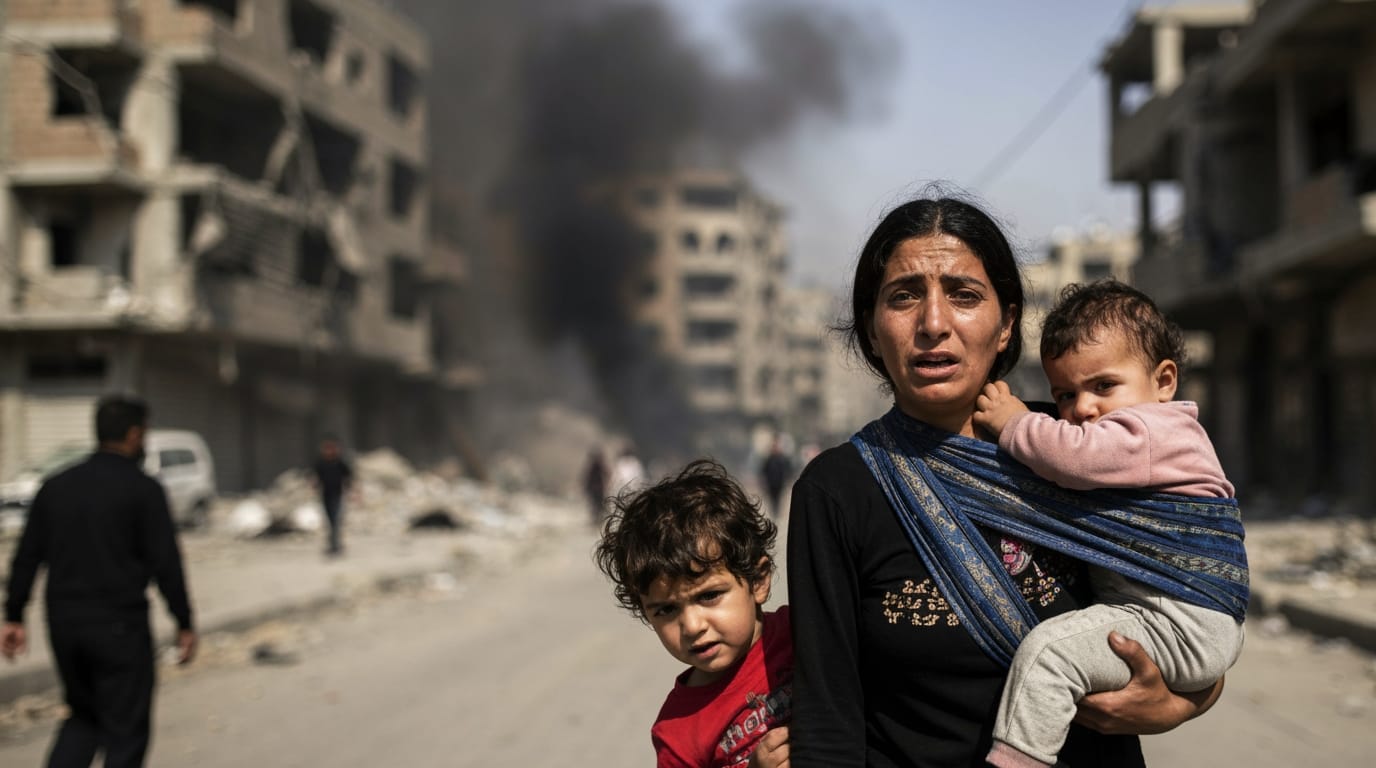
ALEPPO, Syria – A fragile peace in northern Syria has shattered, as intense clashes between Syrian government forces and the Kurdish-led Syrian Democratic Forces (SDF) have forced tens of thousands of civilians to flee their homes in Aleppo. The fighting, which escalated dramatically in early January 2026, has centered on the predominantly Kurdish neighborhoods of Sheikh Maqsoud, Ashrafieh, and Bani Zaid, reigniting fears of a wider conflict in a city still scarred by years of war. Humanitarian organizations are sounding the alarm over the mass displacement and mounting casualties, calling for immediate de-escalation and protection for civilians caught in the crossfire.
A City on Edge: The Latest Escalation
The violence erupted on Tuesday, January 6, 2026, marking the deadliest confrontation between Syrian government forces and the SDF in recent months. Eyewitnesses reported intense shelling and drone strikes across the northern neighborhoods of Aleppo, prompting a rapid deterioration of the security situation. Syrian military authorities swiftly declared the affected areas, including Sheikh Maqsoud and Ashrafieh, "closed military zones" and issued evacuation orders for residents, setting deadlines for their departure. Tanks were observed entering these neighborhoods, indicating a significant ground operation was underway.
The Syrian Army Operations Command warned of "targeted operations" against SDF positions, claiming the action was a response to SDF attacks on government-controlled areas that had reportedly killed over 20 civilians and 25 soldiers in previous months. Conversely, the SDF accused government forces of "indiscriminate artillery and missile shelling" against residential areas and targeting civilian infrastructure, including water and electricity. They vehemently denied claims of targeting government positions, with one Kurdish representative stating that Kurdish security forces, equipped only with light weapons, controlled the neighborhoods and denied any shells were fired from their areas. Flights at Aleppo International Airport were suspended, and schools and government offices across the city were closed, bringing daily life to a standstill amidst the renewed hostilities.
The Human Cost: Mass Displacement and Humanitarian Crisis
The most immediate and devastating consequence of the renewed fighting has been the mass exodus of civilians. Estimates of those displaced vary, with the provincial directorate of social affairs and labor reporting nearly 140,000 people displaced across Aleppo province, while the UN Office for the Coordination of Humanitarian Affairs (OCHA) estimated approximately 30,000 people displaced within the city. Thousands fled from Sheikh Maqsoud and Ashrafieh, carrying what possessions they could, uncertain of their future or if they would ever return home.
The displaced population includes vulnerable individuals such as women, children, and the elderly, many of whom are suffering from difficult medical issues. Many families are reported to be moving towards the Afrin enclave northwest of Aleppo, while others are sheltering in collective centers or with host communities within the city. Local authorities have opened humanitarian corridors to facilitate evacuations and designated some places of worship as temporary shelters. However, the sudden influx of displaced people places immense strain on already limited resources, exacerbating an existing humanitarian crisis. The situation is compounded by heavy snowstorms that hit northern Syria in late December 2025, affecting 158,000 internally displaced people across several governorates and leading to fatalities among infants due to extreme cold. At least 12 to 16 civilians have been killed and dozens wounded in the recent fighting, with reports indicating that three major hospitals have ceased operations, further crippling healthcare access.
Unraveling a Stalled Agreement: Roots of the Conflict
This latest eruption of violence underscores the deep-seated tensions that persist in post-Assad Syria. The current clashes represent the most severe confrontation between government forces and the SDF since the fall of former President Bashar al-Assad's regime in a rebel offensive in December 2024. A key point of contention is the stalled March 2025 agreement that aimed to integrate the Kurdish-led SDF's semi-autonomous administration and military into the new Syrian national army.
The SDF, which controls significant portions of northeastern Syria and was a crucial U.S. partner in the fight against the Islamic State group, has expressed reluctance to relinquish the autonomy it gained over 14 years of conflict. This autonomy includes control over oil resources and prisons housing ISIS fighters. Disagreements over the implementation of the integration deal have persisted, with both sides accusing each other of stalling. Furthermore, some factions within the new Syrian army are former Turkish-backed insurgent groups with a history of animosity towards Kurdish forces, adding another layer of complexity to the volatile situation. Turkey itself views the People's Protection Units (YPG), a leading component of the SDF, as an extension of the Kurdistan Workers' Party (PKK), which it considers a terrorist organization. This geopolitical entanglement further complicates any potential resolution.
Calls for Calm and the Path Forward
The international community has reacted with alarm to the escalating situation. The United Nations has reiterated that all parties have a clear obligation under international humanitarian law to protect civilians and civilian infrastructure. UN Spokesperson Stéphane Dujarric urged all actors to "immediately de-escalate, exercise maximum restraint, and take all measures to prevent further harm to civilians." The UN Secretary-General called on all parties to demonstrate flexibility and goodwill to resume negotiations and fully implement the March 2025 agreement. Reports also indicate that the United States is working to mediate and de-escalate the situation.
The recent violence in Aleppo serves as a stark reminder of the instability plaguing northern Syria. While a cautious calm has been reported in some areas, the underlying issues remain unresolved. The failure to integrate the SDF into a unified national military structure risks perpetuating cycles of violence and could potentially draw in other regional actors. The future of Aleppo and its inhabitants hinges on the ability of all parties to prioritize civilian protection, engage in meaningful dialogue, and find a lasting political solution that addresses the complex grievances and aspirations of all communities. Until then, the specter of displacement and conflict will continue to loom large over this ancient city.


